Get your free personalized podcast brief
We scan new podcasts and send you the top 5 insights daily.
Unlike software, where customer acquisition is the main risk, the primary diligence question for transformative hardware is technical feasibility. If a team can prove they can build the product (e.g., a cheaper missile system), the market demand is often a given, simplifying the investment thesis.

Related Insights
To differentiate hype from reality, seed investors should practice "vibe coding": daily, hands-on experimentation with new developer tools. This provides an intuitive understanding of current technological capabilities, leading to better investment decisions and inoculating them against unrealistic expectations.

Successful "American Dynamism" companies de-risk hardware development by initially using off-the-shelf commodity components. Their unique value comes from pairing this accessible hardware with sophisticated, proprietary software for AI, computer vision, and autonomy. This approach lowers capital intensity and accelerates time-to-market compared to traditional hardware manufacturing.

The founders initially feared their data collection hardware would be easily copied. However, they discovered the true challenge and defensible moat lay in scaling the full-stack system—integrating hardware iterations, data pipelines, and training loops. The unexpected difficulty of this process created a powerful competitive advantage.

While a fusion reactor can't be built in three months, YC pushes hardware and deep tech founders to create a tangible Minimum Viable Proof. This forces them to de-risk the venture by hitting a critical milestone, such as building a small-scale desert prototype or securing key letters of intent, proving traction on a non-obvious timeline.
Unlike SaaS startups focused on finding product-market fit (market risk), deep tech ventures tackle immense technical challenges. If they succeed, they enter massive, pre-existing trillion-dollar markets like energy or shipping where demand is virtually guaranteed, eliminating market risk entirely.

Moving from a science-focused research phase to building physical technology demonstrators is critical. The sooner a deep tech company does this, the faster it uncovers new real-world challenges, creates tangible proof for investors and customers, and fosters a culture of building, not just researching.

When evaluating revolutionary ideas, traditional Total Addressable Market (TAM) analysis is useless. VCs should instead bet on founders with a "world-bending vision" capable of inducing a new market, not just capturing an existing one. Have the humility to admit you can't predict market size and instead back the visionary founder.
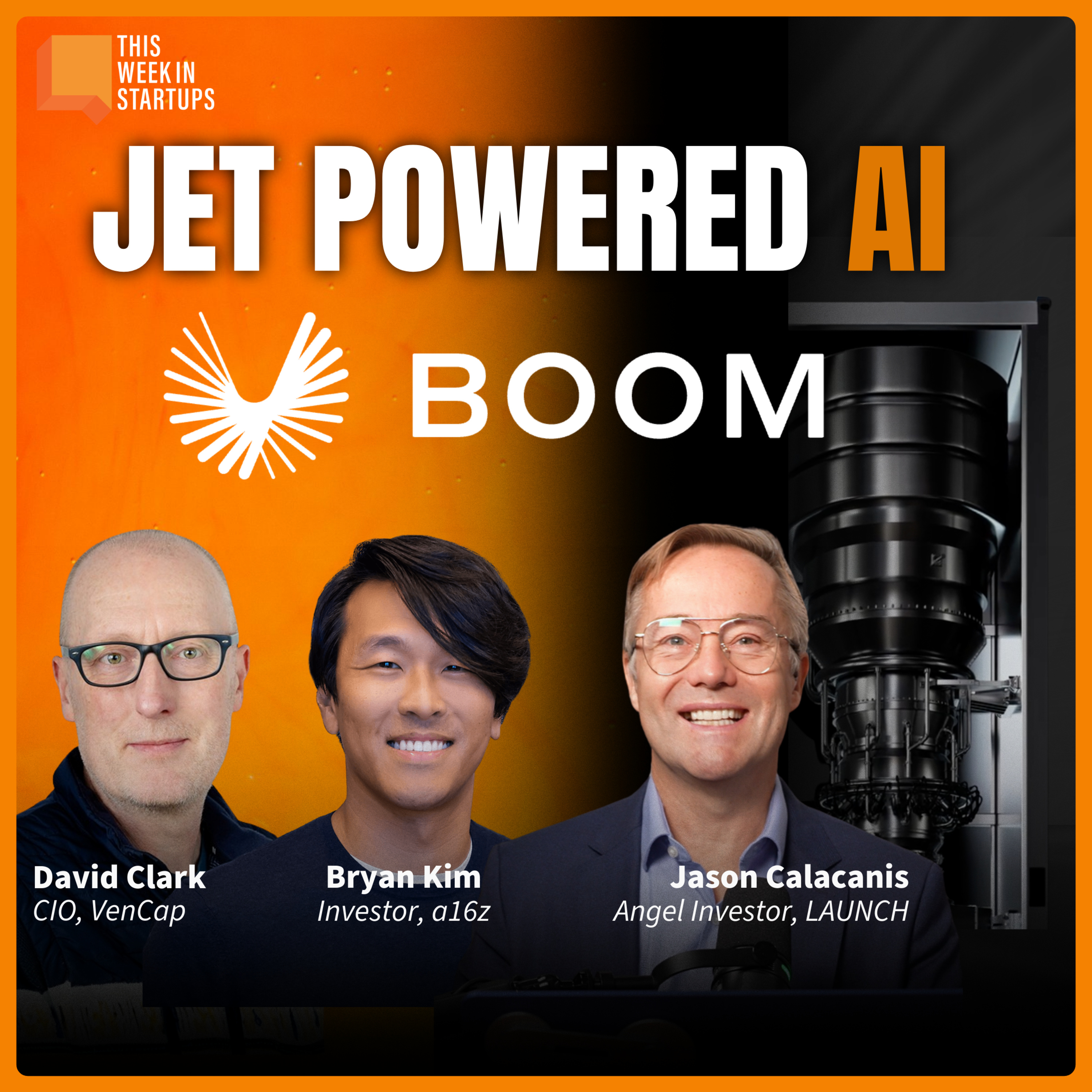
Bryn Putnam de-risks her complex hardware businesses by using commodity components ("withered technology"). The core innovation and defensible IP are built in the software layer, avoiding the massive capital expense and manufacturing risk of creating novel hardware from scratch.
Validate market demand by securing payment from customers before investing significant resources in building anything. This applies to software, hardware, and services, completely eliminating the risk of creating something nobody wants to buy.

Drawing from Verkada's decision to build its own hardware, the strategy is to intentionally tackle difficult, foundational challenges early on. While this requires more upfront investment and delays initial traction, it creates an immense competitive barrier that latecomers will struggle to overcome.