Get your free personalized podcast brief
We scan new podcasts and send you the top 5 insights daily.
Neros deliberately chose a massive facility to avoid future moves and bring component manufacturing in-house. This long-term thinking prioritizes vertical integration and operational stability over the typical startup approach of leasing smaller spaces and moving frequently, which disrupts production and planning.

Related Insights
Impulse Space accelerates development by being 'extremely vertically integrated.' Co-locating the machine shop, assembly areas, and a test area enables a tight 'build, assemble, test' loop, allowing the team to iterate on hardware designs with maximum speed.
Northwood cut ground station deployment time from 3 years to 3 months. They achieved this by vertically integrating the entire value chain—antenna R&D, land procurement, construction, and software APIs. This holistic approach aligns incentives and enables system-level optimization impossible with siloed vendors.

Neros uses a dedicated New Product Introduction (NPI) line—larger than their previous facility's entire production line—to refine manufacturing processes for new products. This strategy allows them to resolve production challenges and stabilize processes before they are moved to the main line, preventing costly disruptions to scaled output.
For hard tech startups, the decision to vertically integrate and build a factory shouldn't be automatic. It's a strategic imperative only when "cadence"—the speed of iteration and delivery—is the primary competitive advantage. In such cases, the in-house capability to move fast outweighs the high capital cost.

Neros seats its mechanical engineering, manufacturing, and supply chain teams directly next to the production line. This close physical proximity ensures constant communication and collaboration, preventing a common failure mode where products are designed in a silo without considering manufacturability and then "thrown over the fence" to production.
Companies like SpaceX built their own operating systems (like Warp Drive) because off-the-shelf solutions couldn't handle their complexity and speed. For Senra, this means building custom software and automation. Vertical integration is not a choice but a necessity when the external industrial base is a bottleneck to growth.
Zipline had to build its own components because the market only offered two extremes: cheap, unreliable consumer drone parts or prohibitively expensive military-grade systems. This "automotive grade" gap for reliable, cost-effective components forced them to vertically integrate to achieve their performance and cost goals.
Figure designs nearly every component of its robots in-house, from motors to batteries. This extreme vertical integration, though costly upfront, prevents being at the mercy of third-party vendor timelines, code problems, or supply chain issues, enabling faster iteration and deeper system control.
Zipline is quadrupling its factory to produce 20,000 drones annually, a necessity to service a 15% week-over-week growth curve. This highlights a unique hardware scaling challenge driven by software-like demand.
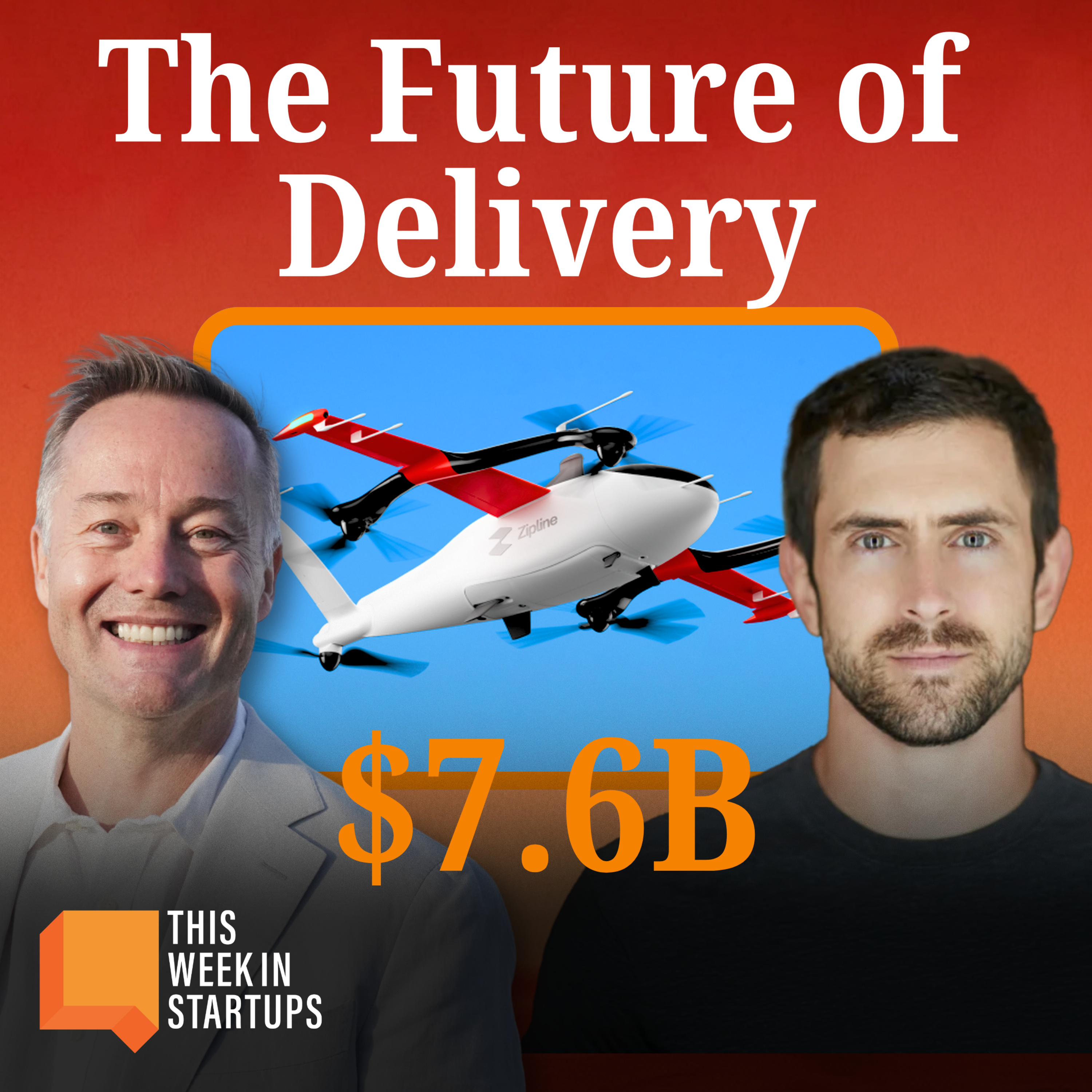
AHC rejects the "micro-factory" trend for a centralized "Gigafactory" model. This allows massive investment in automation and keeps engineers close to production for rapid iteration. To make this viable, their building components are designed to fit in standard shipping containers, enabling cost-effective national distribution.
