Get your free personalized podcast brief
We scan new podcasts and send you the top 5 insights daily.
Northwood cut ground station deployment time from 3 years to 3 months. They achieved this by vertically integrating the entire value chain—antenna R&D, land procurement, construction, and software APIs. This holistic approach aligns incentives and enables system-level optimization impossible with siloed vendors.

Related Insights
Major US tech-industrial companies like SpaceX are forced to vertically integrate not as a strategic choice, but out of necessity. This reveals a critical national infrastructure gap: the absence of a multi-tiered ecosystem of specialized component suppliers that thrives in places like China.
The next wave of space companies is moving away from the vertically integrated "SpaceX model" where everything is built in-house. Instead, a new ecosystem is emerging where companies specialize in specific parts of the stack, such as satellite buses or ground stations. This unbundling creates efficiency and lowers barriers to entry for new players.

Contrary to seeing technologies like Starlink's optical links as a threat, Northwood's CEO views them as a catalyst. By reducing latency and enabling higher data throughput in space, these links expand the overall market and create more use cases, ultimately driving more data volume that must eventually connect back to Earth.
The new wave of space startups is moving away from the SpaceX "build everything yourself" model. Instead, companies like Apex Space are unbundling the stack, specializing in one component like satellite buses. This allows for faster development cycles and creates a more robust, collaborative industry.

Identifying the defense industrial base as "rotted out," Mock Industries is taking a bottom-up approach. Instead of just building platforms, it vertically integrates to produce high-performance subsystems (radars, engines) and sells them to other primes, aiming to fix the entire ecosystem.

The primary advantage of orbital data centers isn't cost, but speed to market. Building on Earth involves years of real estate, permitting, and power grid challenges. The space-based model can turn manufactured chips into operational compute within weeks by treating deployment as an industrial manufacturing and launch problem.

To build a new American semiconductor foundry by 2028, Substrate is rejecting the modern specialized model. Instead, it's vertically integrating by designing and building its own lithography tools. This return to the industry's roots is aimed at reducing complexity and cost, enabling them to move faster.

According to Poolside's CEO, the primary constraint in scaling AI is not chips or energy, but the 18-24 month lead time for building powered data centers. Poolside's strategy is to vertically integrate by manufacturing modular electrical, cooling, and compute 'skids' off-site, which can be trucked in and deployed incrementally.
Northwood Space offers an end-to-end ground station service, handling everything from hardware and land leases to software APIs and network backhaul. This "ground-as-a-service" model frees satellite operators from the complex, time-consuming, and non-core task of building and managing their own global communications infrastructure.

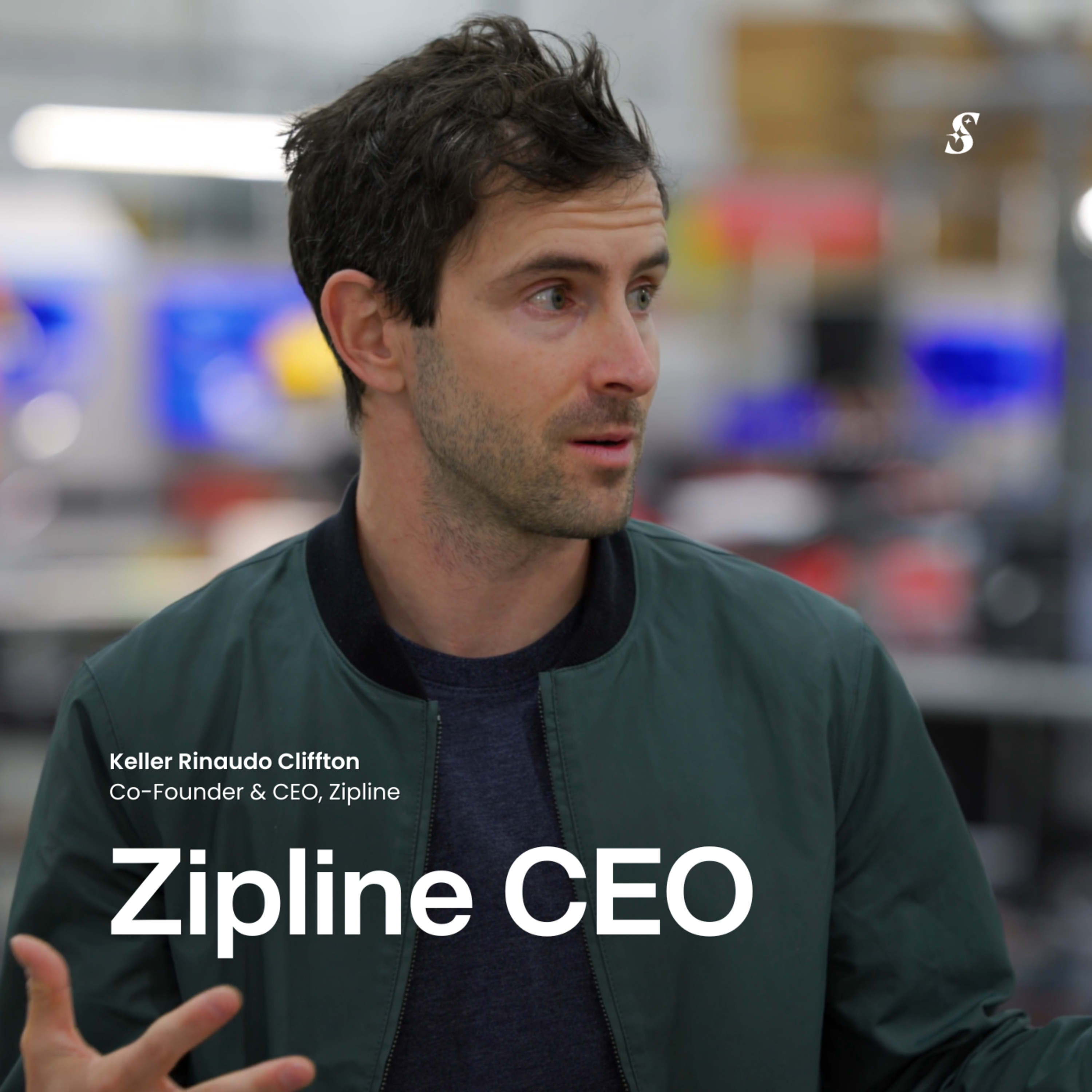
Zipline had to build its own components because the market only offered two extremes: cheap, unreliable consumer drone parts or prohibitively expensive military-grade systems. This "automotive grade" gap for reliable, cost-effective components forced them to vertically integrate to achieve their performance and cost goals.