Get your free personalized podcast brief
We scan new podcasts and send you the top 5 insights daily.
For hard tech startups, the decision to vertically integrate and build a factory shouldn't be automatic. It's a strategic imperative only when "cadence"—the speed of iteration and delivery—is the primary competitive advantage. In such cases, the in-house capability to move fast outweighs the high capital cost.

Related Insights
With AI commoditizing technology, the sustainable advantage for startups is the speed and discipline of their experimentation. Founders who leverage AI to operate 10x faster will outcompete those with static tech advantages, as execution velocity is far harder to replicate than a feature.

When deciding to build or buy, the key factor is strategic importance. Never cede control of technology that is core to your unique value proposition to a vendor. Reserve outsourcing for necessary but commoditized functions that don't differentiate you in the market.

For D2C fashion brands, the inability of third-party suppliers to quickly fulfill reorders on trending products is a key trigger for vertical integration. Larroudé's co-founder realized the cost of one large factory order was equivalent to buying the machinery himself, enabling them to meet demand in weeks, not months.

With traditional moats gone, the only way to stay ahead is to move faster. Defensibility now comes from the speed at which a team can ship new value and deeply understand its customers, ensuring the product is always one step ahead of a crowded field.

To build a new American semiconductor foundry by 2028, Substrate is rejecting the modern specialized model. Instead, it's vertically integrating by designing and building its own lithography tools. This return to the industry's roots is aimed at reducing complexity and cost, enabling them to move faster.

Investors obsess over moats, but in a rapidly changing AI landscape, a startup's ability to quickly build and ship products that unlock latent demand is a more reliable predictor of success than any theoretical defensibility.

Boom Supersonic accelerates development by manufacturing its own parts. This shrinks the iteration cycle for a component like a turbine blade from 6-9 months (via an external supplier) to just 24 hours. This rapid feedback loop liberates engineers from "analysis paralysis" and allows them to move faster.

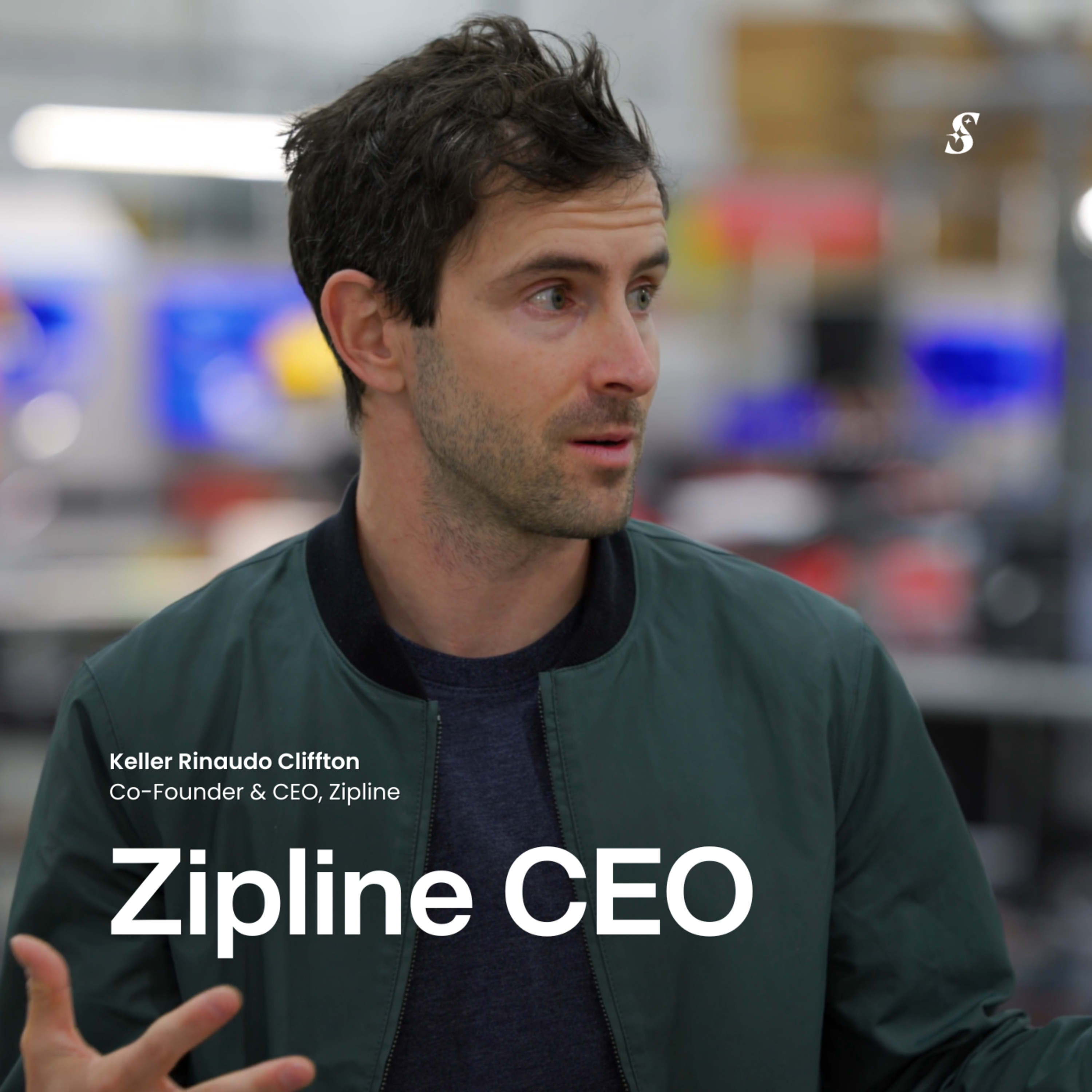
Zipline had to build its own components because the market only offered two extremes: cheap, unreliable consumer drone parts or prohibitively expensive military-grade systems. This "automotive grade" gap for reliable, cost-effective components forced them to vertically integrate to achieve their performance and cost goals.
Drawing from Verkada's decision to build its own hardware, the strategy is to intentionally tackle difficult, foundational challenges early on. While this requires more upfront investment and delays initial traction, it creates an immense competitive barrier that latecomers will struggle to overcome.

While moats like network effects and brand develop over time, the only sustainable advantage an early-stage startup has is its iteration speed. The ability to quickly cycle through ideas, build MVPs, and gather feedback is the fundamental driver of success before achieving scale.
