Get your free personalized podcast brief
We scan new podcasts and send you the top 5 insights daily.
Neros seats its mechanical engineering, manufacturing, and supply chain teams directly next to the production line. This close physical proximity ensures constant communication and collaboration, preventing a common failure mode where products are designed in a silo without considering manufacturability and then "thrown over the fence" to production.

Related Insights
Subcontracting creates fixed interfaces between teams, leading to a "calcified architecture" where system-level optimization is impossible. Vertically integrating engineering and manufacturing in-house allows for dynamic trade-offs between disciplines, accelerating innovation and reducing costs.
![Scott Nolan - SpaceX, Founders Fund, and Rebuilding American Uranium Enrichment - [Invest Like the Best, EP.467] thumbnail](https://megaphone.imgix.net/podcasts/5edee546-3776-11f1-b41d-a76759576e87/image/908aaa6e87baf2b3d364892c4b7f9fd8.jpg?ixlib=rails-4.3.1&max-w=3000&max-h=3000&fit=crop&auto=format,compress)
Neros deliberately chose a massive facility to avoid future moves and bring component manufacturing in-house. This long-term thinking prioritizes vertical integration and operational stability over the typical startup approach of leasing smaller spaces and moving frequently, which disrupts production and planning.
Impulse Space accelerates development by being 'extremely vertically integrated.' Co-locating the machine shop, assembly areas, and a test area enables a tight 'build, assemble, test' loop, allowing the team to iterate on hardware designs with maximum speed.
The common product development process is a sequential handoff model. A better approach is a "jazz band" model where cross-functional teams collaborate harmoniously from the start. This fosters creativity and reduces rework by including engineers in early ideation, rather than treating them as a final step.

A weekly call with a design partner is a sign of failure. True product iteration speed comes from being deeply embedded. Founders should aim to work from their design partner's office, sitting next to the users. This proximity provides a constant, high-fidelity feedback loop.

The best products are built when engineering, product, and design have overlapping responsibilities. This intentional blurring of roles and 'stepping on each other's toes in a good way' fosters holistic product thinking and avoids the fragmented execution common in siloed organizations.

To ensure a smooth transition from development to production, an operations or manufacturing SME must be part of the design process from the start. Otherwise, products are developed without manufacturability in mind, leading to expensive, reactive fixes and subjective quality control during scale-up.

At American Housing Corp, engineers who design components also manufacture them in the factory and assemble them in the field. This forces them to experience the "pain" of their design decisions firsthand, creating a rapid, visceral feedback loop that leads to faster and more effective product improvements.

Manufacturing excellence is predetermined by how easily a product can be assembled. The product and its manufacturing line must be designed in parallel. If you wait to consider manufacturing until after the design is complete, you will have engineered in inefficiencies that are costly or impossible to fix.

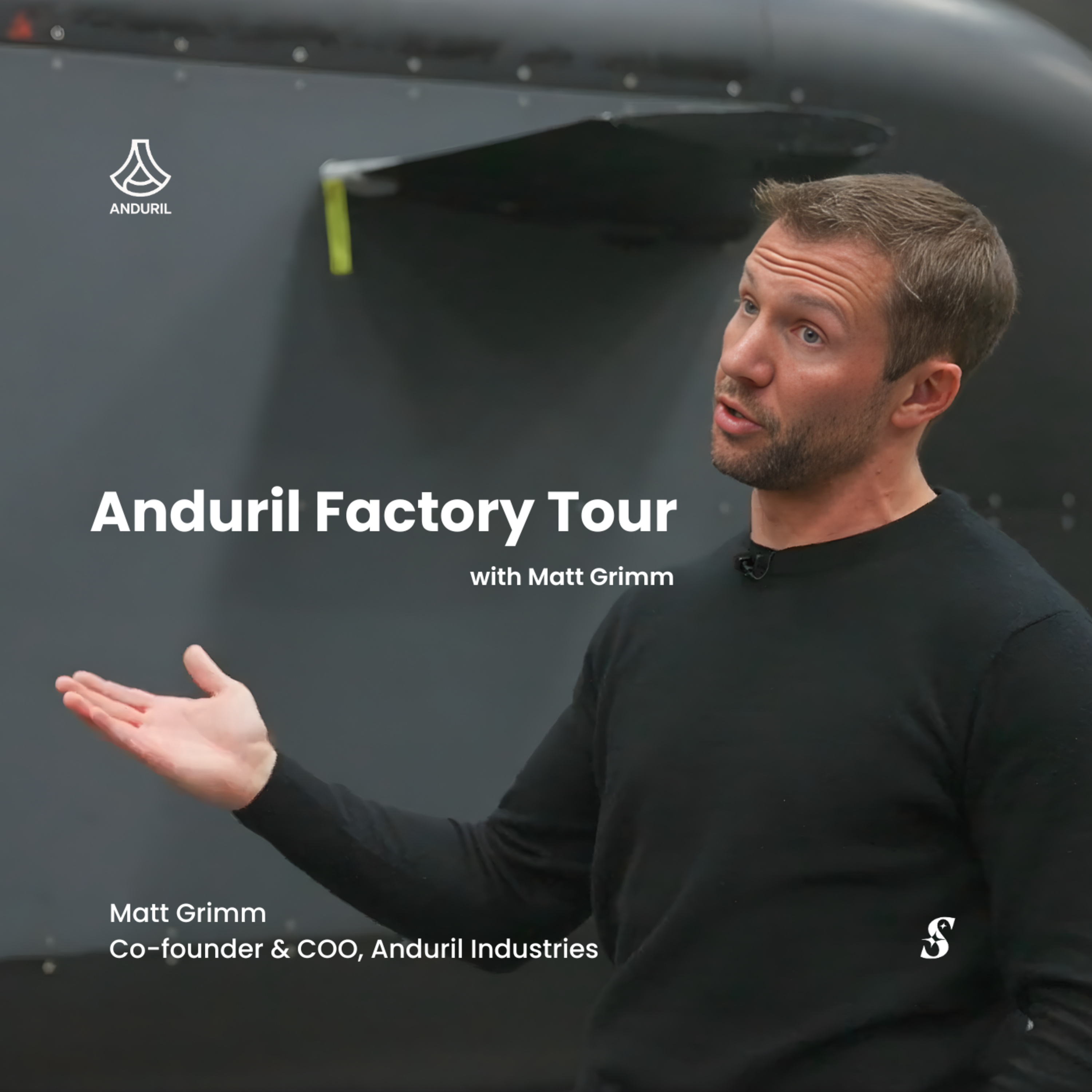
Anduril's R&D building houses machine shops, labs, and a 'dev test area' designed specifically to break products. By putting engineers across the parking lot from facilities that can rapidly prototype and test for failures (e.g., saltwater corrosion, vibration), they create an extremely tight feedback loop, speeding up iteration.