Get your free personalized podcast brief
We scan new podcasts and send you the top 5 insights daily.
Neros uses a dedicated New Product Introduction (NPI) line—larger than their previous facility's entire production line—to refine manufacturing processes for new products. This strategy allows them to resolve production challenges and stabilize processes before they are moved to the main line, preventing costly disruptions to scaled output.

Related Insights
To manage the immense risk of its new manufacturing process, Ford will launch its next-gen EV as a minimal viable product (MVP). The initial release will feature just one color, one spec, and basic software capabilities. More complexity and features will be rolled out gradually post-launch after validating the core product.

Neros deliberately chose a massive facility to avoid future moves and bring component manufacturing in-house. This long-term thinking prioritizes vertical integration and operational stability over the typical startup approach of leasing smaller spaces and moving frequently, which disrupts production and planning.
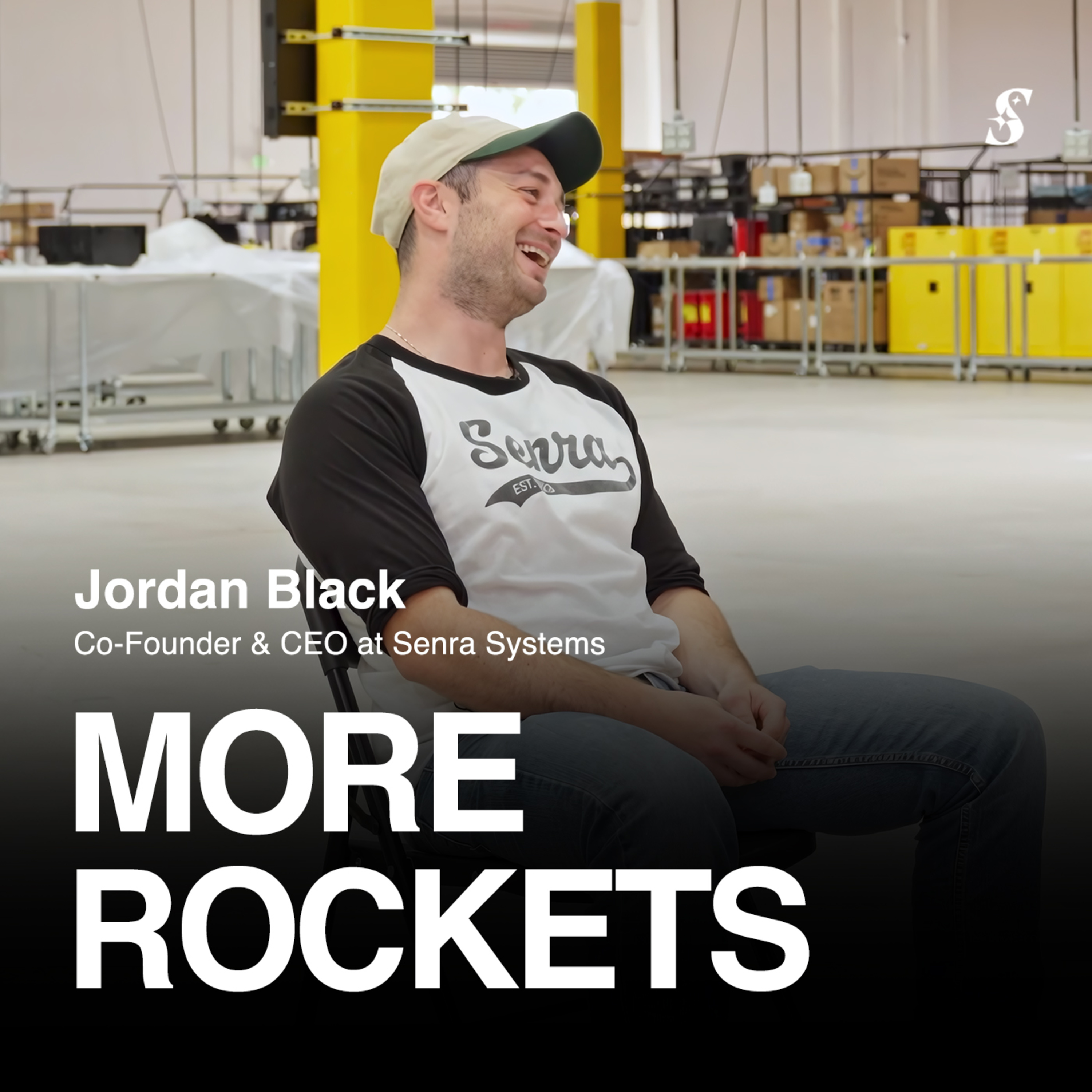
Senra Systems operates two types of facilities: one for rapid prototyping and new product introduction (NPI) to solve immediate customer problems, and another designed for cost-effective, scaled production to solve future demand. This dual approach offers both agility and long-term scalability.
At Rainbird, engineers build the first 'production intent' units for field trials themselves, on the actual assembly line. This serves two critical functions: it produces the necessary test units and simultaneously allows the engineering team to validate and debug the manufacturing process before scaling up.

After finding that involving thousands of engineers from day one led to decision paralysis, Rivian changed its process. Now, a small 'SWAT team' of under 50 people defines a new product's core architecture and makes key trade-offs in the first six months, preventing 'design by committee' before scaling up development.

Instead of immediately scaling up the manufacturing process between clinical Phase 1 and 2, it is strategically better to produce more batches using the established Phase 1 process. This approach builds critical knowledge about process parameters and CQAs through repetition and increased clinical exposure.

American Housing Corp's first factory was built for flexibility to iterate on the product, not for automated efficiency. They believe automation is the final step, implemented only after a process is validated and de-risked manually. Trying to automate an unproven process is a common and costly mistake.

To ensure a smooth transition from development to production, an operations or manufacturing SME must be part of the design process from the start. Otherwise, products are developed without manufacturability in mind, leading to expensive, reactive fixes and subjective quality control during scale-up.

Neros seats its mechanical engineering, manufacturing, and supply chain teams directly next to the production line. This close physical proximity ensures constant communication and collaboration, preventing a common failure mode where products are designed in a silo without considering manufacturability and then "thrown over the fence" to production.
Despite producing over 250 drones daily, Neros uses manual assembly lines because their product isn't designed for automation yet. For rapidly evolving hardware, manual stations provide necessary flexibility. Introducing automation would require a significant product redesign, which is counterproductive during fast development cycles.