Get your free personalized podcast brief
We scan new podcasts and send you the top 5 insights daily.
Surrendering your will to a purpose beyond yourself, similar to 12-step programs, is a powerful tool for overcoming performance anxiety. This act of letting go is especially difficult for talented, self-reliant individuals but is key to trading personal stress for universal strength.

Related Insights
A mental performance coach taught diver Molly Carlson to visualize fear as a piece of paper in front of her eyes. Instead of trying to destroy the paper, she gently shifts it to the side, allowing it to exist without consuming her focus, freeing her to perform.

While confidence is valuable, it can lead to carelessness. A state of being "fully present"—total immersion in the moment without self-consciousness—is a more powerful and reliable driver of peak performance. It replaces ego-driven thoughts with heightened awareness and flow.
Top performers don't conquer nervousness; they listen to it. Self-doubt is an indicator to lean into, not a signal to stop. Performance coach Giselle Ugardi suggests talking back to your inner critic as a way to reframe and manage the feeling, rather than trying to suppress it.

Instead of treating fear as a psychological flaw, view it as a neutral, physical vibration in the body. This atomic perspective, inspired by physics, allows you to step out of self-judgment and use the energy creatively. You stop managing the 'idea' of anxiety and start experiencing the raw sensation.

Top performers don't eliminate the fear of rejection; they diminish its power through repeated exposure. This 'obstacle immunity' conditions them to act despite their brain's natural fear response, just as an expert skydiver still feels fear but jumps anyway.

Marcus Aurelius's "view from above" is a concrete technique, similar to cognitive behavioral therapy, for managing anxiety. It involves visualizing yourself zooming out from your immediate situation to a cosmic scale. This mental drill provides perspective, shrinking overwhelming problems to a more manageable size.

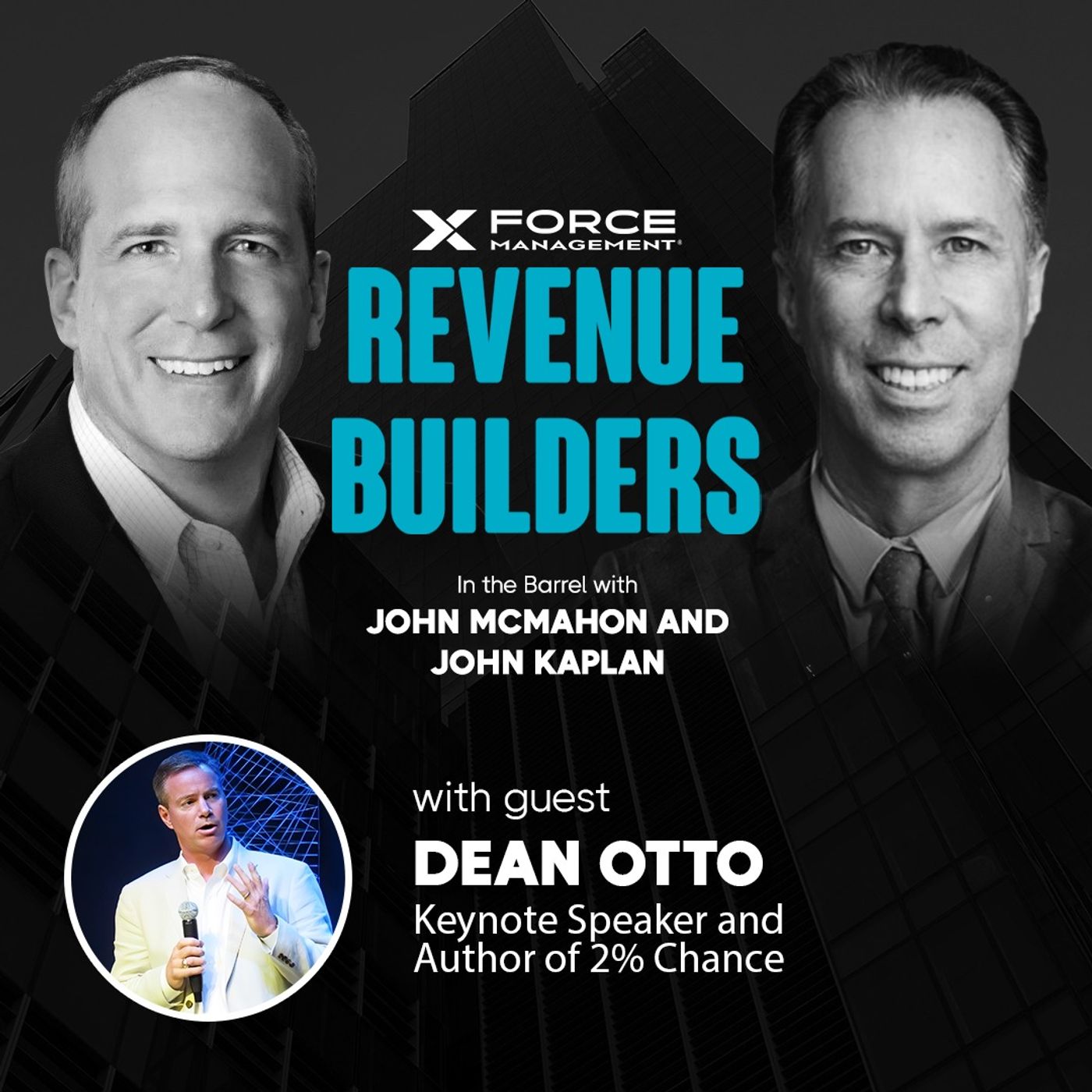
In crises, focus only on what's inside an imaginary "hula hoop" around you: your attitude and your actions. Surrender the outcome to external forces. This mental model, used by endurance athlete Dean Otto when paralyzed, prevents overwhelm and allows for clear-headed decision-making when stakes are highest.
When you are anxious about an outcome and try to force it, you energetically delay its arrival. The counter-intuitive strategy is to surrender and trust the process. Loosening your grip allows the desired result to manifest more quickly and easily.

Anxiety spikes when you mentally separate from your own capacity to handle future challenges. Instead of focusing on uncontrollable 'what ifs,' the antidote is to reconnect with your agency and ability to respond, regardless of the outcome. Doubling down on your capacity to handle things quiets the alarm.

To shift from anxiety to a peak performance state, use physical mechanisms. A specific technique involves scaled, intense breathing to oxygenate the brain and lower cortisol, followed by Qigong "cupping" to open the body's meridians. This provides a physiological lever for emotional regulation.
