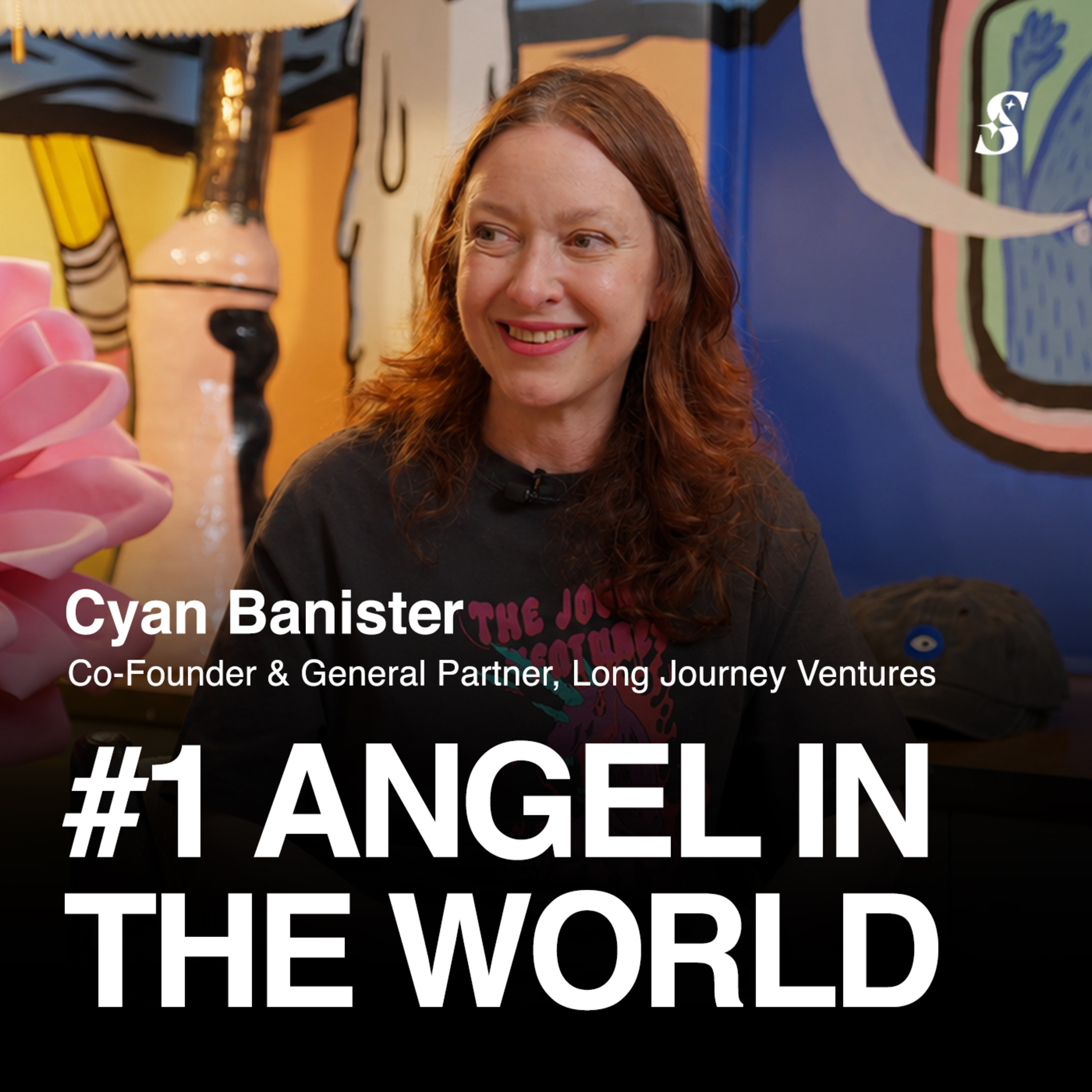
Based on PayPal Mafia member Luke Nosek's passionate plea, Banister invested all her liquidity from her Ironport sale into SpaceX during its early, failure-prone days. She viewed it as a high-conviction "YOLO" bet when others saw only failure.
Cyan Banister's firm uses a metaphor of two candles. The investor (the "second believer") lights their candle from the founder's initial spark and holds that flame, ready to re-ignite the founder's own if it goes out during tough times.
In the deception game "Mafia," Cyan Banister focuses on the "metagame" to identify liars: listening for rustling sounds, watching eye movements, and even noticing when the table physically moves. This strategy applies to any high-stakes business interaction.
Cyan Banister rejects excuses for behavior based on fixed traits (e.g., "I'm a Scorpio"). She argues you can surgically alter your personality through deep introspection, consciously closing the gap between your stated values and your actual actions.
The opportunity to invest in Pokémon Go creator Niantic came from Banister noticing the game "Ingress" in support tickets for her unrelated portfolio company, Hintwater. This revealed a hidden business connection, highlighting the power of peripheral awareness.
Cyan Banister's strategy avoids today's hot, competitive deals. The real alpha, she argues, comes from investing years earlier in the non-obvious infrastructure that will enable the *next* technology wave, securing lower prices and better ownership.
Long Journey's logo, a sheep's eye, challenges the "don't be a sheep" mantra. Cyan Banister argues that following a trusted leader, like using an iPhone, is a rational decision to outsource trust to an expert, not a sign of weakness.
Cyan Banister worries that centralized autonomous vehicle networks could be weaponized by a controlling state. A government could remotely shut down your car or even lock you inside, revoking the fundamental human right of free movement.
Cyan Banister gauges her home's design success by how many guests feel comfortable enough to touch and play with objects unprompted. This indicates she has created a truly welcoming, playful, and disarming environment that encourages interaction.
Borrowing from Peter Thiel, Cyan Banister prioritizes asking what worries someone over what excites them. This question cuts through performative optimism and reveals deeper strategic thinking, potential risks, and a founder's self-awareness.
Amidst AI-driven automation, Cyan Banister is skeptical about the value of traditional schooling for non-medical fields. She predicts a rise in artisanship and creativity, as these are uniquely human skills that AI cannot yet replicate authentically.
To solve the problem of teaching rules at game nights, Cyan Banister ran a paid club where she'd send the game in advance. This ensured everyone arrived ready to play immediately, eliminating a common source of social friction and wasted time.