Get your free personalized podcast brief
We scan new podcasts and send you the top 5 insights daily.
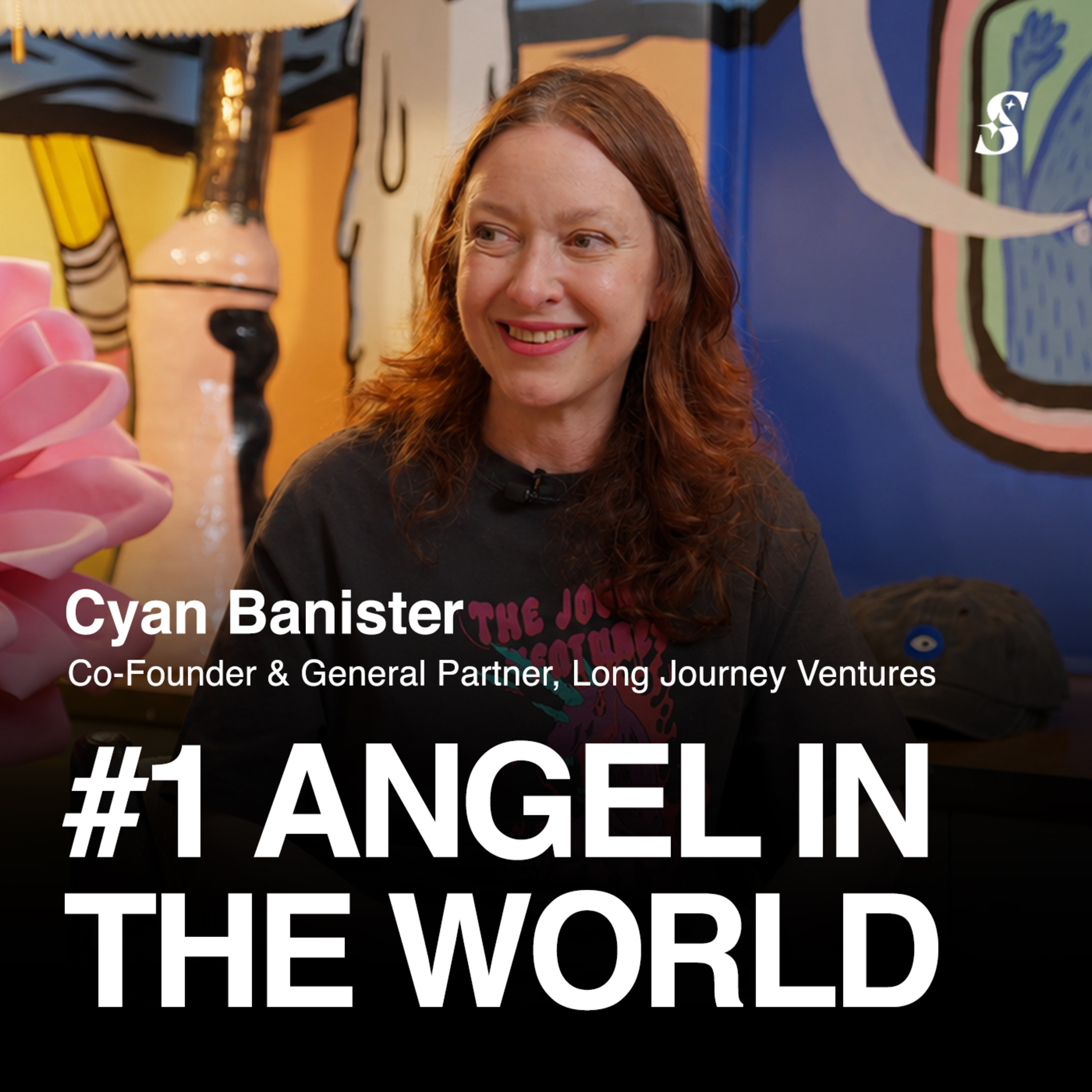
Cyan Banister worries that centralized autonomous vehicle networks could be weaponized by a controlling state. A government could remotely shut down your car or even lock you inside, revoking the fundamental human right of free movement.
Related Insights
The most pressing danger from AI isn't a hypothetical superintelligence but its use as a tool for societal control. The immediate risk is an Orwellian future where AI censors information, rewrites history for political agendas, and enables mass surveillance—a threat far more tangible than science fiction scenarios.

The most immediate danger of AI is its potential for governmental abuse. Concerns focus on embedding political ideology into models and porting social media's censorship apparatus to AI, enabling unprecedented surveillance and social control.

Public fear of AI often focuses on dystopian, "Terminator"-like scenarios. The more immediate and realistic threat is Orwellian: governments leveraging AI to surveil, censor, and embed subtle political biases into models to control public discourse and undermine freedom.

The vocabulary of AI safety and regulation (e.g., 'national security threats,' 'autonomy risk') is so ambiguous that a power-hungry government could easily abuse it. Any AI model that refuses government orders, such as for mass surveillance, could be labeled an 'autonomy risk' and shut down, creating a pre-built tool for despotism.

Despite their different philosophies, both Vitalik Buterin and Guillaume Verdon agree that the greatest immediate danger is the concentration of AI power. They argue that whether by a single AI or a dictatorial government, such centralization threatens human agency and is a risk that must be actively fought.

The car is transforming from a private sanctuary into a monitored space. Incidents like a Waymo vehicle reporting rule-breaking teens to police, combined with new EU laws mandating driver-facing cameras, signal a fundamental shift. The car is no longer a zone free from observation but is becoming a witness for safety and rule enforcement.

To truly stop "rogue AI," one would need to monitor every chip on the planet and use violence to stop unapproved computations. This path, advocated by some AI safety proponents, backs into a call for a totalitarian regime to put the technology "back in the box."
Advanced automation of military and police forces could reduce a totalitarian leader's dependence on human support, tightening their grip on power and enabling unprecedented levels of surveillance and control.

As powerful AI capabilities become widely available, they pose significant risks. This creates a difficult choice: risk societal instability or implement a degree of surveillance to monitor for misuse. The challenge is to build these systems with embedded civil liberties protections, avoiding a purely authoritarian model.

While making powerful AI open-source creates risks from rogue actors, it is preferable to centralized control by a single entity. Widespread access acts as a deterrent based on mutually assured destruction, preventing any one group from using AI as a tool for absolute power.
