Get your free personalized podcast brief
We scan new podcasts and send you the top 5 insights daily.
In underground robotics, creating a wider tunnel requires massive dirt excavation and removal, which is extremely costly. However, a small-diameter drone can travel for miles, carrying an almost infinite payload, by simply condensing dirt to its sides instead of removing it, making long, thin designs superior.

Related Insights
For surveillance, the key metric is "time on virtual scene." A drone with a powerful camera that can see a mile away doesn't need to physically fly to the location. This design philosophy allows the drone to get "eyes on" faster, conserve battery, and stay airborne longer.

The founder's core engineering philosophy is to reduce solutions to their most minimal form, like designing a rail system without gear teeth to avoid lubrication needs in a harsh environment. This 'deceptively simple' approach is crucial for building robust, low-maintenance hard tech that must last for decades.

In defense technology, smaller is often better. The ideal platform is the most compact one that can still perform its intended mission. This approach provides significant advantages in stealth, manufacturing cost, logistical footprint, and speed of proliferation.
For serious cargo delivery, tilt-rotor hybrid drones are more effective than simple quadcopters. They combine the convenience of vertical takeoff with the energy efficiency of fixed-wing flight, enabling longer ranges (60+ miles) and heavier payloads (40+ lbs).
The inefficiency of using a 4,000-pound gas vehicle for a 5-pound delivery ensures drone delivery will eventually be far cheaper. This physics-based argument underpins the entire business model's long-term economic viability.
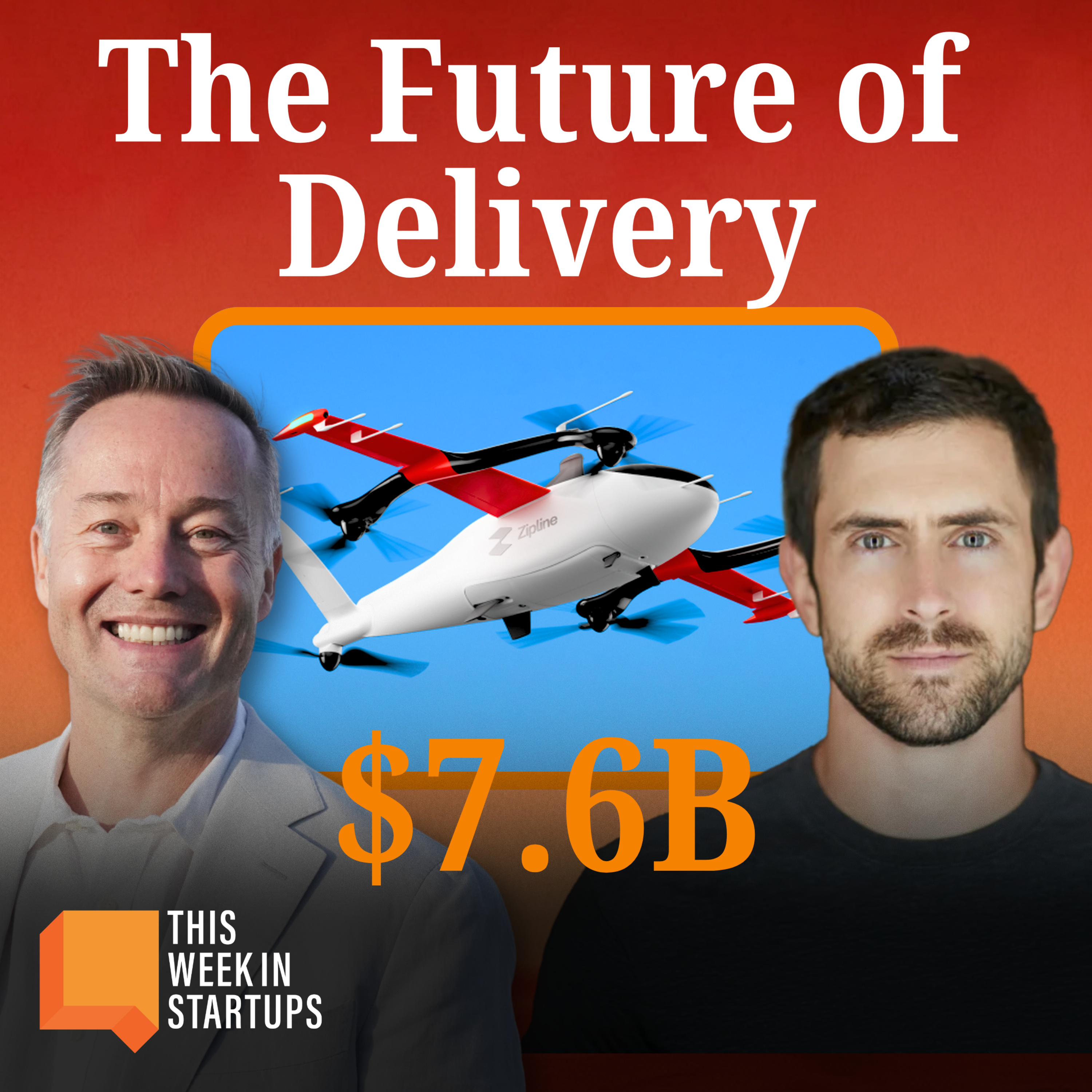
Zipline's CEO argues from first principles that current delivery logistics are absurdly inefficient. Replacing a human-driven, gas-powered car with a small, autonomous electric drone is not just an incremental improvement but a fundamental paradigm shift dictated by physics.

Zipline's 50% cost reduction for its next-gen aircraft wasn't just from supply chain optimization. The primary driver was a design philosophy focused on eliminating components entirely ("the best part is no part"), which also improves reliability.

Designing small drones is counter-intuitively harder than larger aircraft because engineers cannot simply add weight—like a larger heat sink—to solve physical constraints like thermals or vibrations. Every component must be optimized to the absolute limits of physics, making miniaturization an extreme engineering game.

To overcome the limitations of wheeled rovers getting stuck, future exploration robots may be inspired by plant growth. Instead of moving through space, they will 'grow' through it, extending structures from one point to another. This approach allows for traversing difficult terrain and creating a distributed information network.

Cuban argues building humanoid robots is wasteful because our world is designed for human limitations. True innovation lies in redesigning spaces (homes, factories) for more optimal, non-humanoid robots, like spider drones, that can perform tasks more efficiently.