Get your free personalized podcast brief
We scan new podcasts and send you the top 5 insights daily.
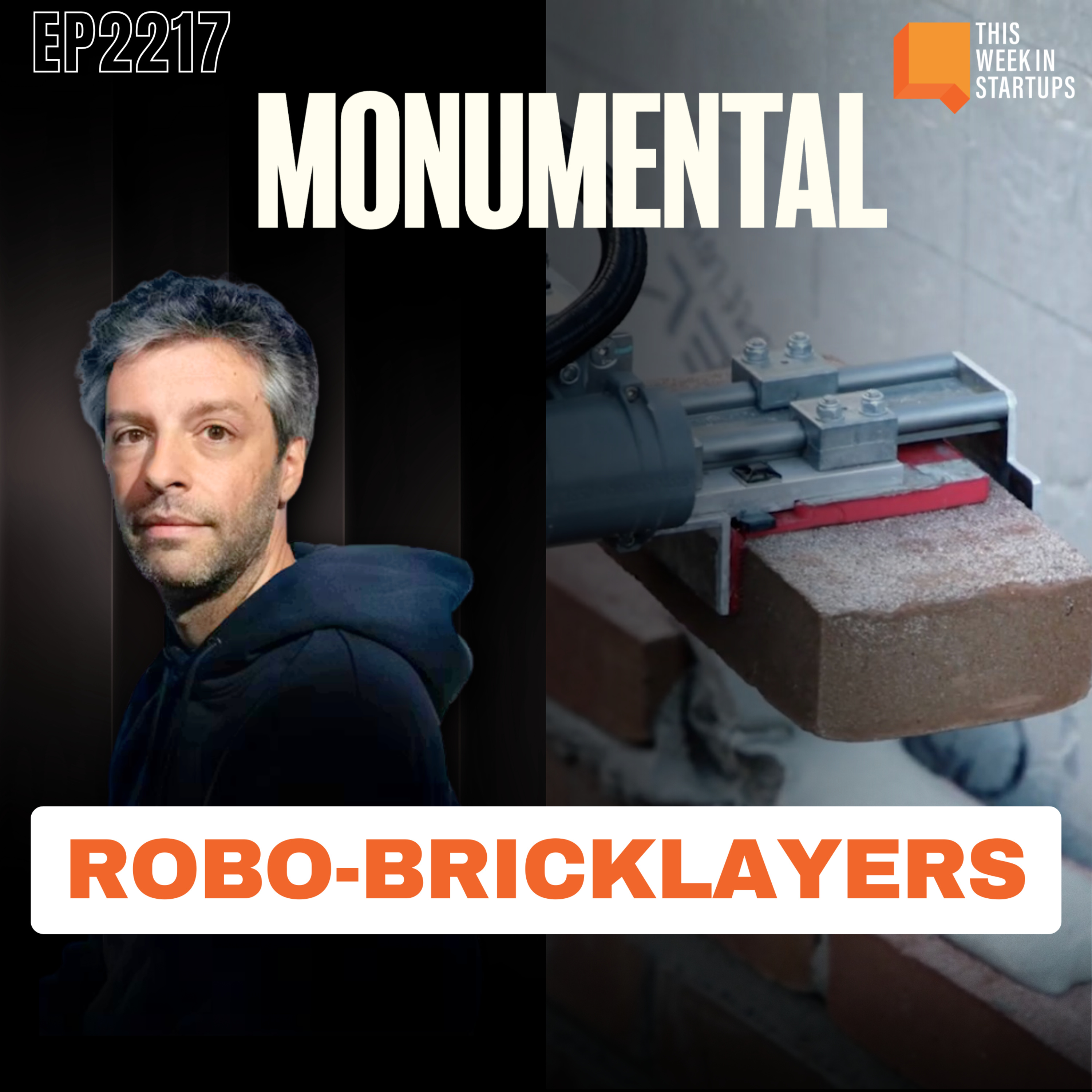
The founder's core engineering philosophy is to reduce solutions to their most minimal form, like designing a rail system without gear teeth to avoid lubrication needs in a harsh environment. This 'deceptively simple' approach is crucial for building robust, low-maintenance hard tech that must last for decades.

Related Insights
Build products on simple, foundational concepts rather than complex, rigid features. These core building blocks can then be combined and layered, leading to emergent complexity that allows the product to scale and serve diverse needs without being overwhelming by default.

Design for Excellence goes beyond just manufacturing costs. Consider the entire product lifecycle, including serviceability. A design that's easy to assemble but difficult to service in the field (like using a blind screw on a replaceable part) increases the total cost of ownership and harms the customer experience.

Mirror founder Bryn Putnam claims her non-technical background was an asset in hardware. It enforced strict discipline to a core customer vision, preventing the common trap of feature creep and over-engineering that technical founders can fall into because they *can* build more.
The core innovation for the Cobra OS wasn't a complex discovery but the disciplined application of a known principle: miniaturizing endovascular devices always makes them safer. By focusing on shrinking the device, they inherently improved safety by reducing the size of the arterial access site.

For high-capital, long-lifespan projects like energy storage, leveraging proven, simple technologies is superior to complex, novel solutions. This approach ensures robustness and hits low economic targets, which is more critical than creating 'fancy' factory-built tech for this specific application.
In defense technology, smaller is often better. The ideal platform is the most compact one that can still perform its intended mission. This approach provides significant advantages in stealth, manufacturing cost, logistical footprint, and speed of proliferation.
Unlike software, hardware iteration is slow and costly. A better approach is to resist building immediately and instead spend the majority of time on deep problem discovery. This allows you to "one-shot" a much better first version, minimizing wasted cycles on flawed prototypes.

The simplicity of the Limitless pendant isn't just a design choice; it's the outcome of intense customer focus. This helps avoid the 'ivory tower' trap where smart teams build complex products in isolation—a likely cause for competitors' failures. Prioritizing user feedback is key to building something that matters.

Designers should consider the human operators and machines that will assemble their product. By making choices that simplify manufacturing—providing clear instructions and avoiding known difficulties—the process becomes smoother and more efficient, akin to 'riding a bike downhill.'
Zipline's 50% cost reduction for its next-gen aircraft wasn't just from supply chain optimization. The primary driver was a design philosophy focused on eliminating components entirely ("the best part is no part"), which also improves reliability.
