Get your free personalized podcast brief
We scan new podcasts and send you the top 5 insights daily.
According to George Hotz, AI isn't a magical disruptor but a continuation of exponential progress. The real threat isn't to creators but to 'rent-seekers'—those in roles that create unnecessary complexity. AI will expose and automate these jobs, which are zero-sum by nature.

Related Insights
Beyond displacing current workers, AI will lead to hiring "abatement," where companies proactively eliminate roles from their hiring plans altogether. This is a subtle but profound workforce shift, as entire job categories may vanish from the market before employees can be retrained.

The fear of mass job replacement by AI is based on a flawed premise. Jobs are not single entities but collections of diverse tasks. AI can automate some tasks but can fully automate very few entire occupations (under 4% in one study), leading to a reshaping of work, not widespread elimination.

The immediate threat in the job market isn't autonomous AI but competitors who master AI tools to become more effective. Career survival and advancement depend not on fearing AI, but on becoming the most proficient user of it in your field to augment your skills and output.

The true disruption from AI is not a single bot replacing a single worker. It's the immense leverage granted to individuals who can deploy thousands of autonomous AI agents. This creates a massive multiplication of productivity and economic power for a select few, fundamentally altering labor market dynamics from one-to-one replacement to one-to-many amplification.
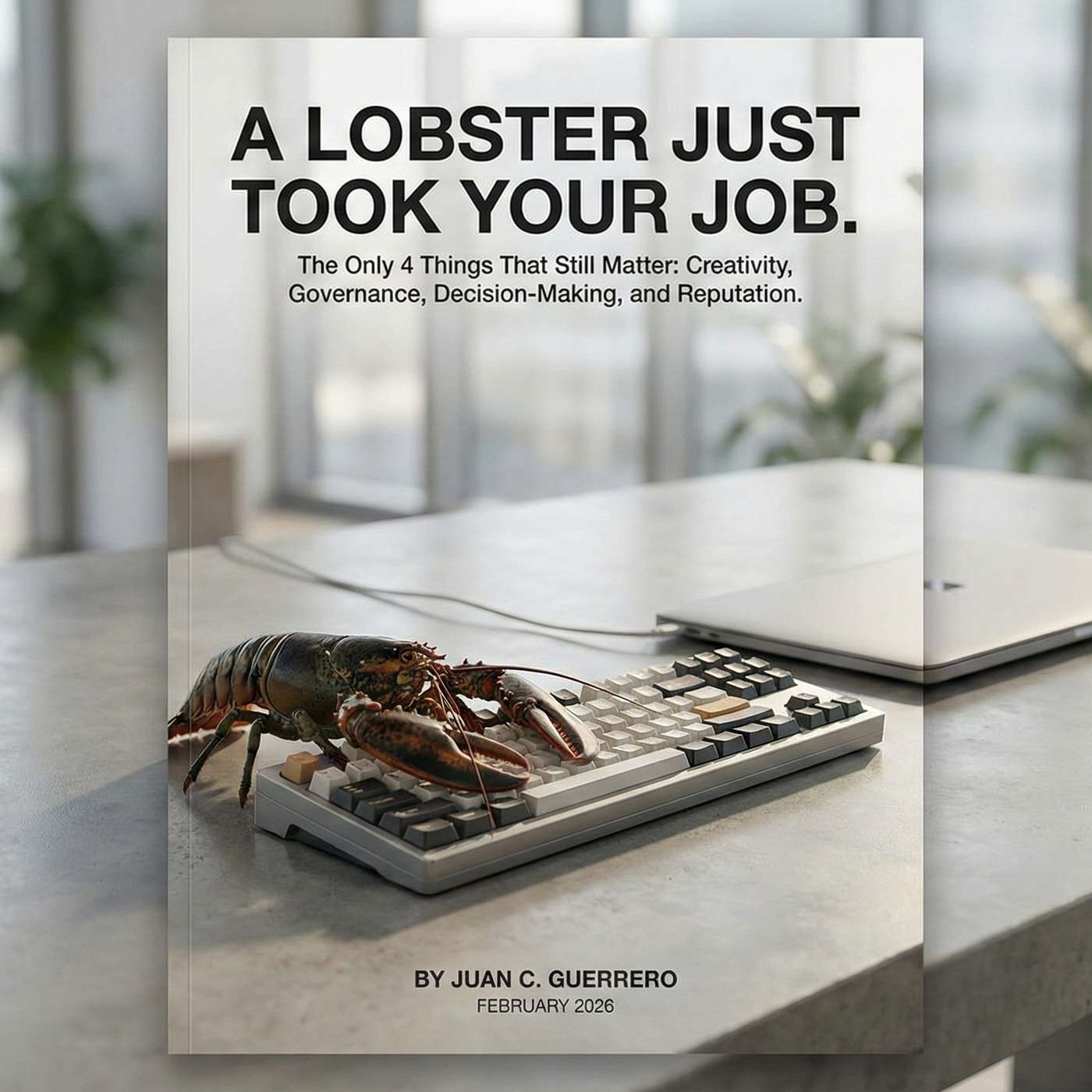
The narrative of AI replacing jobs is misleading. The real threat is competitive displacement. Professionals will be put out of business not by AI itself, but by more agile competitors who master AI tools to become faster, smarter, and more efficient.

While AI may not cause mass unemployment, its greatest danger lies in automating the routine entry-level tasks that new workers rely on to build skills. This could disrupt traditional career ladders and create a long-term talent development crisis for organizations.
The narrative "AI will take your job" is misleading. The reality is companies will replace employees who refuse to adopt AI with those who can leverage it for massive productivity gains. Non-adoption is a career-limiting choice.
Capitalism values scarcity. AI's core disruption is not just automating tasks, but making human-like intellectual labor so abundant that its market value approaches zero. This breaks the fundamental economic loop of trading scarce labor for wages.

Dan Siroker predicts AI will handle the tedious 50% of knowledge work, not eliminate jobs entirely. This allows humans to focus on tasks that provide purpose, passion, and energy. The goal is augmentation, freeing people from drudgery to focus on high-impact, meaningful work.

The primary threat of AI in the workforce isn't autonomous systems replacing people. Instead, it's the competitive displacement where individuals who master AI tools will vastly outperform and consequently replace their peers who fail to adapt to the new technology.
