Get your free personalized podcast brief
We scan new podcasts and send you the top 5 insights daily.
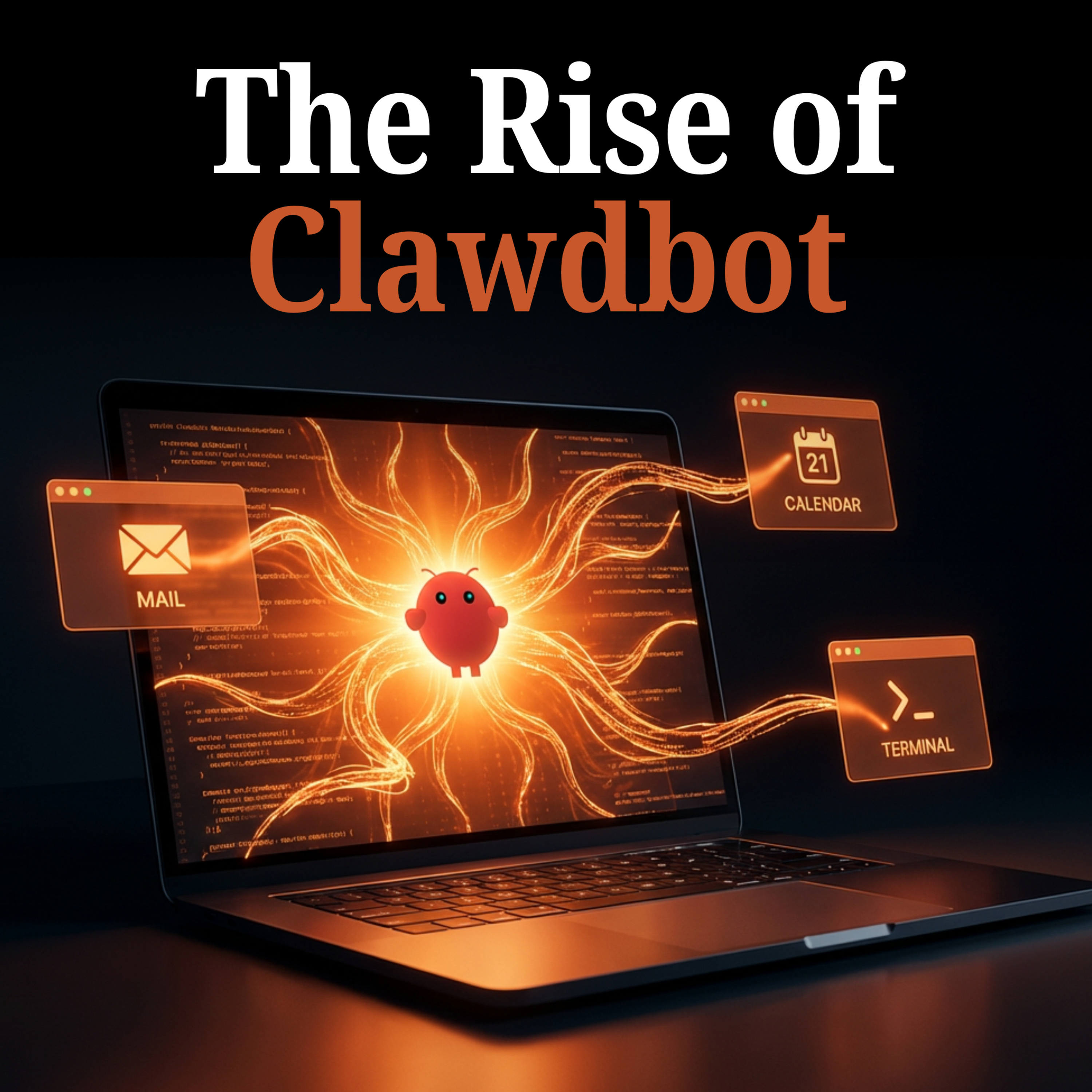
Clawdbot can autonomously identify market trends (like X's new article feature), propose new product features, and even write the code for them, acting more like a chief of staff than a simple task-doer.
Related Insights
Platforms like Nebula allow founders to move beyond simple automation. By providing a high-level directive and connecting services, AI agents can run entire business functions, like a content blog that researches, writes, and publishes daily with minimal human intervention.

The primary interface for AI is shifting from a prompt box to a proactive system. Future applications will observe user behavior, anticipate needs, and suggest actions for approval, mirroring the initiative of a high-agency employee rather than waiting for commands.

Pushing the boundaries of autonomy, an engineer on the Goose team has their agent monitor all their communications. The agent then intervenes, proactively developing new features that were merely discussed with colleagues and opening a pull request without being prompted.

Early AI adoption focused on idea generation and copy help. The next wave involves autonomous AI agents that execute tasks like creating webpages, optimizing campaigns, and auto-building reports, moving AI from a thought-partner to an active tool that 'does' the work.

Instead of integrating with existing SaaS tools, AI agents can be instructed on a high-level goal (e.g., 'track my relationships'). The agent can then determine the need for a CRM, write the code for it, and deploy it itself.
The era of prompt engineering is ending. The future is proactive AI agents working in the background to surface critical information. These agents will automatically monitor for and alert teams to competitor launches, new patent filings, and regulatory changes, shifting from a manual 'pull' to an automated 'push' model of intelligence.

The current chatbot model of asking a question and getting an answer is a transitional phase. The next evolution is proactive AI assistants that understand your environment and goals, anticipating needs and taking action without explicit commands, like reminding you of a task at the opportune moment.

The paradigm shift with AI agents is from "tools to click buttons in" (like CRMs) to autonomous systems that work for you in the background. This is a new form of productivity, akin to delegating tasks to a team member rather than just using a better tool yourself.
The "Claudebot" system represents a new paradigm where users run a persistent, open-source AI agent on their own local hardware. The agent's key feature is its ability to self-improve by writing new skills on command, effectively becoming a 24/7 digital employee that continually expands its capabilities.

Anthropic's upcoming 'Agent Mode' for Claude moves beyond simple text prompts to a structured interface for delegating and monitoring tasks like research, analysis, and coding. This productizes common workflows, representing a major evolution from conversational AI to autonomous, goal-oriented agents, simplifying complex user needs.