Get your free personalized podcast brief
We scan new podcasts and send you the top 5 insights daily.
The era of prompt engineering is ending. The future is proactive AI agents working in the background to surface critical information. These agents will automatically monitor for and alert teams to competitor launches, new patent filings, and regulatory changes, shifting from a manual 'pull' to an automated 'push' model of intelligence.

Related Insights
The most significant productivity gains come from applying AI to every stage of development, including research, planning, product marketing, and status updates. Limiting AI to just code generation misses the larger opportunity to automate the entire engineering process.

As AI evolves from single-task tools to autonomous agents, the human role transforms. Instead of simply using AI, professionals will need to manage and oversee multiple AI agents, ensuring their actions are safe, ethical, and aligned with business goals, acting as a critical control layer.

Organizations must urgently develop policies for AI agents, which take action on a user's behalf. This is not a future problem. Agents are already being integrated into common business tools like ChatGPT, Microsoft Copilot, and Salesforce, creating new risks that existing generative AI policies do not cover.

Instead of focusing on foundational models, software engineers should target the creation of AI "agents." These are automated workflows designed to handle specific, repetitive business chores within departments like customer support, sales, or HR. This is where companies see immediate value and are willing to invest.

The primary interface for AI is shifting from a prompt box to a proactive system. Future applications will observe user behavior, anticipate needs, and suggest actions for approval, mirroring the initiative of a high-agency employee rather than waiting for commands.

The next phase of AI will involve autonomous agents communicating and transacting with each other online. This requires a strategic shift in marketing, sales, and e-commerce away from purely human-centric interaction models toward agent-to-agent commerce.
The future of software isn't just AI-powered features. It's a fundamental shift from tools that assist humans to autonomous agents that perform tasks. Human roles will evolve from *doing* the work to *orchestrating* thousands of these agents.
AI is transforming Product Portfolio Management (PPM) from a function reliant on periodic, presentation-heavy reviews into a real-time intelligence capability. Leaders can move beyond quarterly business reviews and use AI to query portfolio status, surface risks, and gain continuous visibility, enabling proactive decision-making.
The paradigm shift with AI agents is from "tools to click buttons in" (like CRMs) to autonomous systems that work for you in the background. This is a new form of productivity, akin to delegating tasks to a team member rather than just using a better tool yourself.
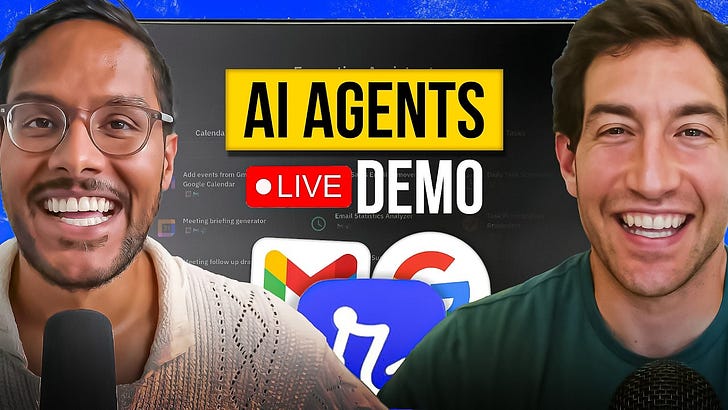
Anthropic's upcoming 'Agent Mode' for Claude moves beyond simple text prompts to a structured interface for delegating and monitoring tasks like research, analysis, and coding. This productizes common workflows, representing a major evolution from conversational AI to autonomous, goal-oriented agents, simplifying complex user needs.
