Get your free personalized podcast brief
We scan new podcasts and send you the top 5 insights daily.
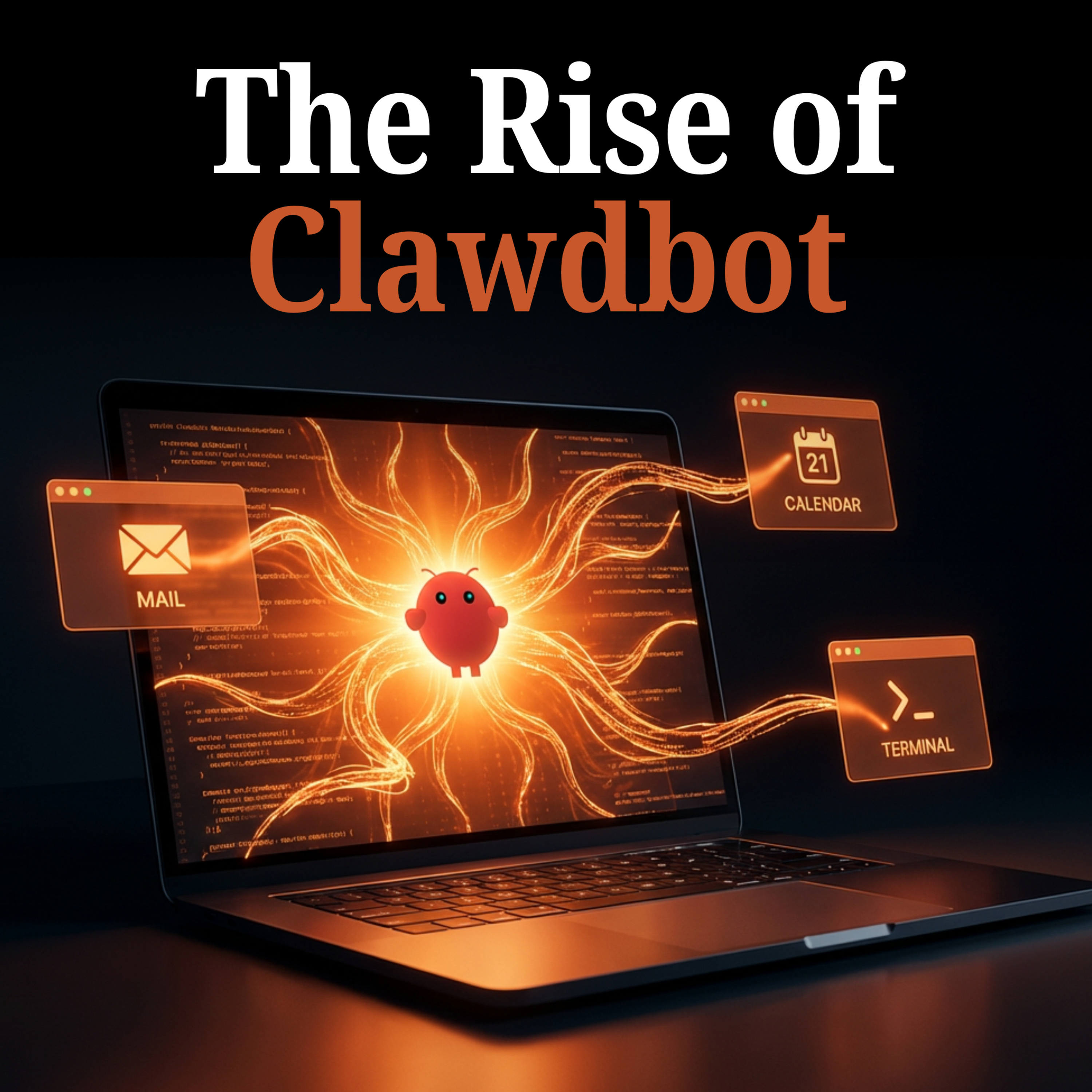
Instead of integrating with existing SaaS tools, AI agents can be instructed on a high-level goal (e.g., 'track my relationships'). The agent can then determine the need for a CRM, write the code for it, and deploy it itself.
Related Insights
Block's AI agent, Goose, has an accessible UI that allows non-technical employees in roles like sales and finance to build their own software dashboards and tools. This democratizes software creation within the enterprise, turning domain experts into citizen developers.

Modern AI coding agents allow non-technical and technical users alike to rapidly translate business problems into functional software. This shift means the primary question is no longer 'What tool can I use?' but 'Can I build a custom solution for this right now?' This dramatically shortens the cycle from idea to execution for everyone.

Unlike tools like Zapier where users manually construct logic, advanced AI agent platforms allow users to simply state their goal in natural language. The agent then autonomously determines the steps, writes necessary code, and executes the task, abstracting away the workflow.

Instead of pre-engineering tool integrations, Block lets its AI agent Goose learn by doing. Successful user-driven workflows can be saved as shareable "recipes," allowing emergent capabilities to be captured and scaled. They found the agent is more capable this way than if they tried to make tools "Goose-friendly."
For decades, buying generalized SaaS was more efficient than building custom software. AI coding agents reverse this. Now, companies can build hyper-specific, more effective tools internally for less cost than a bloated SaaS subscription, because they only need to solve their unique problem.

The true advantage of AI coding tools like Claude Code is not just task automation, but the ability for non-engineers to build a suite of personal, custom applications. This "personal software" is the ultimate unlock for scaling a marketer's unique craft and workflows.

The primary value of AI app builders isn't just for MVPs, but for creating disposable, single-purpose internal tools. For example, automatically generating personalized client summary decks from intake forms, replacing the need for a full-time employee.

A new software paradigm, "agent-native architecture," treats AI as a core component, not an add-on. This progresses in levels: the agent can do any UI action, trigger any backend code, and finally, perform any developer task like writing and deploying new code, enabling user-driven app customization.

Legacy systems like CRMs will lose their central role. A new, dynamic 'agent layer' will sit above them, interpreting user intent and executing tasks across multiple tools. This layer, which collapses the distance between intent and action, will become the primary place where work gets done.

Traditionally, building software required deep knowledge of many complex layers and team handoffs. AI agents change this paradigm. A creator can now provide a vague idea and receive a 60-70% complete, working artifact, dramatically shortening the iteration cycle from months to minutes and bypassing initial complexities.