Get your free personalized podcast brief
We scan new podcasts and send you the top 5 insights daily.
Contrary to public perception, Israeli and Palestinian Authority security leadership work together effectively. This cooperation targets common threats like Hamas and extremist Israeli settlers, but it remains unpublicized to avoid backlash from their respective populations.

Related Insights
The Israeli withdrawal from Gaza, without Hamas being disarmed or an international force in place, creates a space for violent clashes. Hamas, armed gangs, and powerful clans are already competing for control, illustrating a critical risk in phased peace plans where security is not transferred seamlessly.

Israeli PM Netanyahu's acceptance of the peace plan is a study in contradiction. While publicly endorsing the deal, he immediately rejected a key component: a role for the Palestinian Authority in post-war Gaza. This tactic creates 'wiggle room' and signals a lack of genuine buy-in, challenging the deal's future.
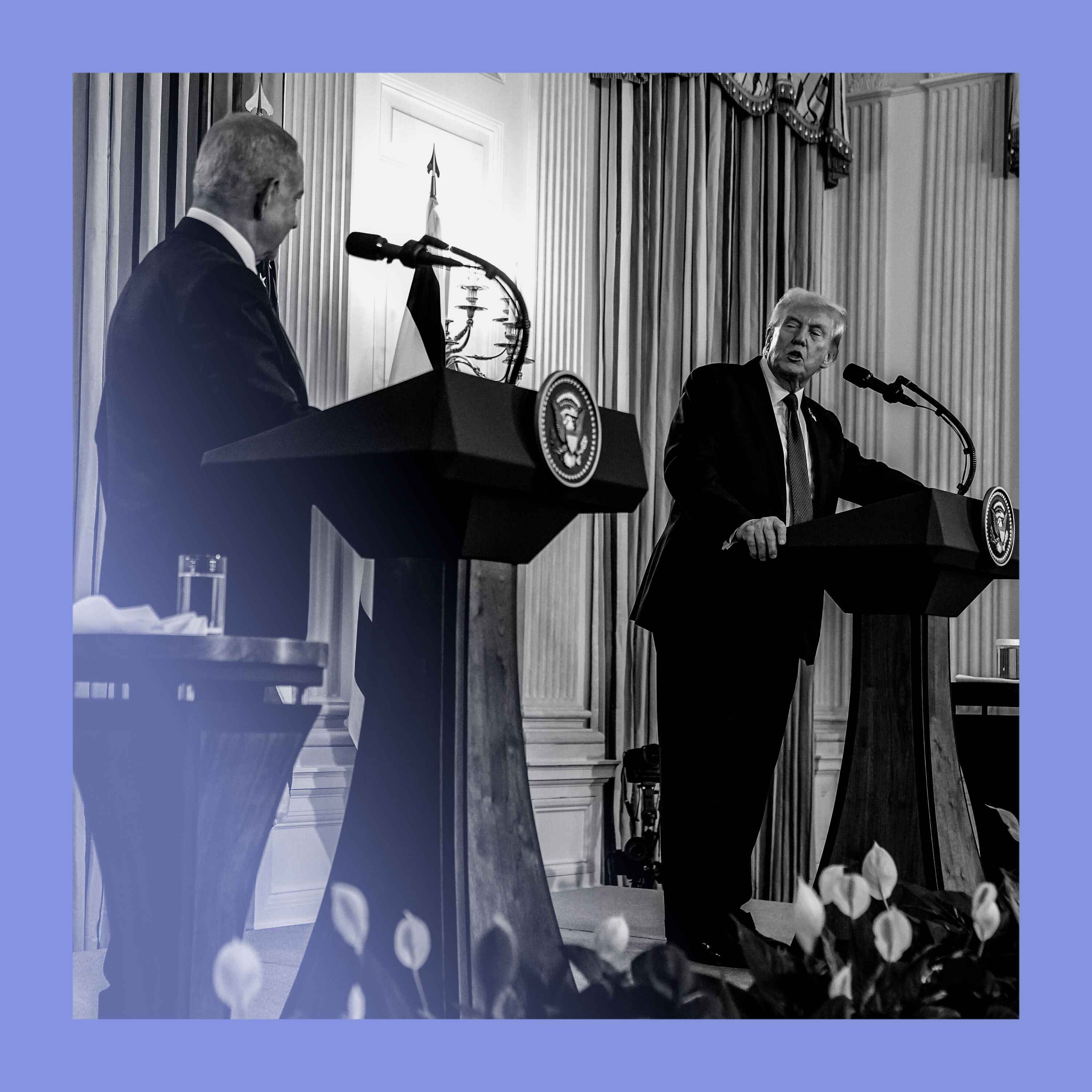
Contrary to his hawkish reputation, Benjamin Netanyahu is deliberately lowering Israel's profile regarding Iran's internal protests. This strategic silence aims to prevent the embattled Iranian regime from feeling cornered and launching a preemptive attack out of paranoia.

For deep-seated issues like the Israeli-Palestinian conflict, pursuing a grand final solution is often counterproductive. A better approach is to "shrink the conflict" through practical, tangible steps like building transportation corridors, which can reduce friction and build momentum for an eventual resolution.
The proposed peace deal’s elements have been discussed for months. The breakthrough isn't the plan itself, but President Trump's willingness to strong-arm Israeli Prime Minister Netanyahu into agreement, a tactic previously avoided by both Trump and his predecessor Joe Biden.
Viewing the conflict as two rational sides in a misunderstanding is flawed. Both sides see the other as an existential threat and are willing to use extreme violence to achieve their goals. This reframes the narrative from a political dispute to a primal, violent tribal conflict where both sides see themselves as righteous.

The viability of a two-state solution depends entirely on the nature of the new Palestinian government. A state cannot achieve stability if it is run by a terrorist organization like Hamas. The international community's push for statehood is meaningless without addressing the internal governance that perpetuates violence.

The breakthrough was achieved by splitting the agreement into phases. The initial, easier phase focuses on hostage release and partial withdrawal. The most contentious issues, like post-war governance and Hamas's disarmament, were intentionally postponed, creating both immediate success and future risk.

The 20-point plan calls for an international force to disarm Hamas. However, a negotiator revealed that no country has actually committed troops to this force. This critical gap in implementation threatens the entire long-term viability of the deal, as it is unclear who would enforce disarmament.
The Israelis bought a pager company, convinced Hezbollah to order from them, and inserted explosives into the devices. After routing the pagers through multiple countries, they activated all explosives simultaneously, wiping out Hezbollah's leadership in a single, coordinated supply-chain attack.
