Get your free personalized podcast brief
We scan new podcasts and send you the top 5 insights daily.
Moritz notes that venture investing requires deciding on unfamiliar founders and new sectors without ever having complete information. While investors with engineering backgrounds often struggle because they yearn for missing data, comfortable decision-making under imperfection is essential.

Related Insights
Moritz argues his journalism background was excellent training for 1980s venture capital. In the pre-internet era, the primary challenge was dealing with imperfect information, not technical complexity. A journalist's ability to uncover and synthesize information from limited sources was more valuable than an engineering degree, a dynamic that has since inverted.

A common mistake in venture capital is investing too early based on founder pedigree or gut feel, which is akin to 'shooting in the dark'. A more disciplined private equity approach waits for companies to establish repeatable, business-driven key performance metrics before committing capital, reducing portfolio variance.

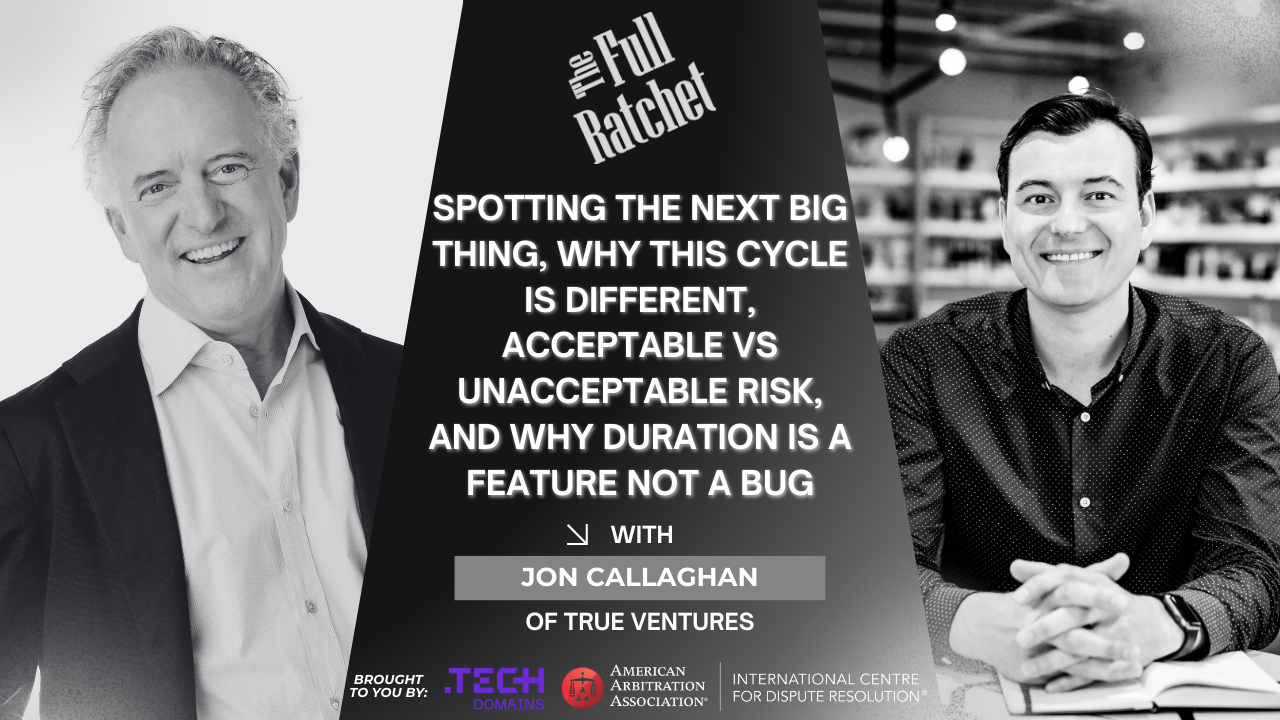
In VC, where being wrong is the norm (80%+ of the time), the most critical trait is not righteousness but deep curiosity. This learning-first mindset is what uncovers non-obvious opportunities and allows investors to see future market shifts before they become mainstream, according to True Ventures' Jon Callaghan.
Entrepreneurship is defined by making decisions with incomplete information. Most choices should be directional, reasoned from first principles. Only irreversible, "one-way door" decisions justify delaying action for more data collection, as you will never have complete data.

Moving from science to investing requires a critical mindset shift. Science seeks objective, repeatable truths, while investing involves making judgments about an unknowable future. Successful investors must use quantitative models as guides for judgment, not as sources of definitive answers.

The common trope of the risk-loving founder is a myth. A more accurate trait is a high tolerance for ambiguity and the ability to make decisions with incomplete information. This is about managing uncertainty strategically, not consistently making high-stakes bets that endanger the entire enterprise.

In fast-moving sectors, the investable options can seem to improve every few days, creating a dilemma for VCs: invest now or wait for a better team? The solution is to assume dozens of teams are working on any rational idea and focus on choosing the best one you can find now, rather than waiting indefinitely.

As an operator, the goal is to reduce variables and create predictable systems. Agarwal explains that applying this mindset as an early-stage investor is detrimental, as it leads to rejecting messy but high-potential opportunities. Investing requires embracing uncertainty and focusing on founder talent.

Venture investing is defined not by being an expert operator, but by a continuous process: study a space, place bets, accept losses, learn from the outcomes, and place more informed bets. Active participation in the market, with real capital at risk, is the primary mechanism for learning and developing a thesis.

In early-stage investing, where information is scarce and risk is high, selfishness and greed are not vices but necessary virtues. These traits drive investors to make tough decisions, scrutinize deals based on price, and maintain a sharp focus on maximizing returns in a power-law driven market.