Get your free personalized podcast brief
We scan new podcasts and send you the top 5 insights daily.
Zipline faced a classic AI cold-start problem: it needed real-world flight data for its autonomous drones but couldn't get it in restrictive US airspace. Their solution was to operate in Africa providing life-saving medical deliveries, creating a massive, real-world training ground and a powerful social good before launching in the US.

Related Insights
Companies like One X deploy robots that are remotely operated by humans to complete tasks. This strategy provides immediate value to customers while simultaneously collecting vast amounts of real-world training data, which is the primary bottleneck for developing full autonomy.

By launching in Rwanda, Zipline was forced to engineer its drones for some of the world's most volatile weather. This real-world hardening created a more robust system and provided invaluable safety data that proved critical for gaining regulatory trust and expanding into the U.S. market.

The primary challenge in robotics AI is the lack of real-world training data. To solve this, models are bootstrapped using a combination of learning from human lifestyle videos and extensive simulation environments. This creates a foundational model capable of initial deployment, which then generates a real-world data flywheel.

To overcome US regulations banning autonomous flight, Zipline found a life-saving use case (blood delivery) so critical that a foreign government would create a legal framework, allowing them to scale and prove their technology.
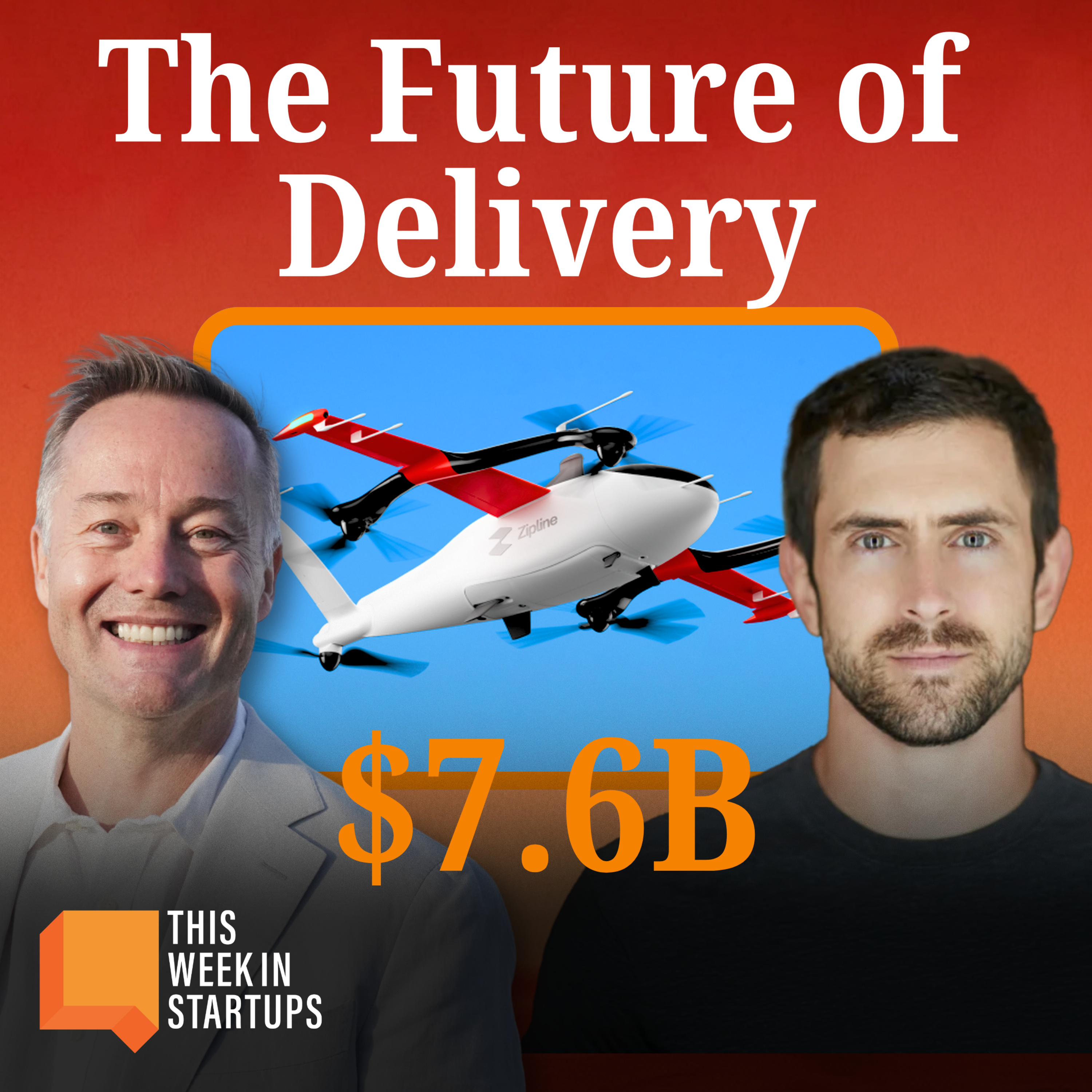
The founders initially focused on building the autonomous aircraft. They soon realized the vehicle was only 15% of the problem's complexity. The real challenge was creating the entire logistics ecosystem around it, from inventory and fulfillment software to new procedures for rural hospitals.
Hardware founders often fixate on the core device. Zipline learned the hard way that their aircraft was only 15% of the total system complexity. The truly difficult challenges lay in the surrounding logistics: inventory management, cold chain, maintenance, air traffic control, and ground infrastructure.

Zipline's CEO Keller Rinaudo Cliffton reveals their service's profound public health impact. By providing rapid, on-demand delivery of blood transfusions to remote hospitals, the autonomous system directly addressed a leading cause of maternal death, proving robotics can solve critical global issues.

Zipline's original product was a robotics platform that failed to gain traction. Their 'Capital P Pivot' was to medical drone delivery, starting in Rwanda due to US regulations. The strategy was to build a strong safety record abroad to eventually earn the right to operate in the US.

Zipline overcame US regulatory hurdles by launching in Rwanda, where the government's desperate need for emergency blood delivery made them willing to partner with an unproven startup. This highlights finding customers whose pain is so acute they'll accept an MVP and take risks.

Strict US FAA rules on beyond-visual-line-of-sight operations force autonomous drone companies to deploy commercially in countries like Brazil and Rwanda, which have more permissive regulatory environments to gather data.