Get your free personalized podcast brief
We scan new podcasts and send you the top 5 insights daily.
Zipline overcame US regulatory hurdles by launching in Rwanda, where the government's desperate need for emergency blood delivery made them willing to partner with an unproven startup. This highlights finding customers whose pain is so acute they'll accept an MVP and take risks.

Related Insights
By launching in Rwanda, Zipline was forced to engineer its drones for some of the world's most volatile weather. This real-world hardening created a more robust system and provided invaluable safety data that proved critical for gaining regulatory trust and expanding into the U.S. market.

Zipline initially planned to deliver all medical products. Rwanda's Minister of Health demanded they "just do blood," a product with acute logistical challenges. This customer-enforced focus on a single, high-stakes problem was critical to their initial market validation and success.
To overcome US regulations banning autonomous flight, Zipline found a life-saving use case (blood delivery) so critical that a foreign government would create a legal framework, allowing them to scale and prove their technology.

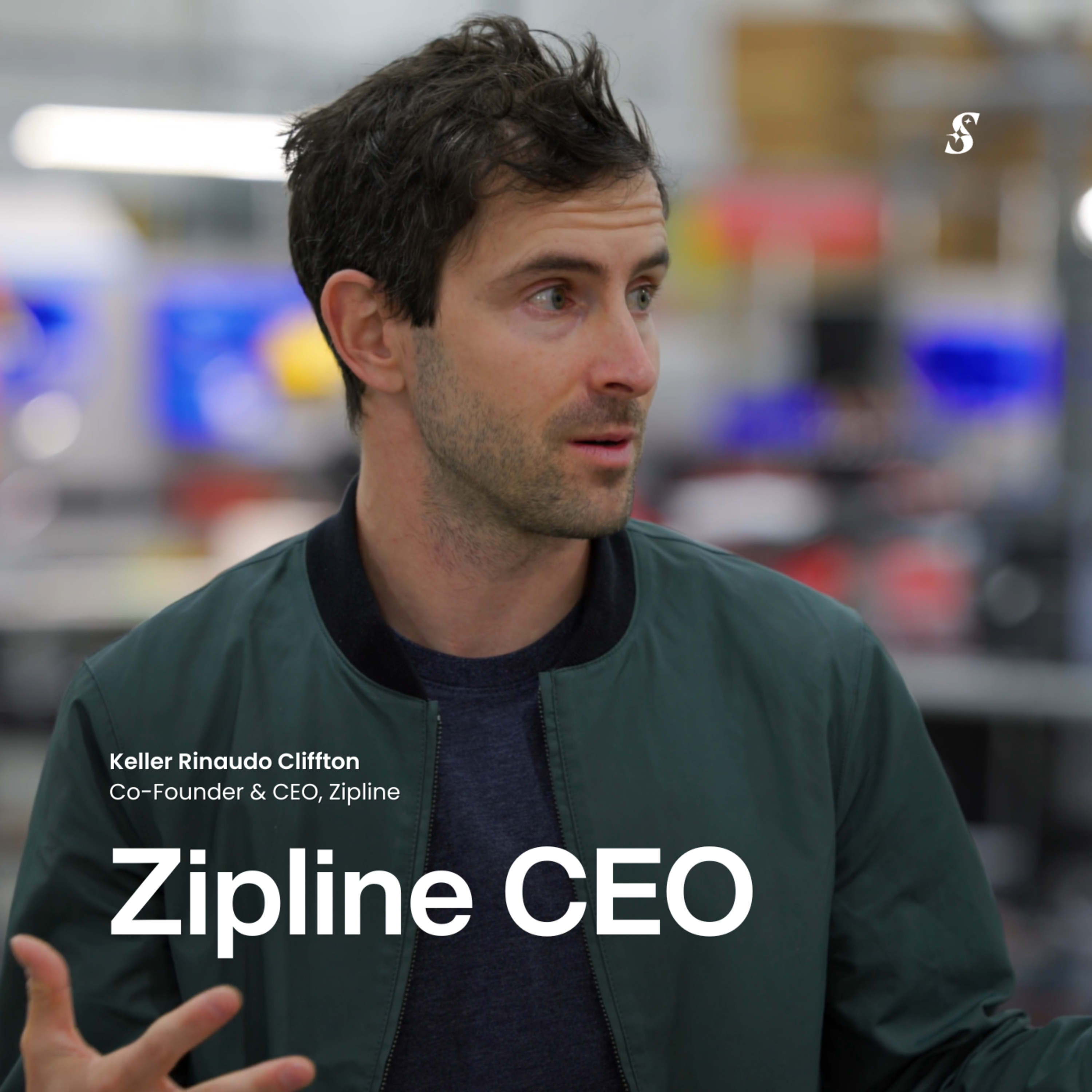
CEO Keller Rinaudo Cliffton explains that developing nations can be superior markets for launching disruptive tech. Rwanda's regulatory agility and hunger to adopt new paradigms allowed Zipline to deploy and prove its technology faster than would have been possible in the U.S.

Zipline's CEO Keller Rinaudo Cliffton reveals their service's profound public health impact. By providing rapid, on-demand delivery of blood transfusions to remote hospitals, the autonomous system directly addressed a leading cause of maternal death, proving robotics can solve critical global issues.
When domestic regulations make a business model illegal, founders can launch in a more favorable foreign country. By partnering with governments there and gathering extensive operational data (e.g., 100M miles with no incidents), they can return to their home market with the credibility needed to gain regulatory approval.
To convince a country to allow its illegal drone operations, Zipline framed the problem in the starkest terms: delivering life-saving blood. The argument was that if a delivery *doesn't* happen, a person will die. This created a powerful moral imperative for regulators to grant an exception.

Zipline's original product was a robotics platform that failed to gain traction. Their 'Capital P Pivot' was to medical drone delivery, starting in Rwanda due to US regulations. The strategy was to build a strong safety record abroad to eventually earn the right to operate in the US.

For years, global health experts told Zipline their idea was stupid and would fail. The breakthrough came from listening to a customer—Rwanda's Minister of Health—who gave them a single, critical problem to solve: "Just do blood." This narrow focus was the key to proving their value against broad expert dismissal.
When Zipline pitched a broad logistics vision, the Rwandan Minister of Health told them to "shut up" and focus only on delivering blood. This shows that founders should listen intently to customers, as they can provide the crucial focus needed to solve the most painful problem first.