Get your free personalized podcast brief
We scan new podcasts and send you the top 5 insights daily.
Hardware founders often fixate on the core device. Zipline learned the hard way that their aircraft was only 15% of the total system complexity. The truly difficult challenges lay in the surrounding logistics: inventory management, cold chain, maintenance, air traffic control, and ground infrastructure.

Related Insights
A drone's dock is a complex engineering challenge, functioning as a commercial-grade HVAC system. It must keep the lithium-ion batteries within their optimal temperature range—whether it's snowing or scorching hot—to ensure the drone is always ready for dispatch.

Many hardware companies burn cash building "cool" tech in isolation, assuming use cases will follow. Zipline avoided this by launching the simplest possible paid product within a year. This forced them to learn and iterate based on real-world customer needs and operational challenges, not internal metrics.
The founders initially focused on building the autonomous aircraft. They soon realized the vehicle was only 15% of the problem's complexity. The real challenge was creating the entire logistics ecosystem around it, from inventory and fulfillment software to new procedures for rural hospitals.
Zipline's CEO reveals the aircraft is a small part of their solution. The real challenge and value lie in the vertically integrated network: ground infrastructure, traffic management, regulatory approval, and customer-facing apps.
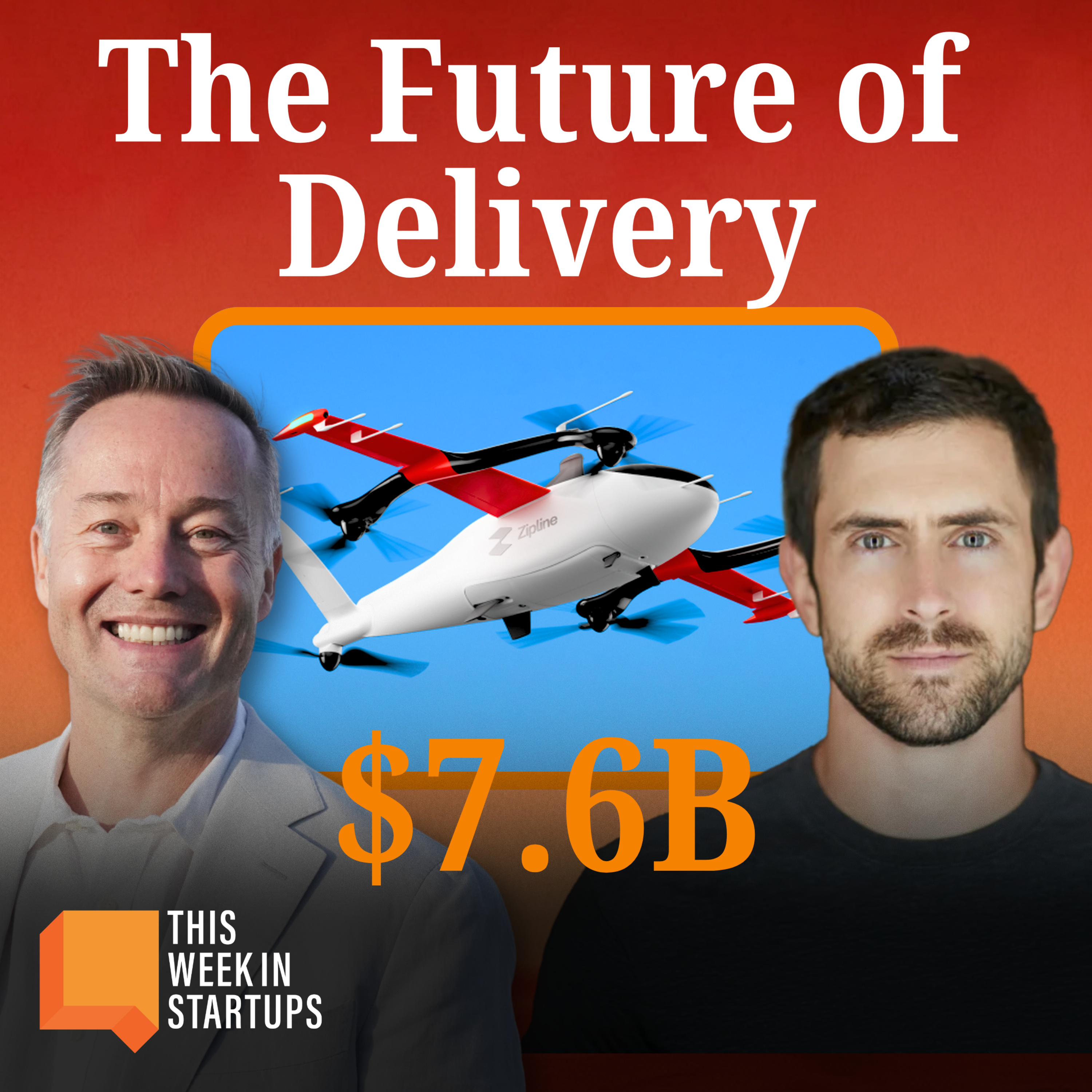
A harsh reality for hardware startups is that manufacturing and development costs are consistently underestimated. Zipline's founder uses a 10x rule of thumb. They survived by signing a contract at a fixed price, losing money for years while driving costs down through relentless, incremental improvements.
Zipline's CEO argues from first principles that current delivery logistics are absurdly inefficient. Replacing a human-driven, gas-powered car with a small, autonomous electric drone is not just an incremental improvement but a fundamental paradigm shift dictated by physics.

Zipline's 50% cost reduction for its next-gen aircraft wasn't just from supply chain optimization. The primary driver was a design philosophy focused on eliminating components entirely ("the best part is no part"), which also improves reliability.

Zipline abstracts away all operational complexity (FAA regulations, maintenance, flight ops) and pitches a simple, powerful outcome to partners like Walmart: an instant delivery portal installed in their wall.
Zipline is quadrupling its factory to produce 20,000 drones annually, a necessity to service a 15% week-over-week growth curve. This highlights a unique hardware scaling challenge driven by software-like demand.
After a high-profile but disastrous launch where everything broke, Zipline recovered by narrowing its focus to making the service reliable for a single hospital. It took nine months of all-nighters to fix the system. Once stable, they expanded to 20 more hospitals in just three months.