Get your free personalized podcast brief
We scan new podcasts and send you the top 5 insights daily.
To avoid the discomfort of ambiguity, people would rather invent a definite, albeit catastrophic, future scenario. This cognitive bias highlights a deep-seated need for certainty, even if the certainty imagined is terrifying or supernatural. Dealing with the simple truth of "I don't know" is often more psychologically challenging than confronting a known disaster.

Related Insights
Research shows people are more stressed by a 50% chance of an electric shock than a 100% certainty of one. This reveals our profound aversion to ambiguity. For leaders, it means the uncertainty surrounding a change can be more debilitating for teams than the negative change itself.
Neuroscience shows uncertainty triggers a threat response, killing creativity and collaboration. A confirmed negative outcome, however, allows the brain to switch from emotional processing to rational problem-solving, making clarity more important than certainty for employee well-being.

Humans crave control. When faced with uncertainty, the brain compensates by creating narratives and seeing patterns where none exist. This explains why a conspiracy theory about a planned event can feel more comforting than a random, chaotic one—the former offers an illusion of understandable order.

The drive to optimize every detail of life is often rooted in a deep fear of uncertainty. By planning for every contingency, optimizers attempt to create order from chaos, reducing the anxiety that ambiguity creates.
Negative AI scenarios are more persuasive than utopian ones because of inherent cognitive biases. The "seen vs. unseen" bias makes it easier to visualize existing job losses than to imagine new job creation. The "fixed-pie fallacy" incorrectly frames economic growth and productivity gains as zero-sum.

During the COVID pandemic, some people drank bleach because our brains are wired to despise uncertainty. In the absence of clear answers, we gravitate towards any promised solution, however dangerous, because taking action provides a false sense of control.
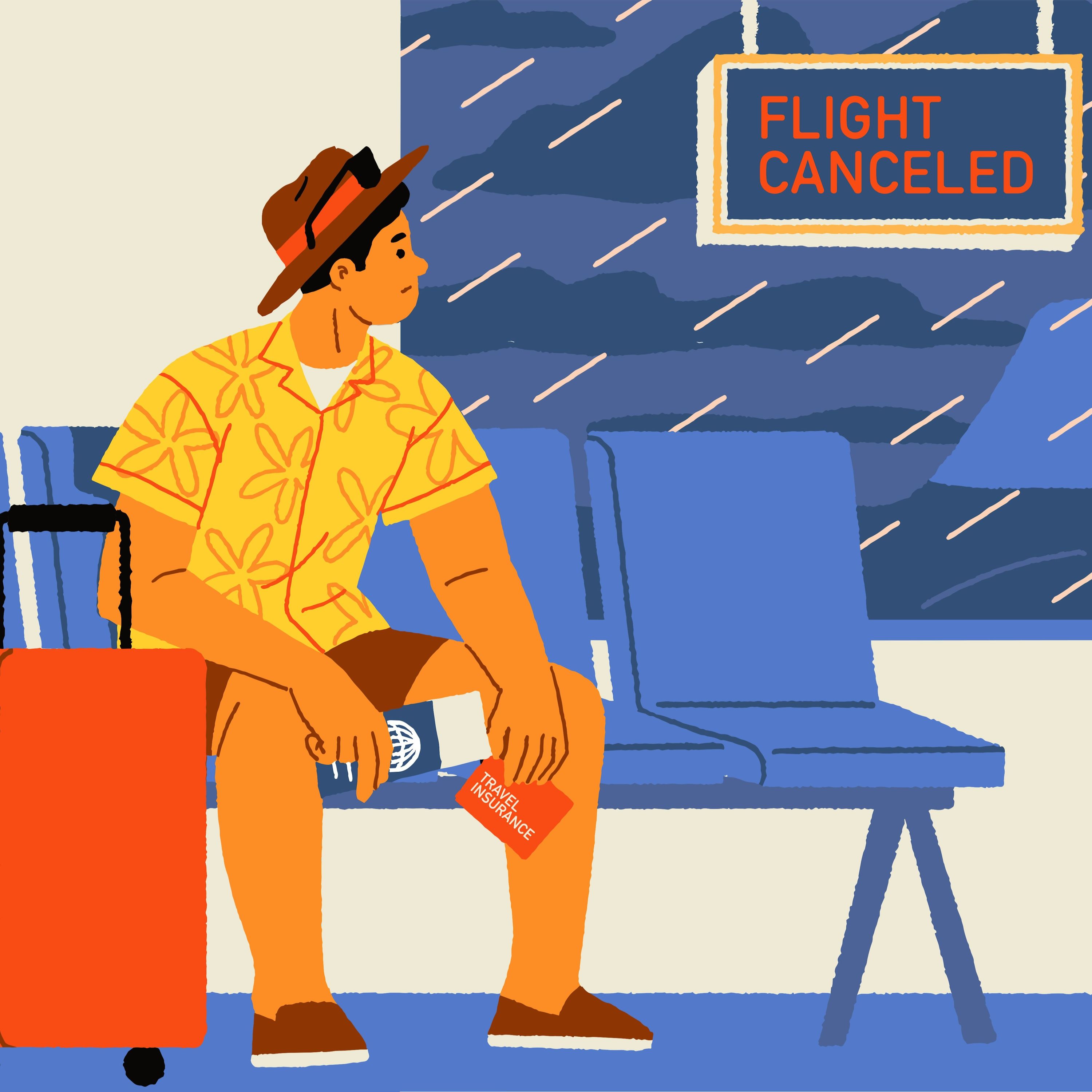
The anxious cycle of trying to predict and plan for every possible negative future outcome inadvertently creates more potential points of failure. This effort to compress uncertainty actually expands its surface area, as each projection introduces new possibilities for being wrong, deepening the anxiety it's meant to solve.
The psychological discomfort of uncertainty, especially under stress like fatigue, pushes us to make *any* decision, even a bad one, just to escape the feeling. The desire for relief can override the need for the right answer, leading to costly mistakes.

Overthinking isn't a cognitive flaw but a protective mechanism. When your brain doesn't trust your ability to handle uncertainty, it generates endless negative scenarios to create a false sense of control. The solution isn't clearer thoughts, but deeper self-trust.

Humans are biased to overestimate downside and underestimate upside because our ancestors' survival depended on it. The cautious survived, passing on pessimistic genes. In the modern world, where most risks are not fatal, this cognitive bias prevents us from pursuing opportunities where the true upside is in the unknown.
