Get your free personalized podcast brief
We scan new podcasts and send you the top 5 insights daily.
Humans crave control. When faced with uncertainty, the brain compensates by creating narratives and seeing patterns where none exist. This explains why a conspiracy theory about a planned event can feel more comforting than a random, chaotic one—the former offers an illusion of understandable order.

Related Insights
Our perception of sensing then reacting is an illusion. The brain constantly predicts the next moment based on past experiences, preparing actions before sensory information fully arrives. This predictive process is far more efficient than constantly reacting to the world from scratch, meaning we act first, then sense.

Our nervous system is wired to gravitate towards familiar patterns, confusing them with safety. This is why people unconsciously recreate painful or traumatic childhood dynamics in adult relationships. It is a biological pull toward the known, not a conscious desire for pain, making it a cosmically unfair default setting.
The RAS in your brain acts as a filter, showing you information that aligns with your core beliefs. If you adopt the belief 'I am a lucky person,' your RAS will start pointing out opportunities that were always there but previously filtered out. This is the neuroscience behind 'creating your own luck.'

The market for financial forecasts is driven by a psychological need to reduce uncertainty, not a demand for accuracy. Pundits who offer confident, black-and-white predictions thrive because they soothe this anxiety. This is why the industry persists despite a terrible track record; it's selling a feeling, not a result.
![[REPLAY] Morgan Housel – Same as Ever (EP.359) thumbnail](https://static.libsyn.com/p/assets/f/b/7/6/fb76e1c8bfb69e8dd959afa2a1bf1c87/CA_Square_logo_light_background_6.26.24.jpg)
Our fascination with danger isn't a flaw but a survival mechanism. Like animals that observe predators from a safe distance to learn their habits, humans consume stories about threats to understand and prepare for them. This 'morbid curiosity' is a safe way to gather crucial information about potential dangers without facing direct risk.
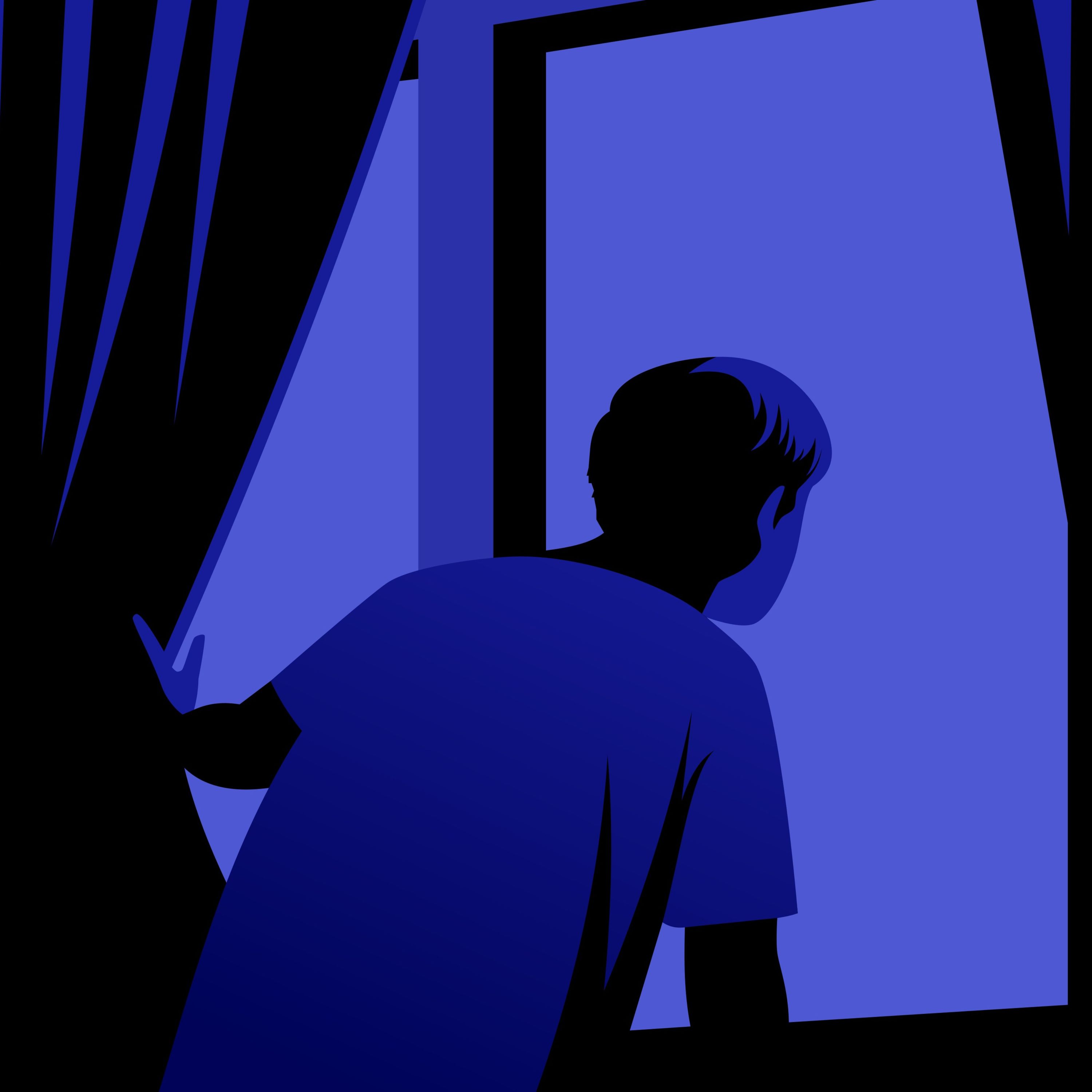
Contrary to the belief that people seek escapism during turbulent times, research shows a surge of interest in scary entertainment following real-life traumatic events. For example, after a campus murder, students in the victim's dorm were most likely to choose to watch a violent movie, suggesting a need to process and understand the threat.
People watched the movie 'Contagion' during the pandemic rather than reading scientific papers because the human brain is wired to learn through first-person stories, not lists of facts. Narratives provide a simulated, experiential perspective that taps into ancient brain mechanisms, making the information more memorable, understandable, and emotionally resonant.
When presented with direct facts, our brains use effortful reasoning, which is prone to defensive reactions. Stories transport us, engaging different, more social brain systems. This allows us to analyze a situation objectively, as if observing others, making us more receptive to the underlying message.

Research on contentious topics finds that individuals with the most passionate and extreme views often possess the least objective knowledge. Their strong feelings create an illusion of understanding that blocks them from seeking or accepting new information.

During a crisis, a simple, emotionally resonant narrative (e.g., "colluding with hedge funds") will always be more memorable and spread faster than a complex, technical explanation (e.g., "clearinghouse collateral requirements"). This highlights the profound asymmetry in crisis communications and narrative warfare.
