Get your free personalized podcast brief
We scan new podcasts and send you the top 5 insights daily.
Humans are biased to overestimate downside and underestimate upside because our ancestors' survival depended on it. The cautious survived, passing on pessimistic genes. In the modern world, where most risks are not fatal, this cognitive bias prevents us from pursuing opportunities where the true upside is in the unknown.

Related Insights
Our brains evolved for a world of linear change, not exponential curves. This cognitive blind spot leads to underestimating threats like viruses and opportunities like compounding, as we tend to perceive exponential growth as linear in the short term.
Unlike a plague or asteroid, the existential threat of AI is 'entertaining' and 'interesting to think about.' This, combined with its immense potential upside, makes it psychologically difficult to maintain the rational level of concern warranted by the high-risk probabilities cited by its own creators.
Our brains are wired for survival, not growth, causing them to fixate on past threats to avoid future danger. This makes negative self-talk and self-doubt the brain's default setting, not a personal failure. Even top performers like Albert Einstein and Sonia Sotomayor experienced imposter syndrome, demonstrating it's a feature of the human condition.

The success of 'false choice' buttons stems from a cognitive bias called the 'framing effect,' which leverages loss aversion. People react more strongly to potential losses and negative self-perceptions than to potential gains. The brain is hardwired to avoid feeling stupid, making the negatively framed 'no' option a powerful deterrent.

Post-mortems of bad investments reveal the cause is never a calculation error but always a psychological bias or emotional trap. Sequoia catalogs ~40 of these, including failing to separate the emotional 'thrill of the chase' from the clinical, objective assessment required for sound decision-making.

The fear of loss is stronger than the attraction to gain. This "loss aversion" explains why people hesitate to initiate positive gestures, like smiling at a stranger in an elevator. They are willing to sacrifice an almost certain positive reciprocal outcome (98% chance) to protect against a tiny risk of looking foolish (2% chance).
![Charlie Munger and The Psychology of Human Misjudgement [Outliers] thumbnail](https://megaphone.imgix.net/podcasts/ffb628d4-c418-11f0-acd7-b3217b3943c4/image/37067138e685dc4ea5d98531397f6711.png?ixlib=rails-4.3.1&max-w=3000&max-h=3000&fit=crop&auto=format,compress)
During the COVID pandemic, some people drank bleach because our brains are wired to despise uncertainty. In the absence of clear answers, we gravitate towards any promised solution, however dangerous, because taking action provides a false sense of control.
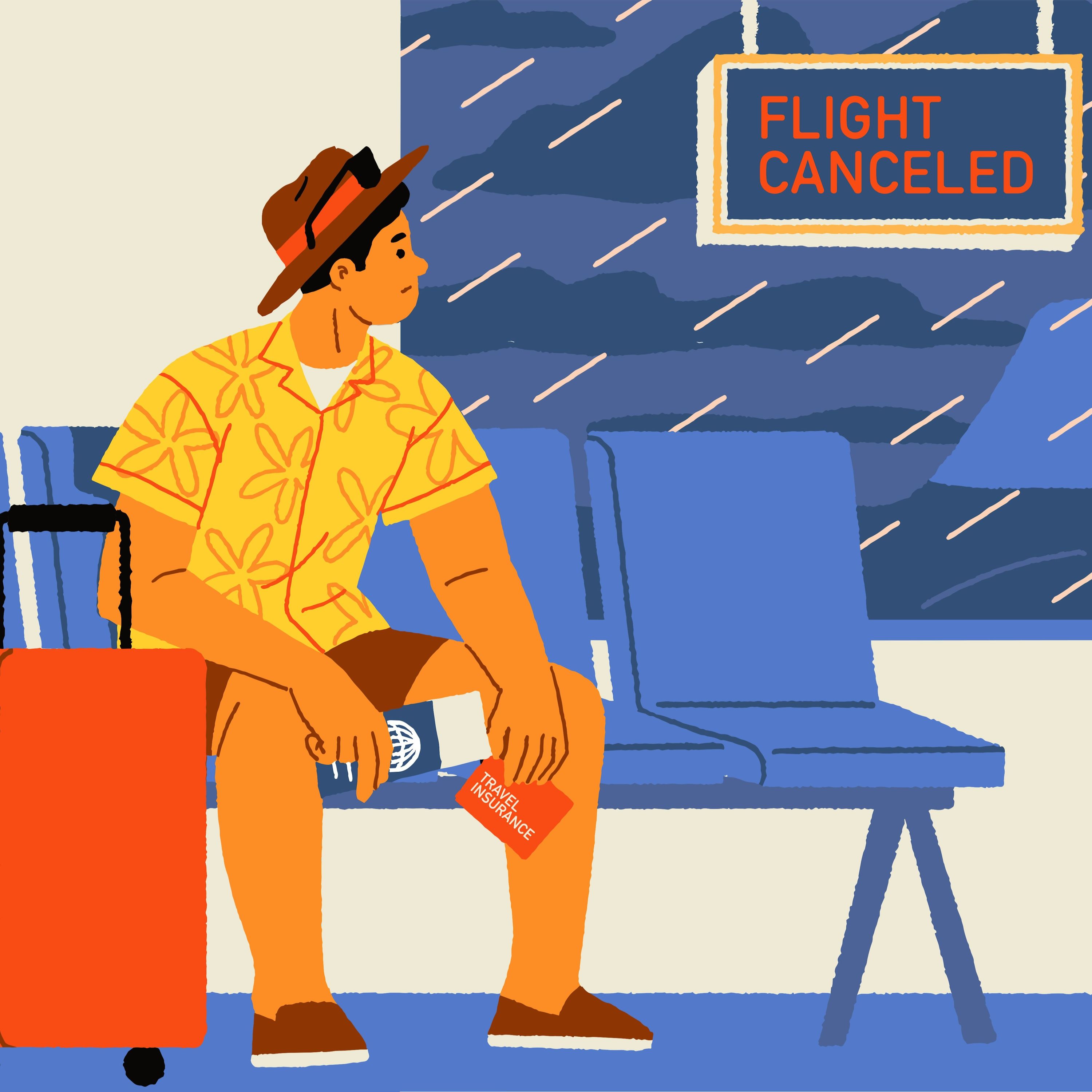
Based on Daniel Kahneman's Prospect Theory, once investors feel they are losing money, their behavior inverts. Instead of cutting losses, they adopt a "double or nothing" mentality, chasing high-risk gambles to escape the psychological pain of loss.

A cognitive bias causes us to consistently underestimate how much we will enjoy a social interaction. This flawed prediction leads to choosing isolation (e.g., a night on the couch) over connection, even when socializing would be significantly better for our brain health and well-being.
The popular assumption that the brain is optimized solely for survival and reproduction is an overly simplistic narrative. In the modern world, the brain's functions are far more complex, and clinging to this outdated model can limit our understanding of its capabilities and our own behavior.
