Get your free personalized podcast brief
We scan new podcasts and send you the top 5 insights daily.
While most AI bets should be tied to ROI, CFOs should also establish an 'internal enablement fund' or 'slush fund.' This dedicated budget allows for low-ROI, high-learning experiments. It formally separates pure exploration from value-capture initiatives, fostering innovation without compromising financial discipline on major projects.

Related Insights
Encourage experimentation with AI, but mitigate risk by giving every pilot a clear budget limit ('a leash') and a deadline ('a clock'). This framework allows for innovation while ensuring underperforming projects are killed quickly, successful ones are funded, and great ones are scaled.
The optimal strategy for managing AI costs is neither total restriction nor a free-for-all. It's providing engineers with dedicated "learning budgets" and experimentation pools, coupled with clear visibility into costs. This fosters innovation responsibly without incurring surprise invoices and turns cost into a first-class constraint.
Review your organization's incentive structure for AI. Are employees only rewarded for executing known use cases faster, or are they encouraged to experiment and share lessons? Without explicit rewards for exploration, companies risk stifling innovation and missing out on transformative AI applications that come from experimentation.

Strict budget controls on AI usage, such as per-employee spending caps, have a hidden cost. They create a "known ROI bias," pushing employees toward safe, incremental productivity tasks instead of the large-scale, uncertain experiments required to unlock AI's true economic value. This focus on efficiency inadvertently kills breakthrough innovation.
In ROI-focused cultures like financial services, protect innovation by dedicating a formal budget (e.g., 20% of team bandwidth) to experiments. These initiatives are explicitly exempt from the rigorous ROI calculations applied to the rest of the roadmap, which fosters necessary risk-taking.

Snowflake's CEO advises against seeking a huge ROI on the first AI project. Instead, companies should run many small, inexpensive experiments—taking multiple "shots on goal"—to learn the landscape and build momentum. This approach proves value incrementally rather than relying on one big bet.

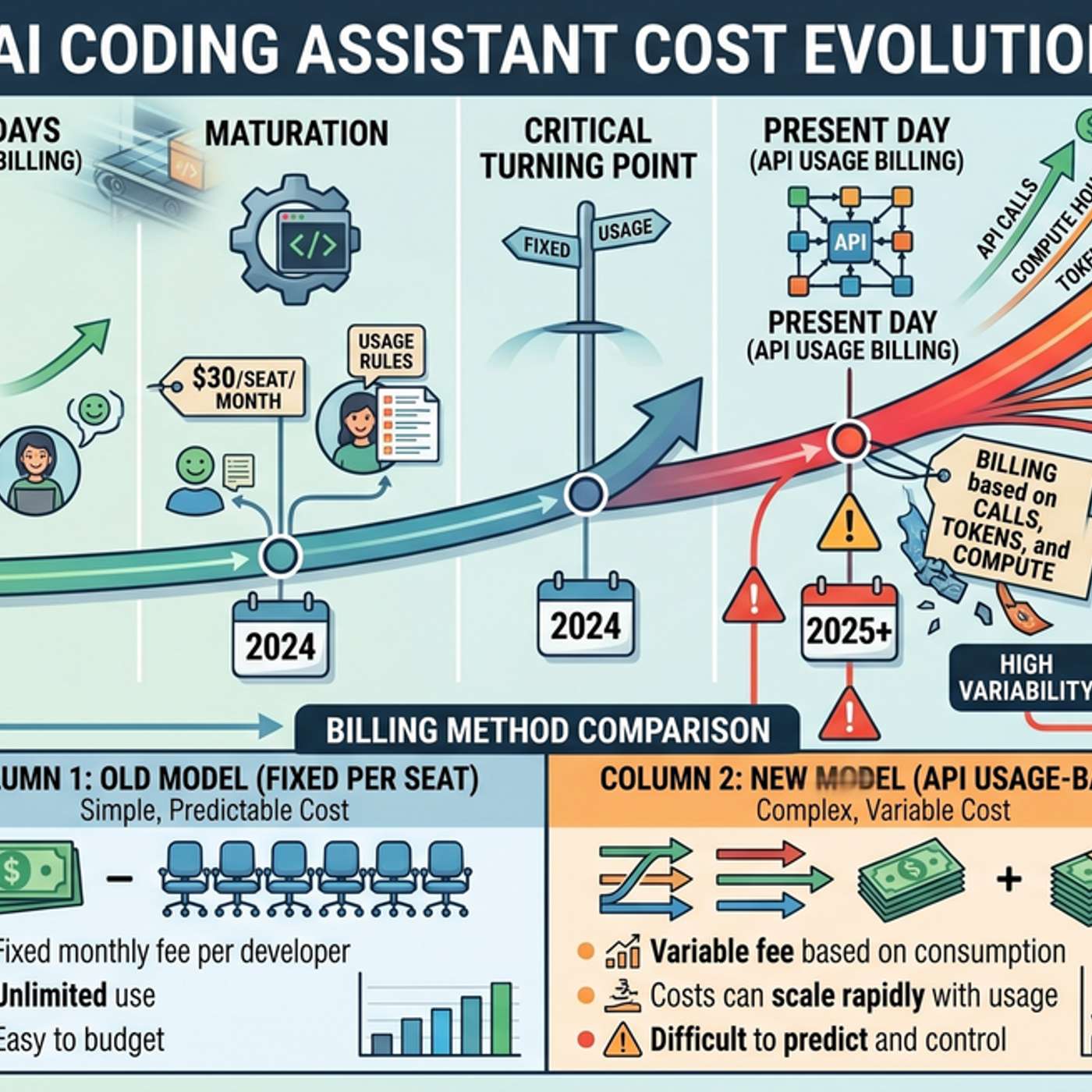
Unlike predictable seat-based SaaS, consumption-based AI is a fungible resource. Companies must treat 'intelligence' like capital, creating budgets and allocating it to the most productive people and projects. This requires a new financial discipline beyond simple software procurement.

To foster a culture of AI-driven productivity, don't throttle usage with cost controls initially. Let employees experiment deeply to discover high-leverage use cases. Once adoption is widespread, introduce analytics to surgically optimize low-ROI spending without stifling innovation.

Lenovo's CFO notes a strategic divide. One school of thought uses tight constraints to see who innovates most efficiently. The other, common at US tech firms, gives high caps to let employees "go to town," believing this is the fastest way to discover high-ROI use cases and talent.

To encourage widespread AI adoption, Snowflake's leadership provides a central, effectively unlimited budget for AI tools. This prevents departmental budget constraints from becoming a bottleneck, ensuring teams can experiment and build without being held back by cost concerns.
