Get your free personalized podcast brief
We scan new podcasts and send you the top 5 insights daily.
To foster a culture of AI-driven productivity, don't throttle usage with cost controls initially. Let employees experiment deeply to discover high-leverage use cases. Once adoption is widespread, introduce analytics to surgically optimize low-ROI spending without stifling innovation.

Related Insights
The optimal strategy for managing AI costs is neither total restriction nor a free-for-all. It's providing engineers with dedicated "learning budgets" and experimentation pools, coupled with clear visibility into costs. This fosters innovation responsibly without incurring surprise invoices and turns cost into a first-class constraint.
Effective AI adoption requires a structured approach. Instead of ad-hoc experimentation, teams should identify, document, and prioritize potential AI use cases based on business value and feasibility. This 'use case workbook' provides a clear roadmap, ensuring that time is spent on high-impact applications.

Review your organization's incentive structure for AI. Are employees only rewarded for executing known use cases faster, or are they encouraged to experiment and share lessons? Without explicit rewards for exploration, companies risk stifling innovation and missing out on transformative AI applications that come from experimentation.

Strict budget controls on AI usage, such as per-employee spending caps, have a hidden cost. They create a "known ROI bias," pushing employees toward safe, incremental productivity tasks instead of the large-scale, uncertain experiments required to unlock AI's true economic value. This focus on efficiency inadvertently kills breakthrough innovation.
To combat engineer skepticism, companies incentivized AI usage to the point of wastefulness ("token maxing"). This overcorrection is a faster way to achieve broad adoption than starting with strict controls. You can enforce responsible usage and cost efficiency once the value is proven and ingrained.

To get teams experimenting with AI, leaders should provide an open budget for tokens initially. Being 'profligate' at the start is crucial, as imposing constraints too early leads to unimpressive results, stifles creativity, and hinders true adoption. Efficiency can be optimized later.

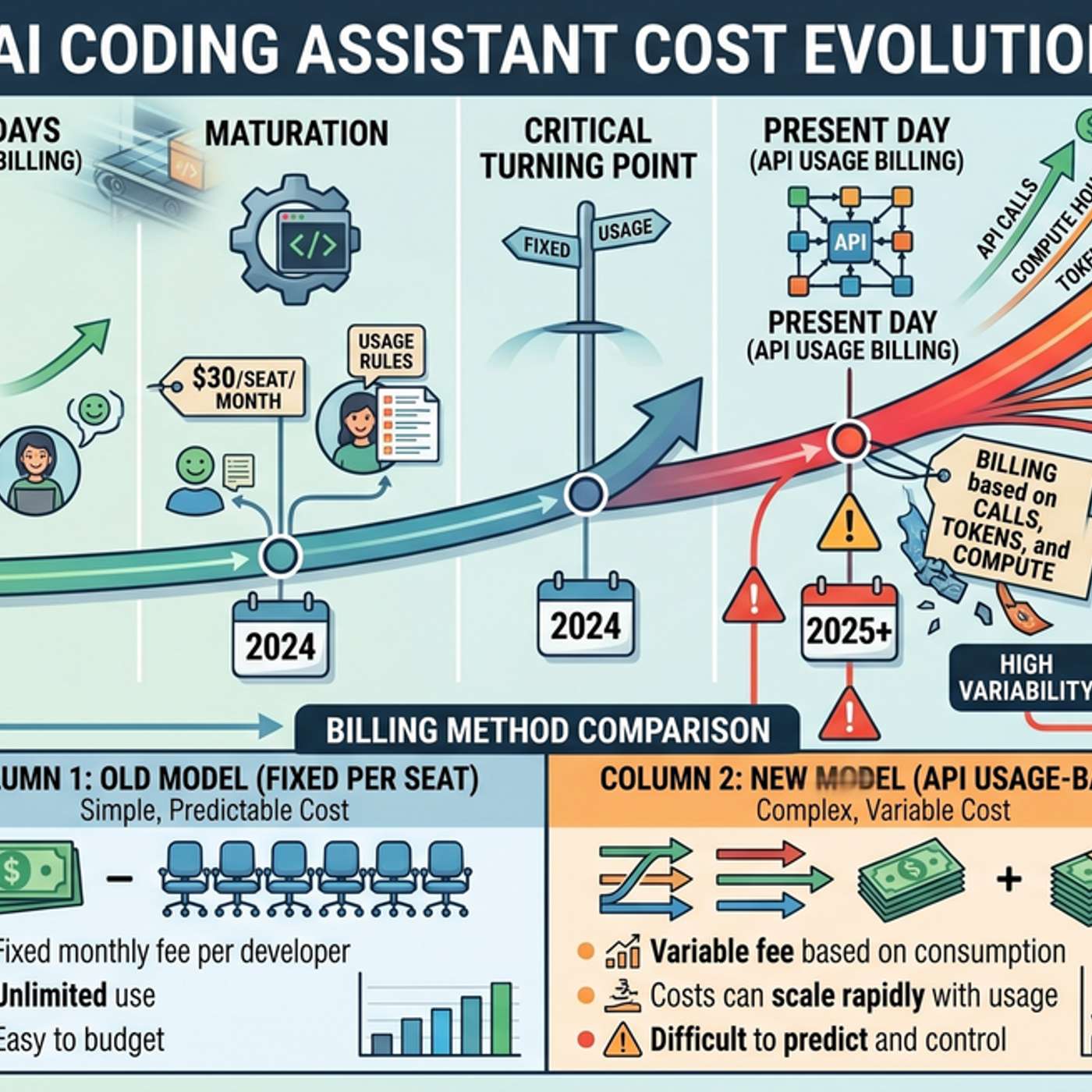
AI agent platforms are typically priced by usage, not seats, making initial costs low. Instead of a top-down mandate for one tool, leaders should encourage teams to expense and experiment with several options. The best solution for the team will emerge organically through use.

To foster breakthrough ideas, companies should initially provide engineers with unrestricted access to the most powerful AI models, ignoring costs. Optimization should only happen after an idea proves its value at scale, as early cost-cutting stifles creativity.

When launching internal AI tools, don't fixate on immediate ROI, which is a lagging indicator. Instead, monitor user adoption rates. A rapid increase in adoption is the strongest signal that a tool is genuinely solving a problem and that positive business outcomes will eventually follow.

For large, traditional companies, the most critical first step in AI adoption isn't building tools, but fostering deep understanding. Provide teams sandboxed access to AI models and company data, allowing them to build intuition about capabilities before crafting strategy.