Get your free personalized podcast brief
We scan new podcasts and send you the top 5 insights daily.
The optimal strategy for managing AI costs is neither total restriction nor a free-for-all. It's providing engineers with dedicated "learning budgets" and experimentation pools, coupled with clear visibility into costs. This fosters innovation responsibly without incurring surprise invoices and turns cost into a first-class constraint.
Related Insights
To get teams experimenting with AI, leaders should provide an open budget for tokens initially. Being 'profligate' at the start is crucial, as imposing constraints too early leads to unimpressive results, stifles creativity, and hinders true adoption. Efficiency can be optimized later.

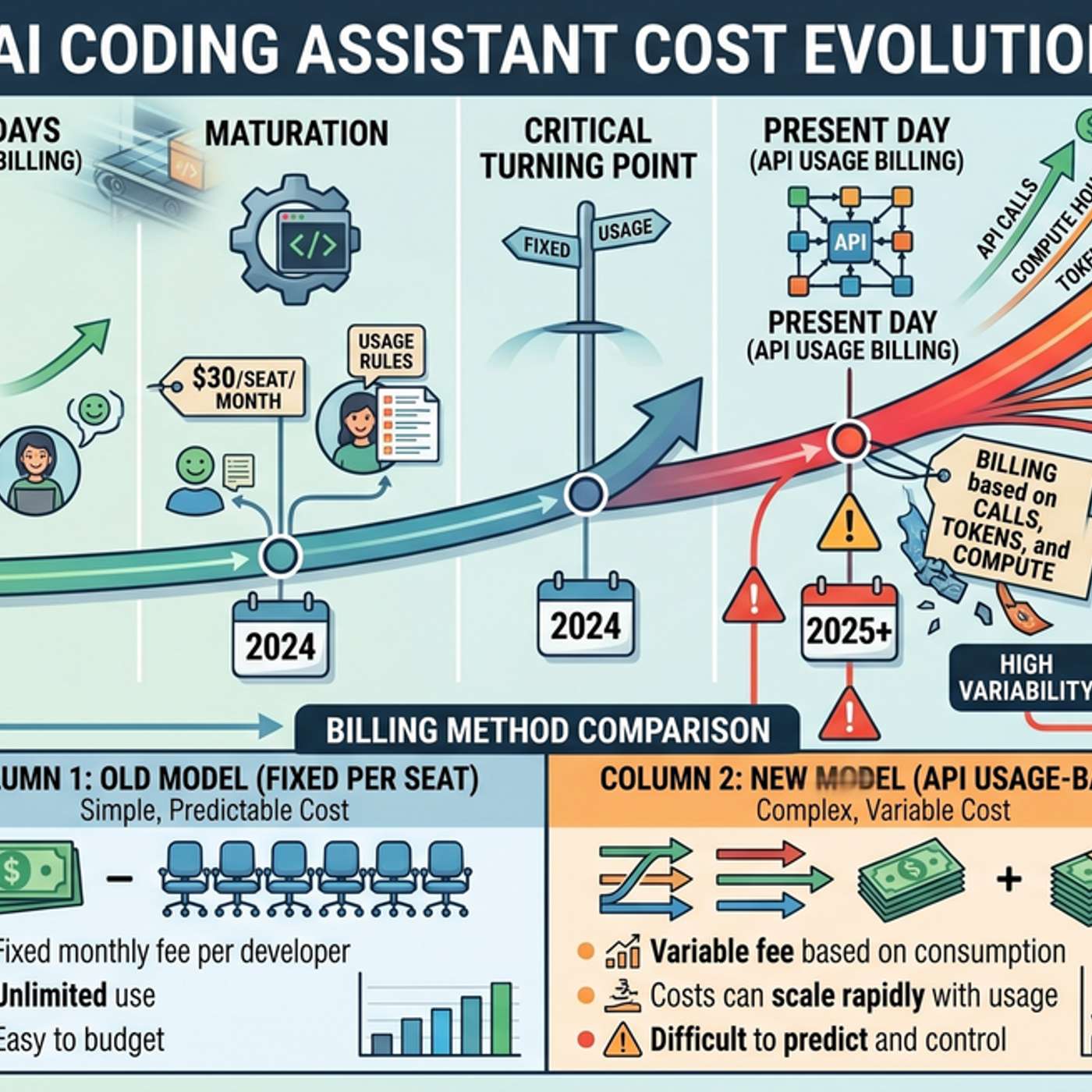
AI agent platforms are typically priced by usage, not seats, making initial costs low. Instead of a top-down mandate for one tool, leaders should encourage teams to expense and experiment with several options. The best solution for the team will emerge organically through use.

To foster breakthrough ideas, companies should initially provide engineers with unrestricted access to the most powerful AI models, ignoring costs. Optimization should only happen after an idea proves its value at scale, as early cost-cutting stifles creativity.

While seemingly logical, hard budget caps on AI usage are ineffective because they can shut down an agent mid-task, breaking workflows and corrupting data. The superior approach is "governed consumption" through infrastructure, which allows for rate limits and monitoring without compromising the agent's core function.

Uber's CTO revealed that enthusiastic adoption of AI coding tools by engineers depleted his entire annual AI budget just months into the year. While delivering huge value, this highlights a critical financial risk for enterprises: successful, widespread internal adoption of AI can lead to runaway costs that far exceed initial projections.

Don't get hung up on the cost of AI credits and subscriptions. Instead, reframe the spending as "tuition" for your professional development. This mindset shift encourages the experimentation and hands-on learning necessary to master these new tools, providing a far greater return than pinching pennies on API calls.

Pay-per-use AI models create a psychological blocker, making teams hesitant to experiment for fear of racking up high costs. A fixed-price, unlimited-use model allows for unrestricted creativity and experimentation, similar to how a chef with inexpensive ingredients can innovate freely.

Just as uncontrolled cloud spending in the 2010s spawned the FinOps field, the shift to consumption-based AI pricing will necessitate a similar discipline. This involves attributing costs to specific workloads, setting granular budgets, and providing real-time visibility to prevent budget overruns and measure ROI accurately.
AI's usage-based pricing doesn't fit traditional seat-based software budgets. Frame it like a marketing program (e.g., paid ads). If increased spending on AI tools generates high ROI, it justifies a larger, flexible budget, shifting the conversation with finance from fixed cost to performance investment.

Giving teams a 'token budget' is flawed because it incentivizes generating low-value output to hit a quota, similar to bad hiring quotas. Instead, companies must tie token consumption directly to business KPIs. This reframes AI spend as a value-creating investment, not a cost to be managed.
