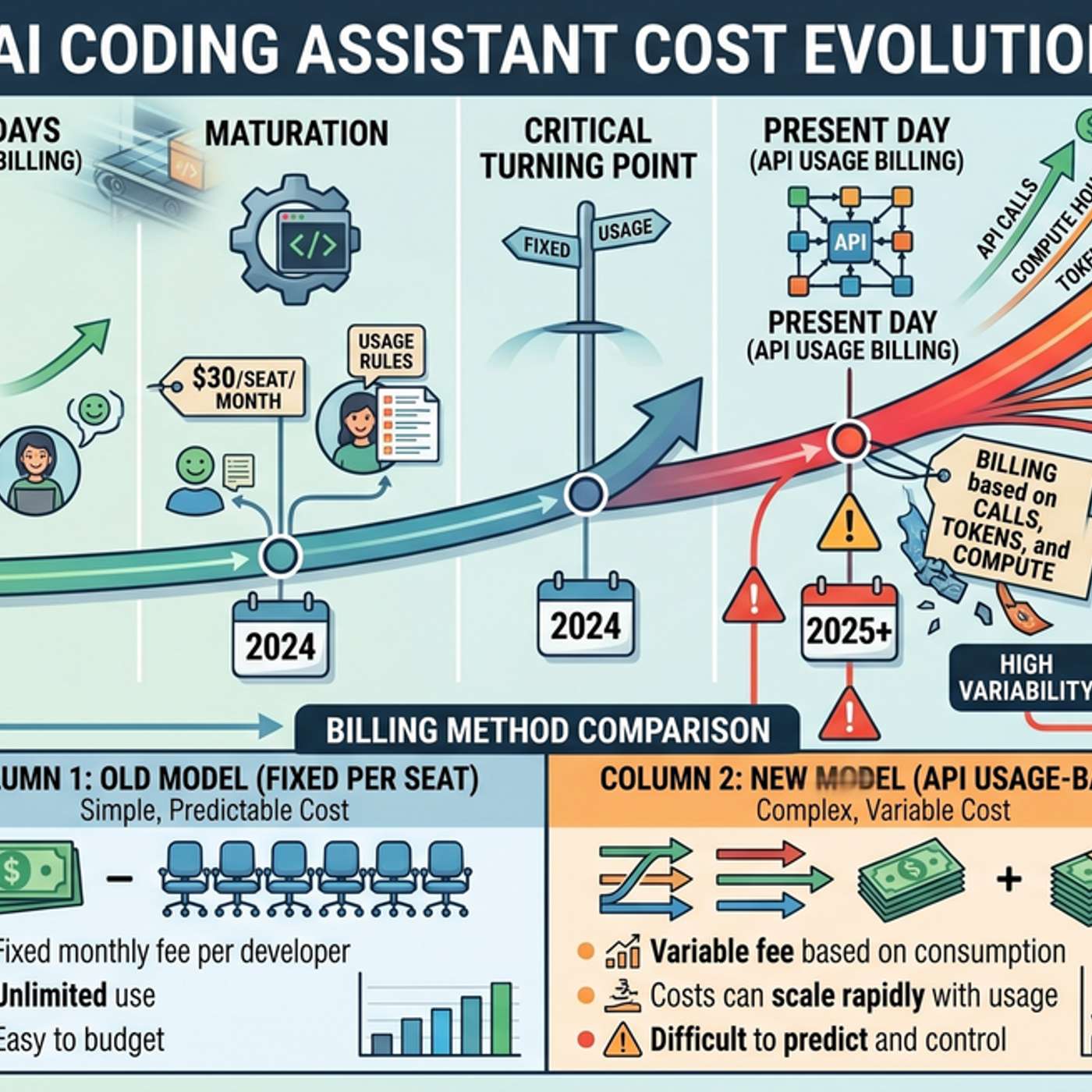
Rising AI API costs are not merely a vendor strategy but a direct result of real-world bottlenecks. These include surging electricity prices for data centers, a structural shortage of high-bandwidth memory (HBM), and constrained hardware supply chains, which are fundamentally altering the cost basis for AI compute.
The optimal strategy for managing AI costs is neither total restriction nor a free-for-all. It's providing engineers with dedicated "learning budgets" and experimentation pools, coupled with clear visibility into costs. This fosters innovation responsibly without incurring surprise invoices and turns cost into a first-class constraint.
Just as uncontrolled cloud spending in the 2010s spawned the FinOps field, the shift to consumption-based AI pricing will necessitate a similar discipline. This involves attributing costs to specific workloads, setting granular budgets, and providing real-time visibility to prevent budget overruns and measure ROI accurately.
Organizations with structured SDLCs can adapt to consumption-based AI pricing because they can attribute costs to specific work items and make deliberate trade-offs, like routing simple tasks to cheaper models. Teams with ad-hoc workflows will struggle, as unattributable costs spiral and quality becomes inconsistent.