Get your free personalized podcast brief
We scan new podcasts and send you the top 5 insights daily.
Strict budget controls on AI usage, such as per-employee spending caps, have a hidden cost. They create a "known ROI bias," pushing employees toward safe, incremental productivity tasks instead of the large-scale, uncertain experiments required to unlock AI's true economic value. This focus on efficiency inadvertently kills breakthrough innovation.

Related Insights
Leaders face a catch-22 when trying to secure AI funding. They are asked to forecast specific results to get a budget, but they often need to spend money first to experiment, understand potential outcomes, and then measure success. This creates a difficult justification cycle.

When companies give employees AI token budgets and track usage on dashboards, it incentivizes ROI-negative behavior. Employees feel compelled to spend their entire allocation to appear productive, a classic example of Goodhart's Law where the metric (usage) undermines the goal (productivity).

A tax would raise the cost of AI experimentation, forcing firms to prioritize safe, efficiency-focused projects over speculative R&D. This 'known ROI bias' would hamper the discovery of transformative AI applications and entrench incumbents who can better absorb experimentation costs.
The optimal strategy for managing AI costs is neither total restriction nor a free-for-all. It's providing engineers with dedicated "learning budgets" and experimentation pools, coupled with clear visibility into costs. This fosters innovation responsibly without incurring surprise invoices and turns cost into a first-class constraint.
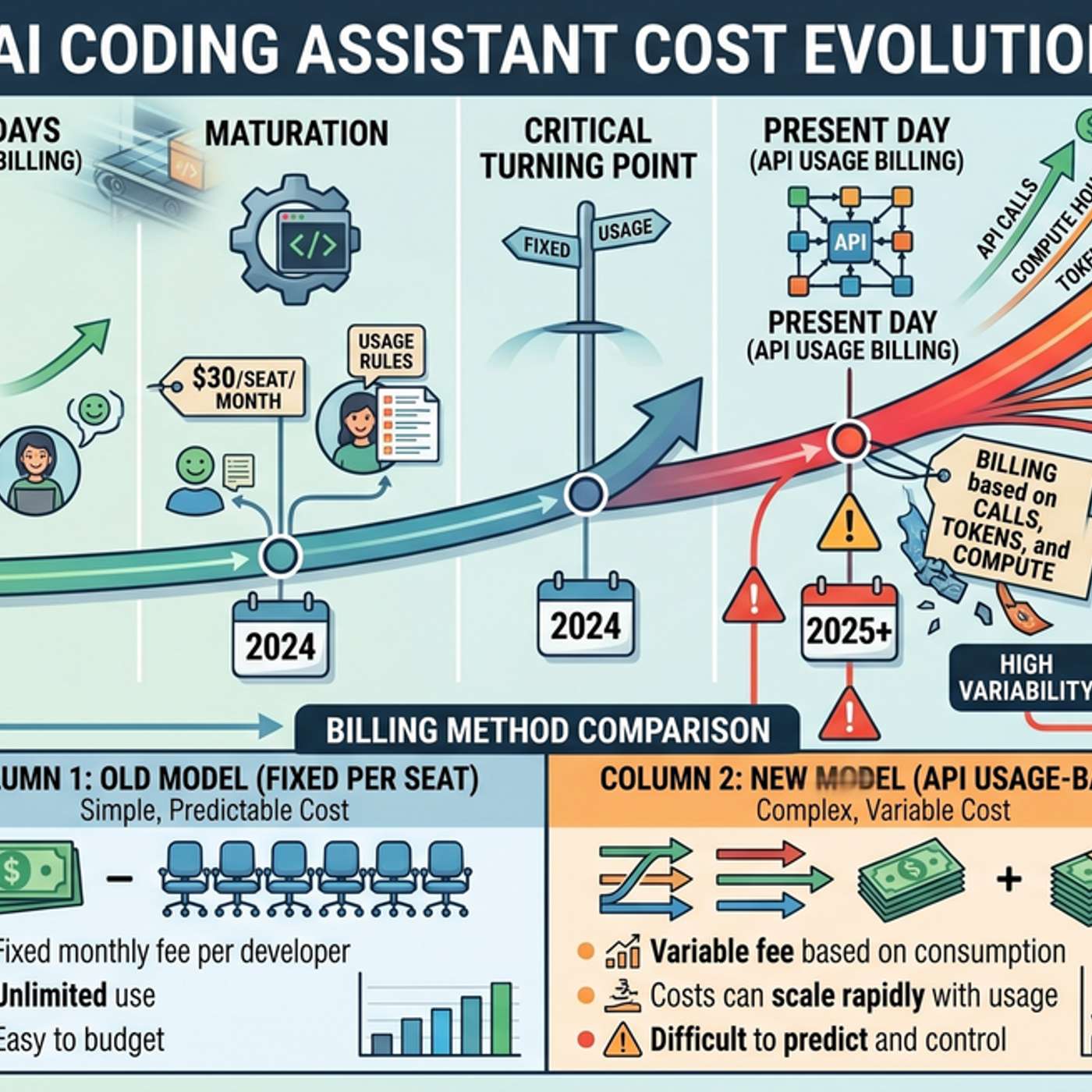
To foster breakthrough ideas, companies should initially provide engineers with unrestricted access to the most powerful AI models, ignoring costs. Optimization should only happen after an idea proves its value at scale, as early cost-cutting stifles creativity.

True AI efficacy isn't just about financial impact; it requires operational leverage and amplifying human capabilities. Simply cutting costs with AI without reinvesting that productivity into new growth is a sign that leadership has run out of ideas for the future.

Despite massive enterprise spending on AI that fuels hypergrowth for companies like Anthropic, non-tech companies find it difficult to realize tangible value. This creates a conflict where CFOs question the spend while CIOs warn of disruption if they pause.

To combat budget chaos from AI usage, enterprises are moving the cost of technology from the central CIO's budget to the P&L of the specific business unit using it. This decentralizes accountability, forcing department managers to make ROI-driven decisions about their team's AI consumption.

The recent trend of companies rationing AI after massive, uncontrolled spending is a healthy and predictable market correction. This initial phase of expensive experimentation, while seemingly wasteful, is a necessary step for organizations to learn how to apply AI tools with surgical precision and track ROI effectively.
A major barrier to enterprise AI adoption is IT treating licenses as scarce resources, parsing them out one-by-one. This creates long queues for eager teams, even those with clear ROI use cases, which stifles grassroots experimentation and kills momentum before value can be proven.
