Get your free personalized podcast brief
We scan new podcasts and send you the top 5 insights daily.
China's provocations, like the spy balloon and Volt Typhoon cyberattacks, are designed to expose US vulnerabilities. This forces the incumbent administration into a defensive position, creating political pressure to downplay the incident rather than confront China forcefully.

Related Insights
China is capitalizing on the chaos of Trump's foreign policy by portraying itself as a predictable and responsible global leader. While this narrative may not be accurate, America's erratic behavior makes China's case more persuasive to other nations seeking stability, allowing Beijing to gain diplomatic influence.

Beyond official diplomacy, direct meetings with US leaders like President Trump provide unfiltered data for Beijing. China's intelligence services analyze off-the-cuff remarks about domestic politics and strategic priorities to build a psychological profile and assess US weaknesses.

China's tough stance toward US allies is not a diplomatic blunder but a deliberate strategy. By applying pressure, Beijing aims to demonstrate that complaining to a distracted Washington is futile, thereby forcing allies to eventually accommodate Chinese interests.
China's key learning from the past year is not that the U.S. lacks economic leverage, but that it lacks the political will to use it. Beijing perceives an unwillingness in Washington to endure domestic consequences, like higher consumer prices during an election year, to win a trade war.
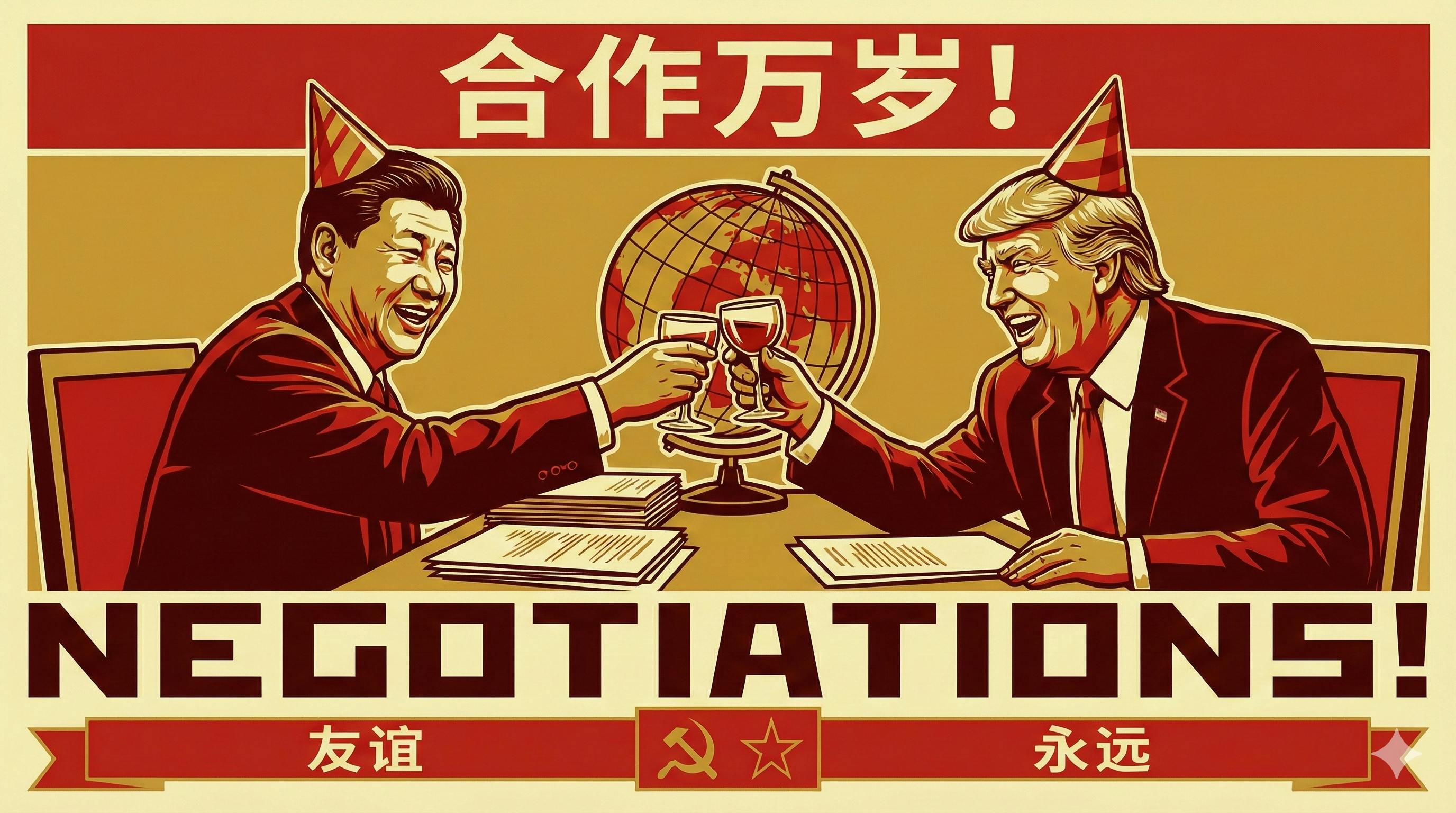
Chinese leadership, receiving filtered intelligence, likely interprets isolated incidents of US political dysfunction as systemic decay. This reinforces a triumphalist narrative of American collapse, which could lead to dangerously bold foreign policy actions based on a misreading of US resilience.
China plays the long game. Instead of direct confrontation, its strategy is to wait for the U.S. to weaken itself through expensive military interventions and political division. This allows China to gain relative power without firing a shot, similar to its rise during the War on Terror.

Instead of a full-scale invasion, China is employing an "anaconda strategy" of constant, low-level pressure. Tactics like cutting undersea cables and sending drones are designed to exhaust and demoralize Taiwan, making a military response from the US difficult to justify.

An obsessive focus on internal political battles creates a critical geopolitical vulnerability. While a nation tears itself apart with divisive rhetoric, strategic adversaries like China benefit from the distraction and internal weakening. This domestic infighting accelerates the erosion of the nation's global influence and power.

The U.S. approach to cybersecurity is often reactive and hampered by political turnover and short-term thinking. This contrasts sharply with China's patient, long-game strategy of embedding assets and vulnerabilities that may not be activated for years, creating a significant strategic disadvantage for America.

Since the 2001 EP-3 incident, China learned that "going dark" during a crisis serves two purposes. Internally, it allows leadership time to deliberate. Externally, it functions as a powerful negotiating tactic that unnerves American policymakers and grants Beijing leverage to control re-engagement.
