Get your free personalized podcast brief
We scan new podcasts and send you the top 5 insights daily.
Beyond official diplomacy, direct meetings with US leaders like President Trump provide unfiltered data for Beijing. China's intelligence services analyze off-the-cuff remarks about domestic politics and strategic priorities to build a psychological profile and assess US weaknesses.

Related Insights
The summit represents a temporary lull in an ongoing, long-term competition, not a fundamental shift toward resolution. Beijing views it as a tactical 'test of wills' to buy time and strengthen its capabilities while maintaining a competitive mindset.
High-level diplomatic meetings between US and Chinese leaders are largely performative, designed to create positive "mood music." The true, underlying relationship is defined by a deep and persistent lack of trust between the two nations' security apparatuses, which continues unabated.
High-level diplomatic summits between the U.S. and China are likely to produce positive public rhetoric and a cooperative tone. However, this is merely “mood music.” Behind the scenes, the security and intelligence apparatus in both nations continues to operate with deep suspicion, viewing the other as an implacable adversary.

For the first time, China's economic power—measured by purchasing power parity, manufacturing output, and control over critical minerals—has shifted the global power balance. This gives President Xi a stronger negotiating position than his U.S. counterpart, as China can now weaponize economic dependencies more effectively.
The recent lack of anti-China rhetoric from the Trump administration, including zero mentions at the State of the Union, is a deliberate tactical truce. The goal is to stabilize relations and create a favorable environment for an upcoming presidential summit with Xi Jinping, which the administration wants to be a major success.

Chinese leadership, receiving filtered intelligence, likely interprets isolated incidents of US political dysfunction as systemic decay. This reinforces a triumphalist narrative of American collapse, which could lead to dangerously bold foreign policy actions based on a misreading of US resilience.
Beijing's leadership believes President Trump is the American leader most likely to strike a deal favorable to them. They perceive him as non-ideological and primarily focused on trade balances, rather than on challenging China's 'core interests' such as human rights or geopolitical ambitions.
Beijing believes that as the U.S. midterm elections approach, the Trump administration will feel increasing pressure to secure a tangible "win" or deal. By prolonging negotiations, China aims to maximize its leverage and extract more favorable terms, mapping this strategy from the first trade war.
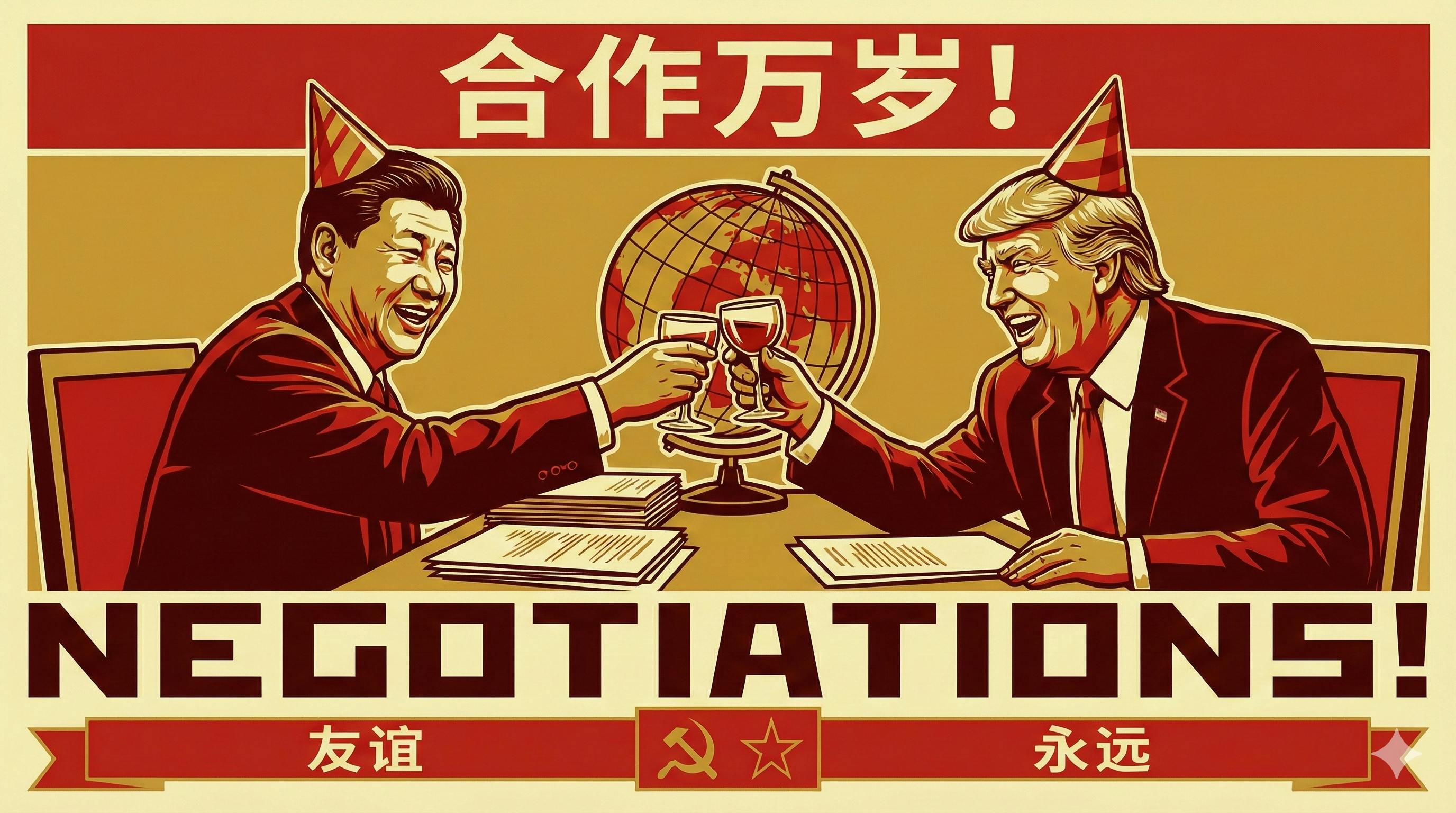
Beijing capitalizes on visits from leaders of key US allies like Canada. Through official media and academic commentary, China actively encourages these nations to adopt "strategic autonomy" from Washington, aiming to sow division and weaken the Western bloc's united front.

President Xi Jinping used a phone call with President Trump not just for bilateral issues, but to strategically signal displeasure with Japan's hawkish stance on Taiwan. This "shadow play" diplomacy shows China leveraging its relationship with the U.S. to indirectly manage and warn other nations, making the U.S. a channel for its geopolitical messaging.
