Get your free personalized podcast brief
We scan new podcasts and send you the top 5 insights daily.
While IP protection is a concern, Figure's primary reason for in-house manufacturing is the product's immaturity. The novelty of humanoid robots requires extremely tight control and rapid feedback loops between design, testing, and production that would be impossible to achieve with a contract manufacturer.
Related Insights
Integrating capabilities like machining isn't just a cost-saver. For startups, it's a strategic advantage that grants direct control over the development lifecycle, enabling rapid iteration and faster time-to-market by eliminating vendor dependencies.

The build vs. outsource decision is strategic. Building in-house is justified when manufacturing is a core competitive advantage or the process itself is your key IP. Otherwise, outsourcing to a CDMO offers critical speed to clinic and preserves capital.

Figure chose to develop its AI systems in-house rather than rely on its partnership with OpenAI. The reason was that its own team proved superior at the highly specialized task of designing, embedding, and running models on physical robot hardware, a challenge distinct from training purely digital LLMs.

Figure's first robots were optimized for development speed using expensive CNC manufacturing. For its third generation, the company focused on design-for-manufacturing, successfully reducing the cost by nearly an order of magnitude while simultaneously improving the robot's capabilities and slimming its design.
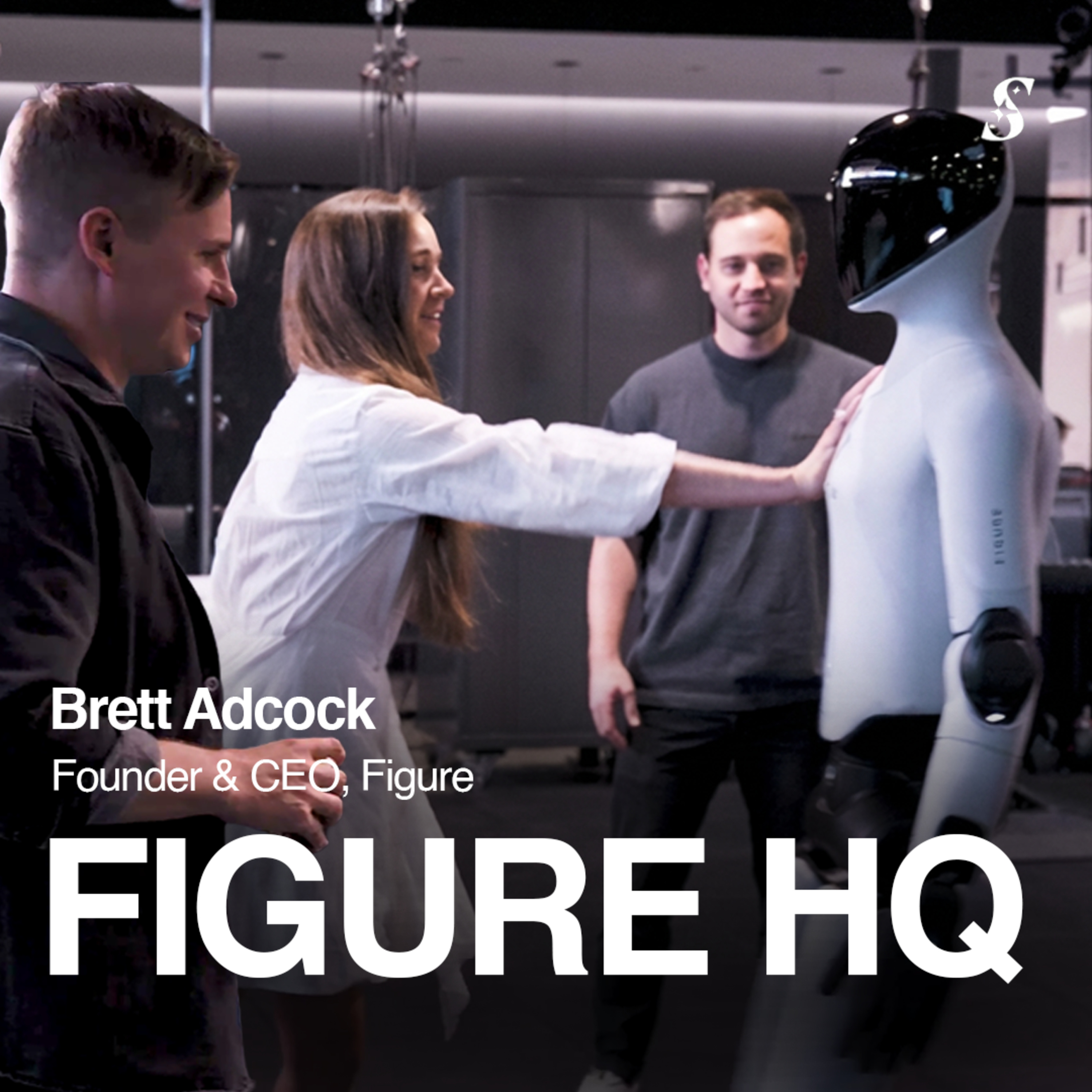
CEO Brett Adcock states Figure has 'overwhelming' commercial demand. The real constraint on growth is ensuring robots can operate reliably at human-level performance. They intentionally limit deployments to avoid a '1,000 robots, 1,000 problems' scenario, prioritizing AI and hardware reliability over rapid sales.
Boom Supersonic accelerates development by manufacturing its own parts. This shrinks the iteration cycle for a component like a turbine blade from 6-9 months (via an external supplier) to just 24 hours. This rapid feedback loop liberates engineers from "analysis paralysis" and allows them to move faster.

Xiaomi is developing humanoid robots for internal use in its manufacturing facilities first. This creates a controlled R&D environment and a guaranteed first customer (itself). This 'dogfooding' approach de-risks development and aims to perfect the technology on its own massive operational needs before ever tackling the consumer market.

For zero-to-one technologies like humanoid robotics, relying on a supply chain is too slow. ONE X develops everything in-house, from new materials to foundation AI models. This enables rapid, cross-disciplinary iteration, as key discoveries happen at the intersection of hardware, software, and materials science.

Companies, especially in early stages, should resist outsourcing production too quickly. Keeping a new process in-house is essential for understanding its pain points, which is a prerequisite for being able to specify clear, effective requirements to an external vendor later on.
Figure designs nearly every component of its robots in-house, from motors to batteries. This extreme vertical integration, though costly upfront, prevents being at the mercy of third-party vendor timelines, code problems, or supply chain issues, enabling faster iteration and deeper system control.