Get your free personalized podcast brief
We scan new podcasts and send you the top 5 insights daily.
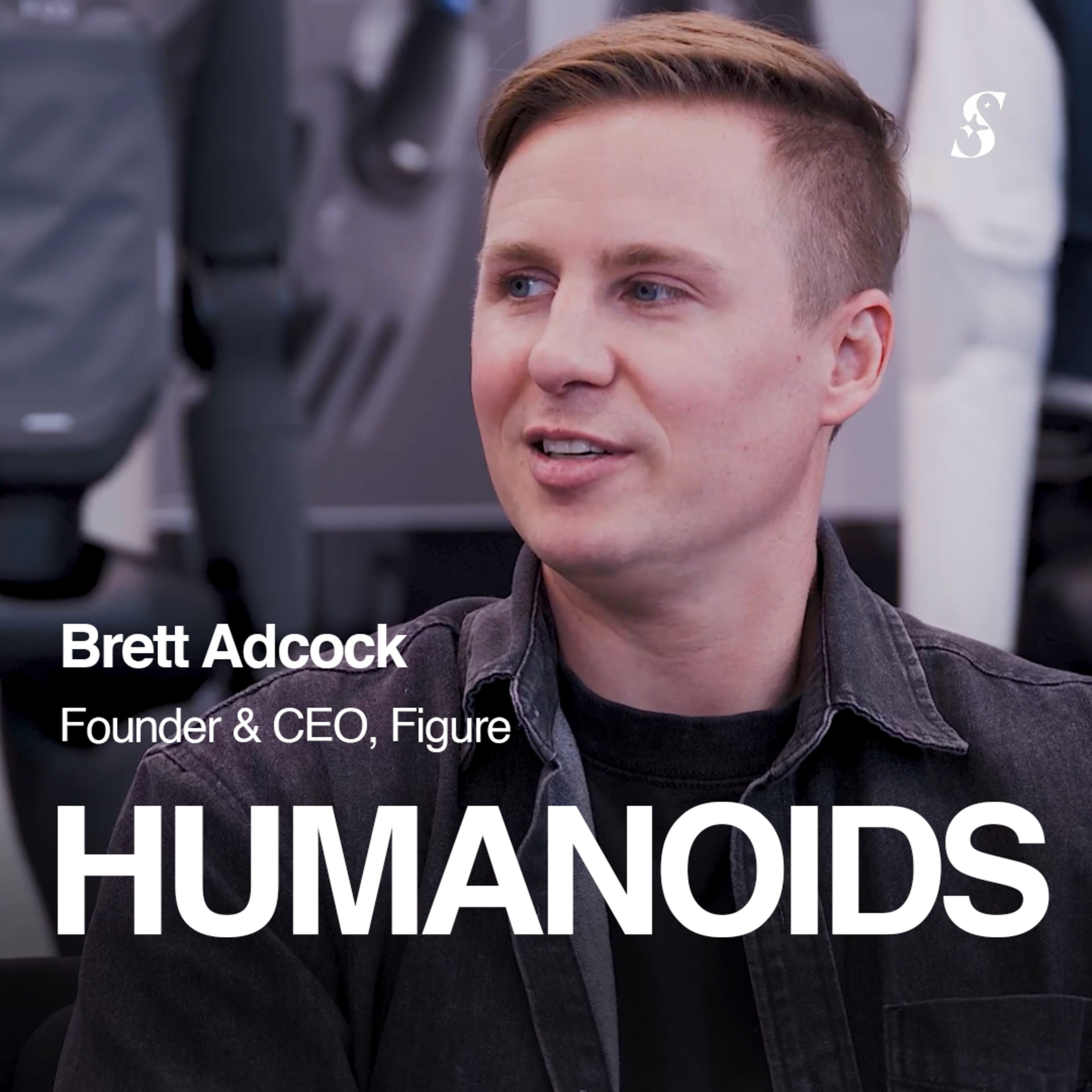
CEO Brett Adcock states Figure has 'overwhelming' commercial demand. The real constraint on growth is ensuring robots can operate reliably at human-level performance. They intentionally limit deployments to avoid a '1,000 robots, 1,000 problems' scenario, prioritizing AI and hardware reliability over rapid sales.
Related Insights
Unlike pure SaaS, an AI-enabled service has a manual component that can be overwhelmed by demand. Quanta had to pause onboarding new customers because saying "yes" to too many slowed down engineering and hurt service quality. Throttling growth is critical to long-term success.

Leading robotics companies are taking different paths to market. Boston Dynamics targets industrial use cases (e.g., DHL, BP). In contrast, both Figure AI and 1X are now focused on the home, but 1X is moving more aggressively by accepting consumer pre-orders first.

The adoption of humanoid robots will mirror that of autonomous vehicles: focus on achievable, single-task applications first. Instead of a complex, general-purpose home robot, the market will first embrace robots trained for specific, repeatable industrial tasks like warehouse logistics or shelf stocking.

While Figure's CEO criticizes competitors for using human operators in robot videos, this 'wizard of oz' technique is a critical data-gathering and development stage. Just as early Waymo cars had human operators, teleoperation is how companies collect the training data needed for true autonomy.
Dropbox's AI strategy is informed by the 'march of nines' concept from self-driving cars, where each step up in reliability (90% to 99% to 99.9%) requires immense effort. This suggests that creating commercially viable, trustworthy AI agents is less about achieving AGI and more about the grueling engineering work to ensure near-perfect reliability for enterprise tasks.
For enterprise AI, the ultimate growth constraint isn't sales but deployment. A star CEO can sell multi-million dollar contracts, but the "physics of change management" inside large corporations—integrations, training, process redesign—creates a natural rate limit on how quickly revenue can be realized, making 10x year-over-year growth at scale nearly impossible.

Many high-growth AI B2B companies face a hidden bottleneck: a shortage of Forward Deployed Engineers (FDEs) who can get customers implemented and running. Despite huge demand, growth is limited by the number of these skilled professionals. This forces them to operate like services businesses, where hiring and training FDEs is the primary constraint.

Initially, factories seemed like the easier first market for humanoids due to structured environments. However, Figure's founder now believes the home is a more near-term opportunity. The challenge of environmental variability is now seen as a data-bound problem that can be solved with large-scale data collection programs.

Brett Adcock states that Figure AI's "Helix 2" neural net provides the right technical stack for general robotics. The biggest remaining obstacle is not hardware but the immense data required to train the robot for a wide distribution of tasks. The company plans to spend nine figures on data acquisition in 2026 to solve this.

Moving a robot from a lab demo to a commercial system reveals that AI is just one component. Success depends heavily on traditional engineering for sensor calibration, arm accuracy, system speed, and reliability. These unglamorous details are critical for performance in the real world.