Get your free personalized podcast brief
We scan new podcasts and send you the top 5 insights daily.
Boom Supersonic accelerates development by manufacturing its own parts. This shrinks the iteration cycle for a component like a turbine blade from 6-9 months (via an external supplier) to just 24 hours. This rapid feedback loop liberates engineers from "analysis paralysis" and allows them to move faster.

Related Insights
Hardware development is often stalled by supplier lead times. To combat this, proactively map out multiple, redundant manufacturing options for every component. By maintaining a constantly updated "lookup table" of suppliers, processes, and their current lead times, teams can parallelize workflows and minimize downtime.

Successful "American Dynamism" companies de-risk hardware development by initially using off-the-shelf commodity components. Their unique value comes from pairing this accessible hardware with sophisticated, proprietary software for AI, computer vision, and autonomy. This approach lowers capital intensity and accelerates time-to-market compared to traditional hardware manufacturing.

Boom Supersonic is adapting its proprietary jet engine, originally for supersonic flight, into "SuperPower" ground turbines for AI data centers. This strategic move provides a path to profitability years sooner, generating the massive capital required to complete its Overture passenger airliner project.
The team avoids traditional design reviews and handoffs, fostering a "process-allergic" culture where everyone obsessively builds and iterates directly on the product. This chaotic but passionate approach is key to their speed and quality, allowing them to move fast, make mistakes, and fix them quickly.

Returning founder Jamie Siminoff cut an 18-month hardware development cycle to under 7 months. He did this by challenging the "why" behind every process step and eliminating generous time buffers, arguing that excess time guarantees that delays will fill it.

Moving from a science-focused research phase to building physical technology demonstrators is critical. The sooner a deep tech company does this, the faster it uncovers new real-world challenges, creates tangible proof for investors and customers, and fosters a culture of building, not just researching.

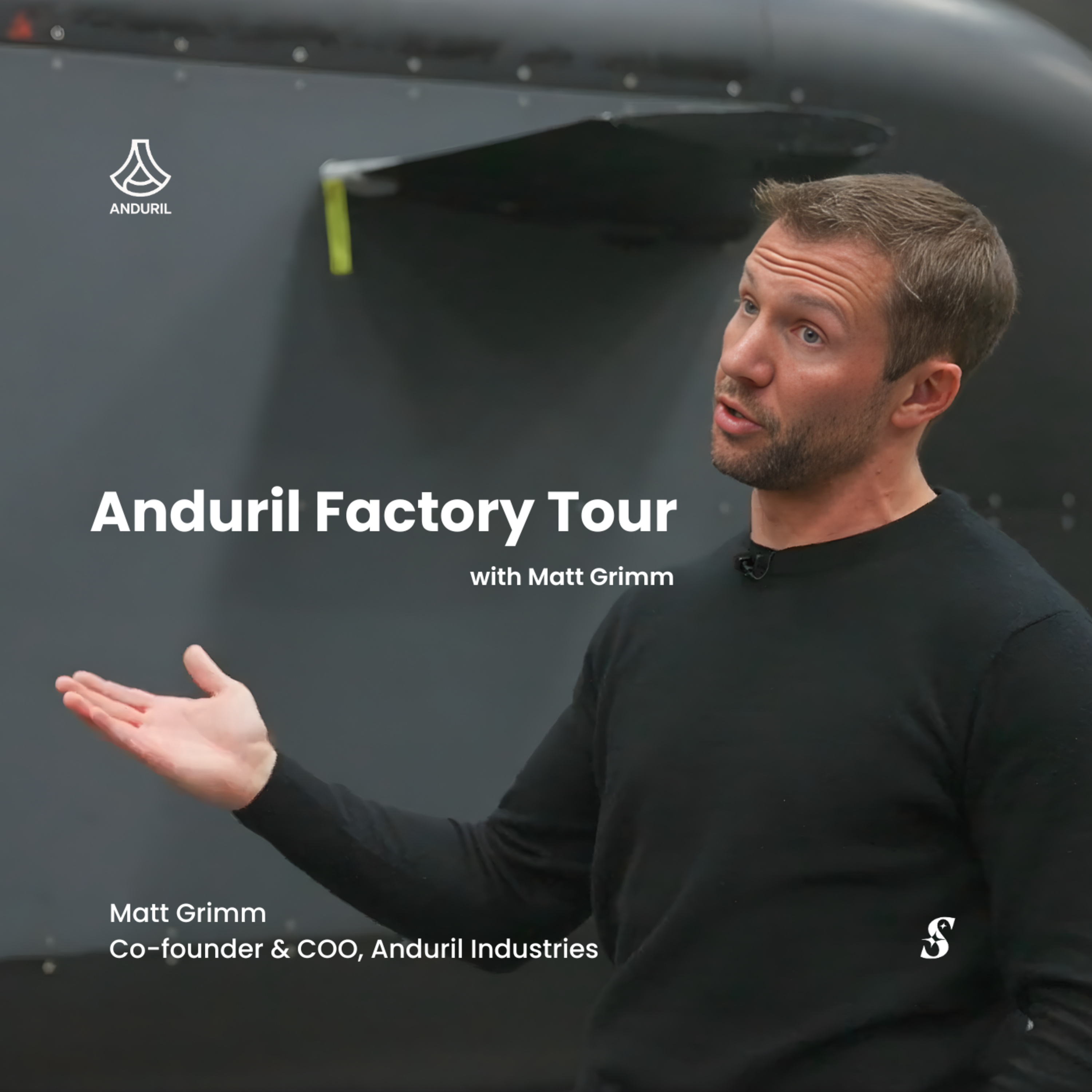
Anduril's R&D building houses machine shops, labs, and a 'dev test area' designed specifically to break products. By putting engineers across the parking lot from facilities that can rapidly prototype and test for failures (e.g., saltwater corrosion, vibration), they create an extremely tight feedback loop, speeding up iteration.
While moats like network effects and brand develop over time, the only sustainable advantage an early-stage startup has is its iteration speed. The ability to quickly cycle through ideas, build MVPs, and gather feedback is the fundamental driver of success before achieving scale.

Unlike mass manufacturers, defense tech requires flexibility for a high mix of low-volume products. Anduril addresses this by creating a core platform of reusable software, hardware, and sensor components, enabling fast development and deployment of new systems without starting from scratch.

Anduril prototypes drone frames by milling them from solid metal blocks. While extremely wasteful and expensive for mass production, this method bypasses the slow and costly process of creating molds for casting, drastically reducing latency during the critical iterative design phase and getting products to market faster.