Get your free personalized podcast brief
We scan new podcasts and send you the top 5 insights daily.
Skydio initially chose US manufacturing for practical reasons: faster iteration. This contrarian decision later became a critical strategic advantage, insulating them from supply chain risks and allowing them to survive direct sanctions from the Chinese government.

Related Insights
Major US tech-industrial companies like SpaceX are forced to vertically integrate not as a strategic choice, but out of necessity. This reveals a critical national infrastructure gap: the absence of a multi-tiered ecosystem of specialized component suppliers that thrives in places like China.

After a disastrous first run with a U.S. manufacturer, Wild Rye pivoted overseas. Counterintuitively, they found Chinese partners offered superior quality, sophisticated machinery, and a proactive partnership approach—even flagging potential issues pre-production. They were also more willing to work with a small brand's lower order quantities.

The push to build defense systems in America reveals that critical sub-components, like rocket motors or high-powered amplifiers, are no longer manufactured domestically at scale. This forces new defense companies to vertically integrate and build their own factories, essentially rebuilding parts of the industrial base themselves.

To build a new American semiconductor foundry by 2028, Substrate is rejecting the modern specialized model. Instead, it's vertically integrating by designing and building its own lithography tools. This return to the industry's roots is aimed at reducing complexity and cost, enabling them to move faster.

Skydio intentionally spent its first decade focused on a single drone type. This patient approach allowed them to mature a core technology stack which now functions as a platform, enabling them to rapidly launch new drone form factors.
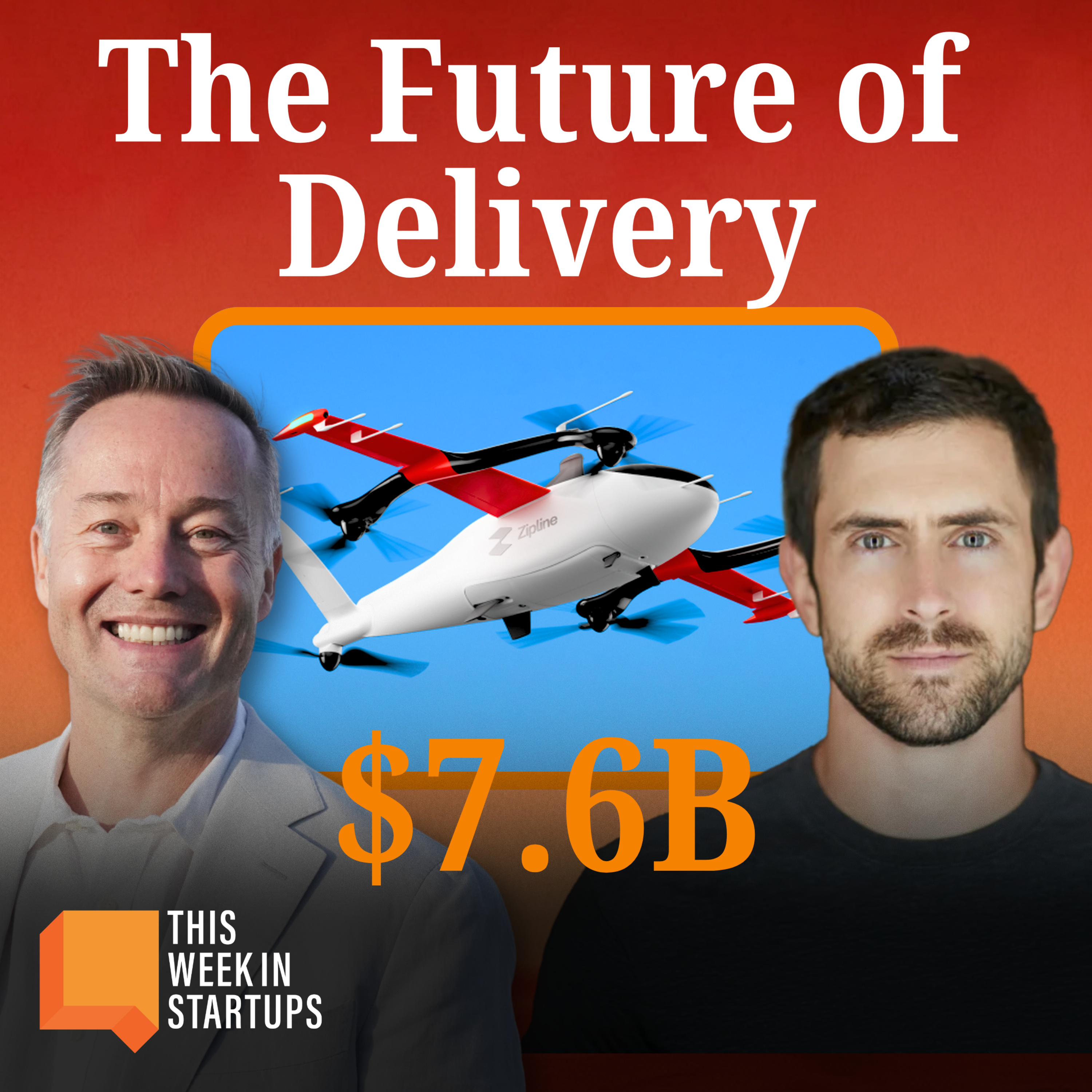
Zipline's CEO argues the US can't compete with China's scale on simple drones. The winning strategy is to innovate on complex, state-of-the-art aircraft where America leads, and then scale that manufacturing advantage.
Boom Supersonic accelerates development by manufacturing its own parts. This shrinks the iteration cycle for a component like a turbine blade from 6-9 months (via an external supplier) to just 24 hours. This rapid feedback loop liberates engineers from "analysis paralysis" and allows them to move faster.

For hard tech startups, the decision to vertically integrate and build a factory shouldn't be automatic. It's a strategic imperative only when "cadence"—the speed of iteration and delivery—is the primary competitive advantage. In such cases, the in-house capability to move fast outweighs the high capital cost.

Siemens mitigates geopolitical risks and tariffs not just by being global, but by being hyper-local. Its CEO reveals that 85-87% of its production in major markets like the US and China is for that market, minimizing cross-border dependencies and the direct impact of trade wars.

Anticipating that independence from China will be a long-term, bipartisan US policy goal, Rivian intentionally designed its new R2 supply chain to be U.S.-centric. This strategic planning aims to align the business with persistent geopolitical trends, rather than just reacting to current tariffs.
