Get your free personalized podcast brief
We scan new podcasts and send you the top 5 insights daily.
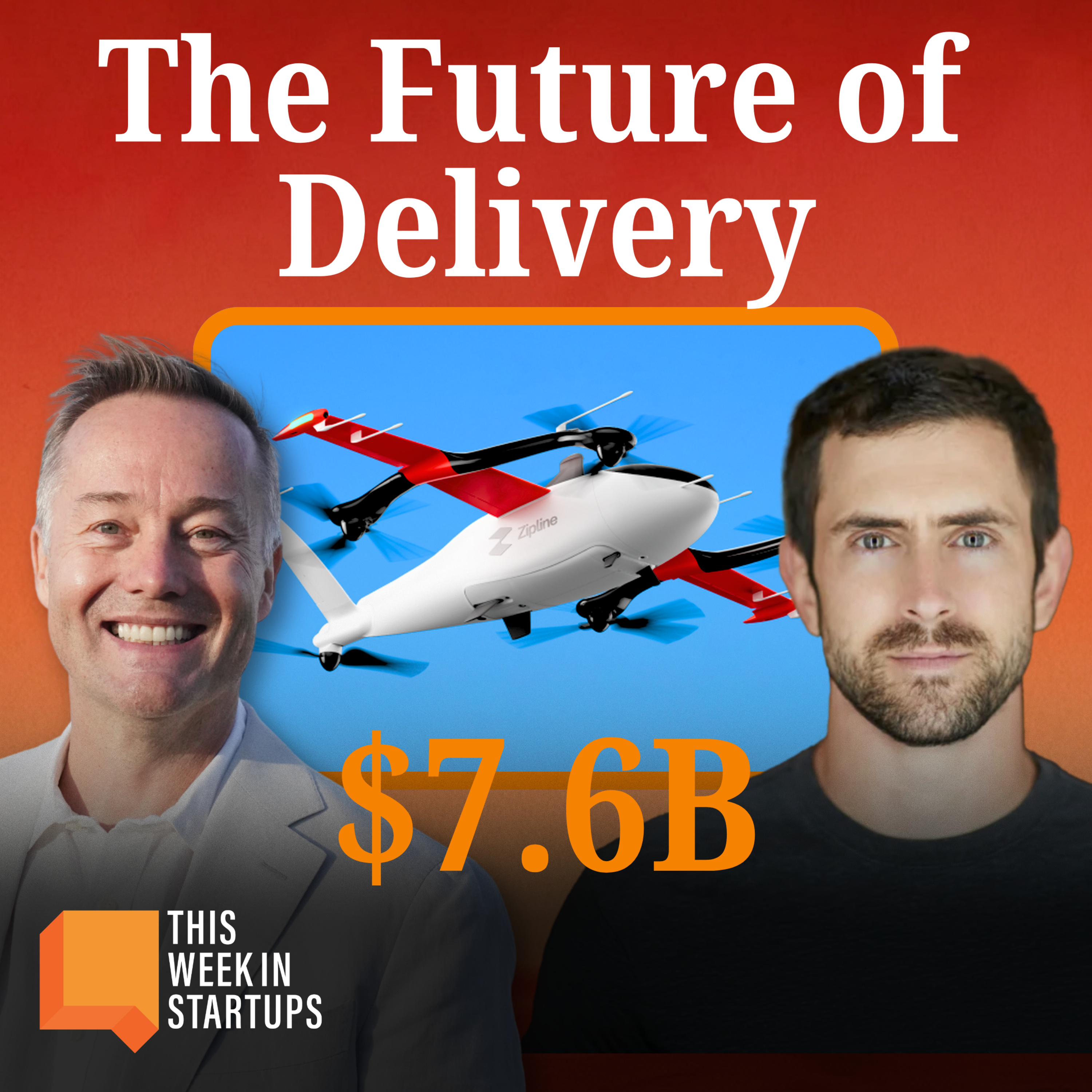
Zipline's CEO argues the US can't compete with China's scale on simple drones. The winning strategy is to innovate on complex, state-of-the-art aircraft where America leads, and then scale that manufacturing advantage.
Related Insights
Successful "American Dynamism" companies de-risk hardware development by initially using off-the-shelf commodity components. Their unique value comes from pairing this accessible hardware with sophisticated, proprietary software for AI, computer vision, and autonomy. This approach lowers capital intensity and accelerates time-to-market compared to traditional hardware manufacturing.

The founders initially focused on building the autonomous aircraft. They soon realized the vehicle was only 15% of the problem's complexity. The real challenge was creating the entire logistics ecosystem around it, from inventory and fulfillment software to new procedures for rural hospitals.

Contrary to popular belief, China is not ahead in the humanoid race. The current bottleneck is solving general-purpose AI and systems integration, not manufacturing at scale. In this domain, US companies are leading. Manufacturing humanoids is closer to consumer electronics than cars, mitigating China's automotive-style manufacturing advantages.

Against investor advice and industry trends favoring VTOL (vertical takeoff and landing) drones, Zipline opted for a fixed-wing airplane design. They realized their customers valued range above all else, and a simple airplane could fly 10-30x farther, solving the core problem more effectively.
Zipline's CEO reveals the aircraft is a small part of their solution. The real challenge and value lie in the vertically integrated network: ground infrastructure, traffic management, regulatory approval, and customer-facing apps.
China achieved tech superpower status not through invention, but by mastering mass manufacturing and process knowledge. It allows the U.S. to create the initial spark (0-to-1), like solar PV, and then China creates the "prairie fire" by scaling it (1-to-N), ultimately dominating the industry.
![Dan Wang - The US vs China In The 21st Century - [Invest Like the Best, EP.444] thumbnail](https://megaphone.imgix.net/podcasts/e1599a88-a9f6-11f0-b532-e3695bb27d60/image/0f5c07552cef2689e5834d56786ad6f1.jpg?ixlib=rails-4.3.1&max-w=3000&max-h=3000&fit=crop&auto=format,compress)
Zipline had to build its own components because the market only offered two extremes: cheap, unreliable consumer drone parts or prohibitively expensive military-grade systems. This "automotive grade" gap for reliable, cost-effective components forced them to vertically integrate to achieve their performance and cost goals.
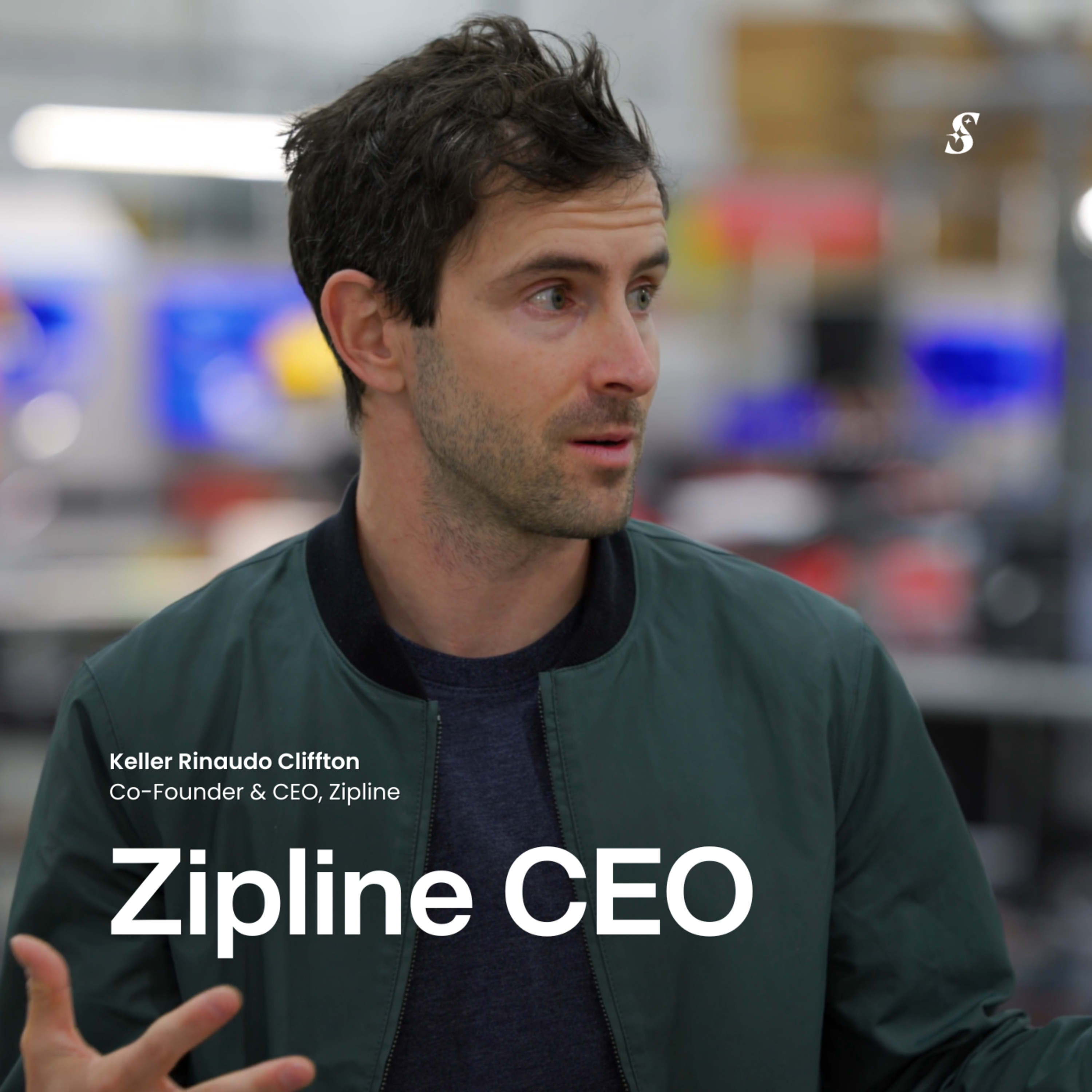
The US cannot win by simply matching China's manufacturing volume in areas like drones. Instead, its cultural strength as an "underdog comeback king" suggests a strategy of being clever and outthinking the enemy, rather than playing a "Me Too" game of mass versus mass.

While the West may lead in AI models, China's key strategic advantage is its ability to 'embody' AI in hardware. Decades of de-industrialization in the U.S. have left a gap, while China's manufacturing dominance allows it to integrate AI into cars, drones, and robots at a scale the West cannot currently match.
Zipline is quadrupling its factory to produce 20,000 drones annually, a necessity to service a 15% week-over-week growth curve. This highlights a unique hardware scaling challenge driven by software-like demand.