Get your free personalized podcast brief
We scan new podcasts and send you the top 5 insights daily.
A mass driver on the moon is not just for deep space missions. Varda's Delian Asparouhov explains it would be a game-changer for Low Earth Orbit (LEO) manufacturing by enabling the free delivery of basic materials like water from the moon. This would drastically reduce the cost and complexity of orbital factories that currently must launch all inputs from Earth.

Related Insights
Reusable rockets will efficiently deliver payloads to Low Earth Orbit (LEO), where specialized "space tugs" will then take over for the final, more efficient journey to higher orbits. This creates a new, more economical layer of in-space transportation infrastructure.
Getting to space is now relatively cheap thanks to SpaceX. The next economic revolution will be triggered by solving the much harder problem of bringing materials back from space. This will enable in-space manufacturing and create a true two-way space economy.

Unlike on Earth, where atmospheric drag makes electromagnetic launchers (mass drivers) impractical, the Moon's vacuum environment makes them highly efficient. This technology could turn the Moon into a "train station" for the solar system, launching raw materials and goods to Mars at a fraction of the energy cost.

The long-term vision isn't just launching data centers, but manufacturing them on the moon. This would utilize lunar resources and electromagnetic mass drivers to deploy satellites, making Earth's launch costs and gravity well irrelevant for deep space expansion.
The hosts deconstruct the mass driver project into distinct, necessary phases: reliable heavy lunar launch, power infrastructure, robotic construction, and on-moon assembly. This highlights the immense, long-term complexity behind the visionary render, with each step being a massive undertaking in itself.
Varda Space, an in-orbit manufacturing company, simplifies its business model by treating space launches as a mere shipping cost, not a core competency. Co-founder Will Bruey notes they use SpaceX instead of FedEx, but from a business perspective, 'shipping is shipping.' This focus allows them to concentrate on their true value: manufacturing in microgravity.
To bypass the complexity of transferring cryogenic fuels in space, Orbital Operations' vehicles will be refueled with simple tanks of water. An onboard electrolysis system will then split the H2O into storable hydrogen and oxygen propellants, dramatically simplifying logistics.
Varda manufactures products like pharmaceuticals and fiber optics in space, where zero gravity acts as an "off switch" enabling unique molecular structures. Their key advantage is the difficult-to-replicate capability of returning materials safely from orbit.

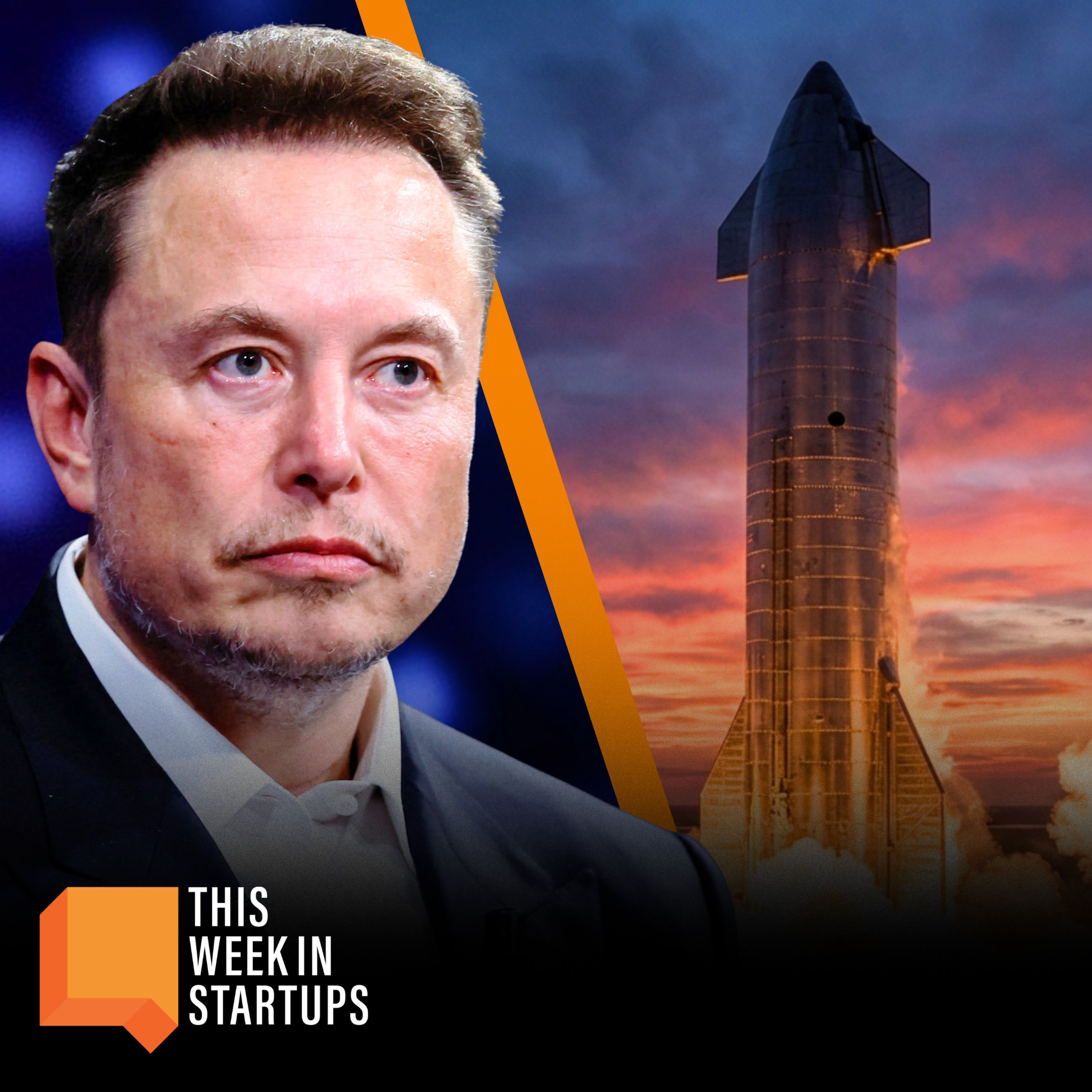
Elon Musk has strategically shifted SpaceX's primary focus from colonizing Mars to establishing an industrial base on the Moon. The new vision is to manufacture AI satellites on the lunar surface and launch them into a 'Dyson swarm' using electromagnetic mass drivers, framing the Moon as a critical stepping stone for a space-based economy.

The project's value proposition is defeated if you transport fully-made satellites to the moon just to launch them back towards Earth. The true economic benefit comes from sourcing and manufacturing most of the payload's mass from lunar resources, minimizing costly Earth-to-moon transport.