Get your free personalized podcast brief
We scan new podcasts and send you the top 5 insights daily.
The project's value proposition is defeated if you transport fully-made satellites to the moon just to launch them back towards Earth. The true economic benefit comes from sourcing and manufacturing most of the payload's mass from lunar resources, minimizing costly Earth-to-moon transport.

Related Insights
Google's "Project Suncatcher" aims to place AI data centers in orbit for efficient solar power. However, the project's viability isn't just a technical challenge; it fundamentally requires space transport costs to decrease tenfold. This massive economic hurdle, more than technical feasibility, defines it as a long-term "moonshot" initiative.

Getting to space is now relatively cheap thanks to SpaceX. The next economic revolution will be triggered by solving the much harder problem of bringing materials back from space. This will enable in-space manufacturing and create a true two-way space economy.

Unlike on Earth, where atmospheric drag makes electromagnetic launchers (mass drivers) impractical, the Moon's vacuum environment makes them highly efficient. This technology could turn the Moon into a "train station" for the solar system, launching raw materials and goods to Mars at a fraction of the energy cost.

The long-term vision isn't just launching data centers, but manufacturing them on the moon. This would utilize lunar resources and electromagnetic mass drivers to deploy satellites, making Earth's launch costs and gravity well irrelevant for deep space expansion.
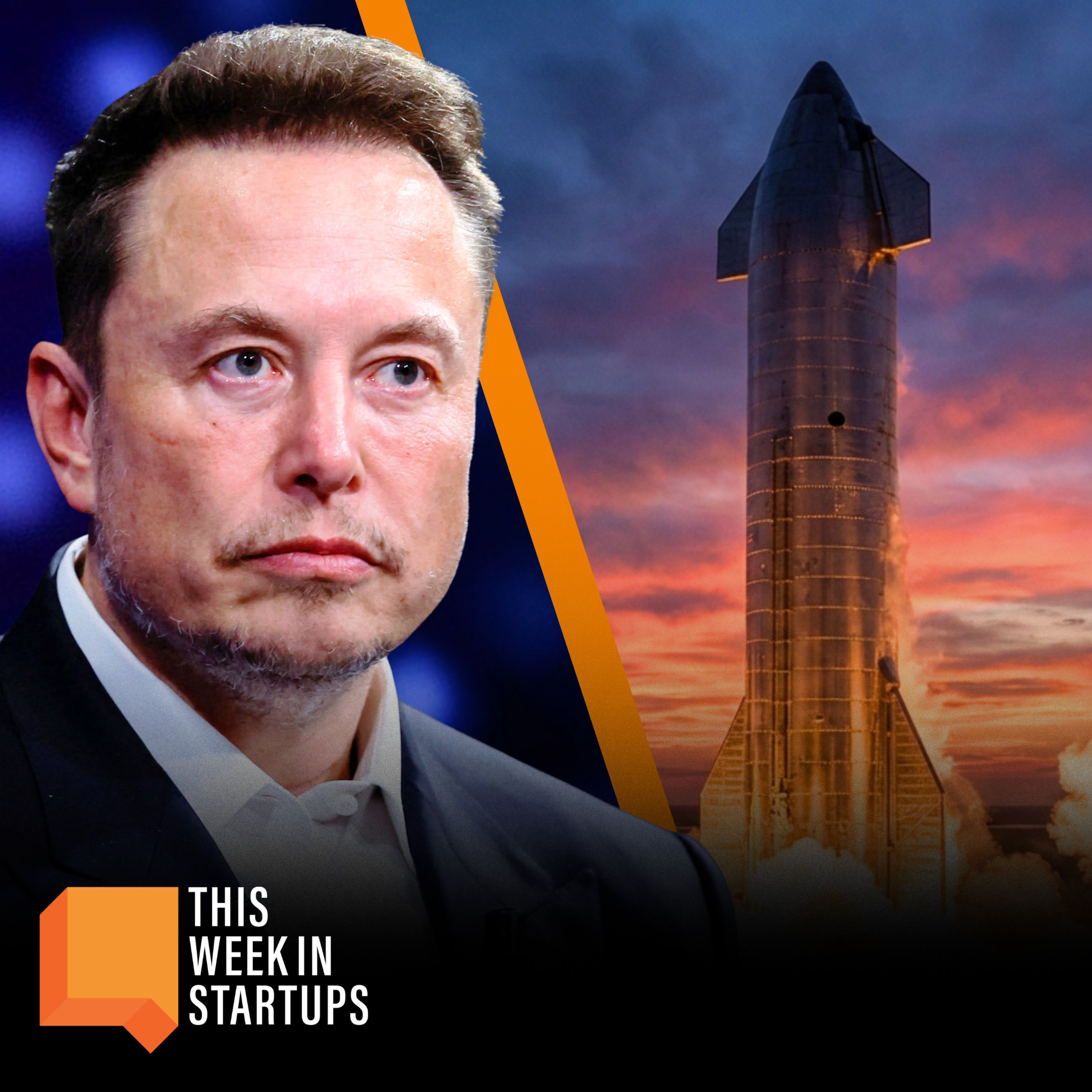
The shift to a moon base isn't just about faster space colonization. It's a strategic move to build massive AI and quantum computing data centers off-planet. This bypasses terrestrial energy regulations and solves the immense cooling requirements for these systems, positioning SpaceX to dominate the AI landscape.

Lux Aeterna's reusable satellites fundamentally change space mission economics. Instead of designing for maximum longevity, companies can now create shorter, purpose-built missions (e.g., six months) for applications like in-space manufacturing, where the value lies in bringing physical materials back to Earth.
The hosts deconstruct the mass driver project into distinct, necessary phases: reliable heavy lunar launch, power infrastructure, robotic construction, and on-moon assembly. This highlights the immense, long-term complexity behind the visionary render, with each step being a massive undertaking in itself.
Startups are successfully deploying infrastructure like in-orbit GPUs. However, the space economy remains self-referential, serving other space companies. It needs a major commercial application with Earth-based customers, like asteroid mining, to achieve sustainable growth.
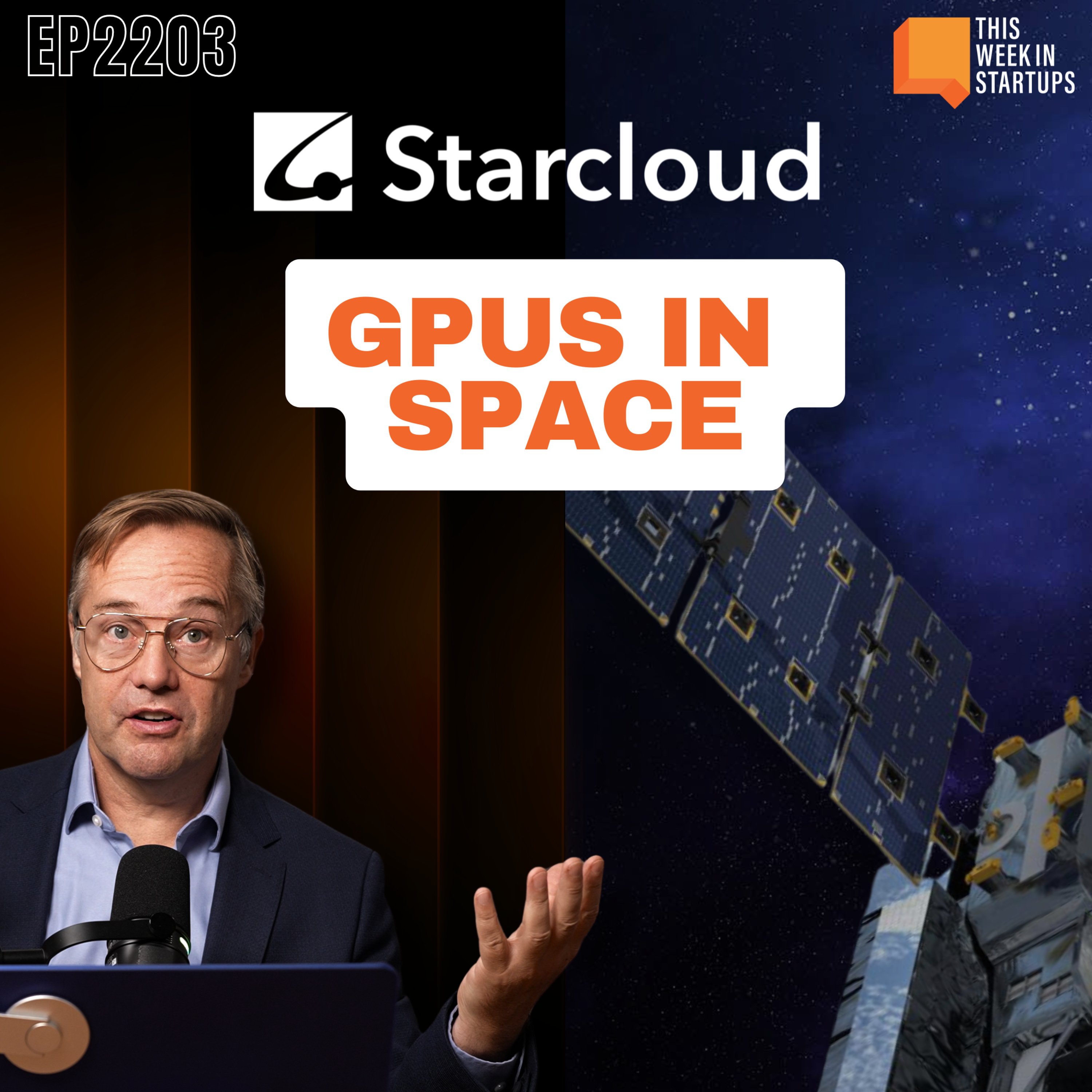
On Earth, each new data center is more expensive than the last due to land and energy constraints. In space, manufacturing satellites at scale and declining launch costs (via Starship) mean the marginal cost for each new data center goes down, creating fundamentally different scaling economics.

Elon Musk has strategically shifted SpaceX's primary focus from colonizing Mars to establishing an industrial base on the Moon. The new vision is to manufacture AI satellites on the lunar surface and launch them into a 'Dyson swarm' using electromagnetic mass drivers, framing the Moon as a critical stepping stone for a space-based economy.
