Get your free personalized podcast brief
We scan new podcasts and send you the top 5 insights daily.
Elon Musk has strategically shifted SpaceX's primary focus from colonizing Mars to establishing an industrial base on the Moon. The new vision is to manufacture AI satellites on the lunar surface and launch them into a 'Dyson swarm' using electromagnetic mass drivers, framing the Moon as a critical stepping stone for a space-based economy.

Related Insights
The grand proposal for a million-satellite orbital data center serves a dual purpose. It's not just about future technology; it's a strategic narrative play to convince potential IPO investors that SpaceX is a major player in the lucrative AI space, not merely a rocket and satellite internet company.

The long-term vision isn't just launching data centers, but manufacturing them on the moon. This would utilize lunar resources and electromagnetic mass drivers to deploy satellites, making Earth's launch costs and gravity well irrelevant for deep space expansion.
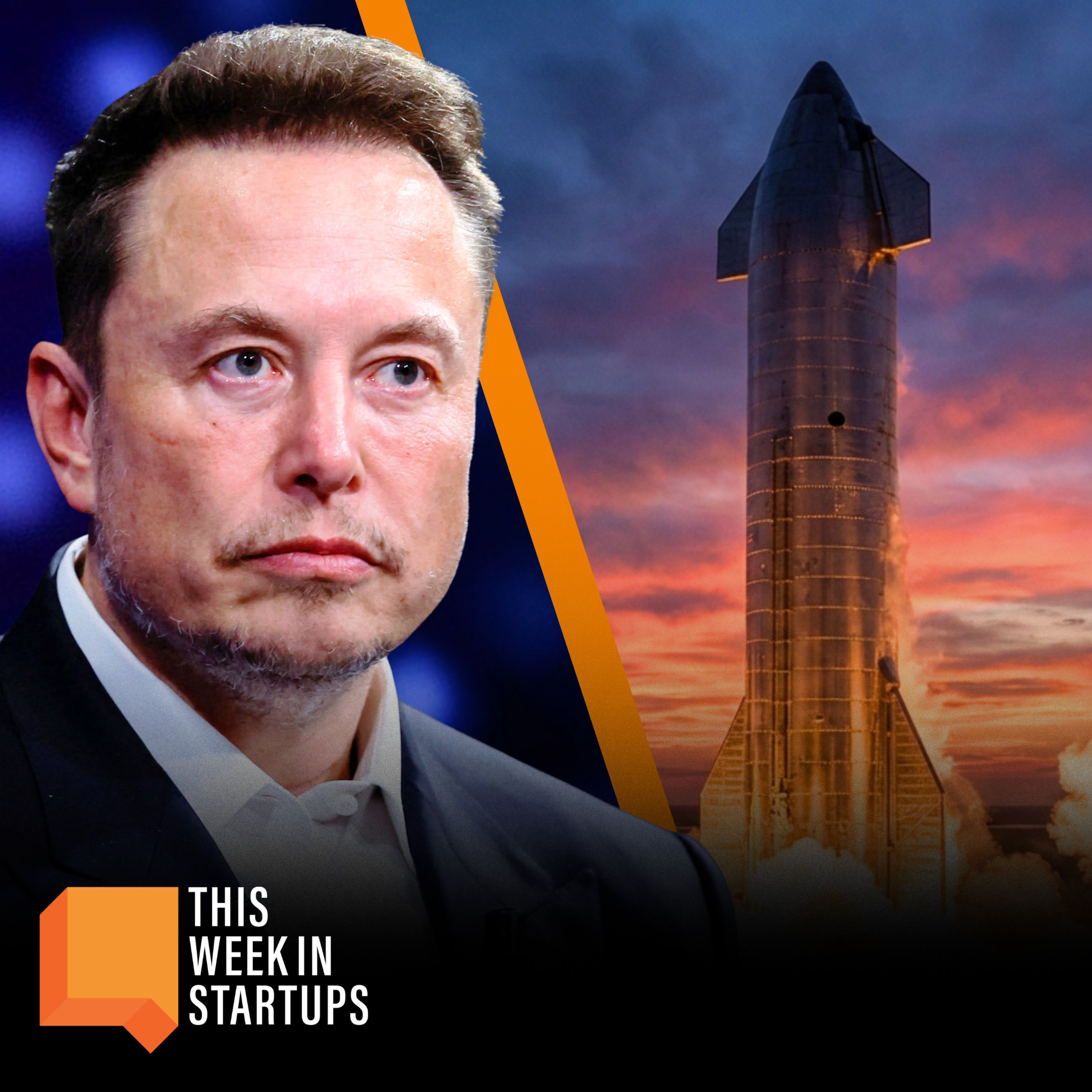
The shift to a moon base isn't just about faster space colonization. It's a strategic move to build massive AI and quantum computing data centers off-planet. This bypasses terrestrial energy regulations and solves the immense cooling requirements for these systems, positioning SpaceX to dominate the AI landscape.

Musk's long-standing resistance to a SpaceX IPO has shifted due to the rise of AI. The massive capital raise is primarily aimed at establishing a network of space-based data centers, a strategic convergence of his space and AI ventures, rather than solely funding Mars colonization.

The merger combines SpaceX's rocketry with XAI's AI development. The official rationale is to build cost-effective, environmentally friendly data centers in space to meet the massive compute demands of future AI, a vision that leverages SpaceX's continually falling launch costs to make space-based supercomputing feasible.

Building a city on Mars is hindered by a 26-month launch window, making iteration incredibly slow. The moon, with a 10-day launch window and two-day trip, allows for the rapid, agile development cycles necessary to solve the complex problems of off-world colonization.
SpaceX is strategically delaying its Mars ambitions to first establish a permanent, 'self-growing' city on the moon. Elon Musk now views this as a more practical 10-year goal, with the moon serving as an essential staging ground for materials and deeper space exploration, rather than a direct-to-Mars approach.

SpaceX is reportedly targeting a $1.5 trillion IPO to raise $30 billion. This capital isn't just for rockets but to fund a new AI infrastructure business: data centers in space. This represents a significant strategic shift, leveraging its launch dominance to compete in the AI compute market by acquiring massive quantities of GPUs.

Contrary to his long-held anti-IPO stance, Elon Musk is reportedly racing to take SpaceX public. The primary driver is the immense capital required to build AI data centers in space, a strategic pivot from Mars colonization to competing in the orbital computing infrastructure race against rivals like Jeff Bezos.

The merger between SpaceX and xAI is being justified by the strategic narrative of building "data centers in space." This positions SpaceX's satellite network not just as a communications provider but as the essential physical infrastructure for a future AI-driven world, providing a rationale for combining rockets and AI.