Get your free personalized podcast brief
We scan new podcasts and send you the top 5 insights daily.
The hosts deconstruct the mass driver project into distinct, necessary phases: reliable heavy lunar launch, power infrastructure, robotic construction, and on-moon assembly. This highlights the immense, long-term complexity behind the visionary render, with each step being a massive undertaking in itself.

Related Insights
Unlike on Earth, where atmospheric drag makes electromagnetic launchers (mass drivers) impractical, the Moon's vacuum environment makes them highly efficient. This technology could turn the Moon into a "train station" for the solar system, launching raw materials and goods to Mars at a fraction of the energy cost.

The long-term vision isn't just launching data centers, but manufacturing them on the moon. This would utilize lunar resources and electromagnetic mass drivers to deploy satellites, making Earth's launch costs and gravity well irrelevant for deep space expansion.
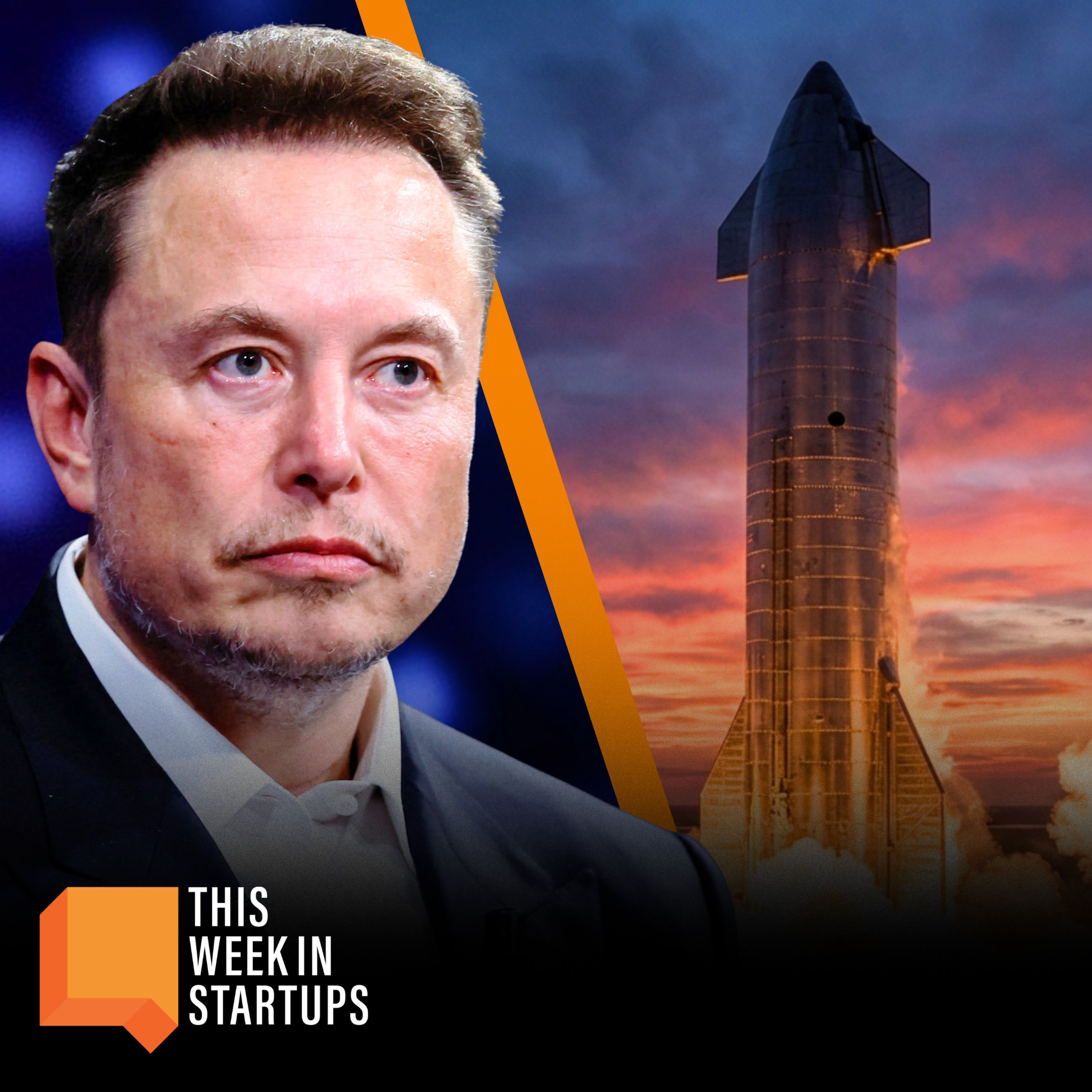
Musk's presentations, like for the lunar mass driver, often focus on grand, futuristic concepts, emphasizing how "epic" a project will be rather than providing a detailed business plan. This suggests his strategy is about selling a long-term vision, not a Q1 roadmap, to attract talent and capital.
The expansion of humanity to the Moon and Mars, using robotics for base-building and mining, will necessitate vast, local computing resources. It is more efficient to process data in space than to transmit it to Earth, creating an inevitable new frontier for data infrastructure.

Building a city on Mars is hindered by a 26-month launch window, making iteration incredibly slow. The moon, with a 10-day launch window and two-day trip, allows for the rapid, agile development cycles necessary to solve the complex problems of off-world colonization.

A moonshot isn't just a big goal. It requires three parts: a major global problem, a sci-fi sounding solution that would solve it, and a specific breakthrough technology that makes the solution seem just barely possible. This framework creates a testable hypothesis.

SpaceX is strategically delaying its Mars ambitions to first establish a permanent, 'self-growing' city on the moon. Elon Musk now views this as a more practical 10-year goal, with the moon serving as an essential staging ground for materials and deeper space exploration, rather than a direct-to-Mars approach.
Elon Musk has strategically shifted SpaceX's primary focus from colonizing Mars to establishing an industrial base on the Moon. The new vision is to manufacture AI satellites on the lunar surface and launch them into a 'Dyson swarm' using electromagnetic mass drivers, framing the Moon as a critical stepping stone for a space-based economy.

The project's value proposition is defeated if you transport fully-made satellites to the moon just to launch them back towards Earth. The true economic benefit comes from sourcing and manufacturing most of the payload's mass from lunar resources, minimizing costly Earth-to-moon transport.
To de-risk ambitious projects, identify the most challenging sub-problem. If your team can prove that part is solvable, the rest of the project becomes a manageable operational task. This validates the entire moonshot's feasibility early on.