Get your free personalized podcast brief
We scan new podcasts and send you the top 5 insights daily.
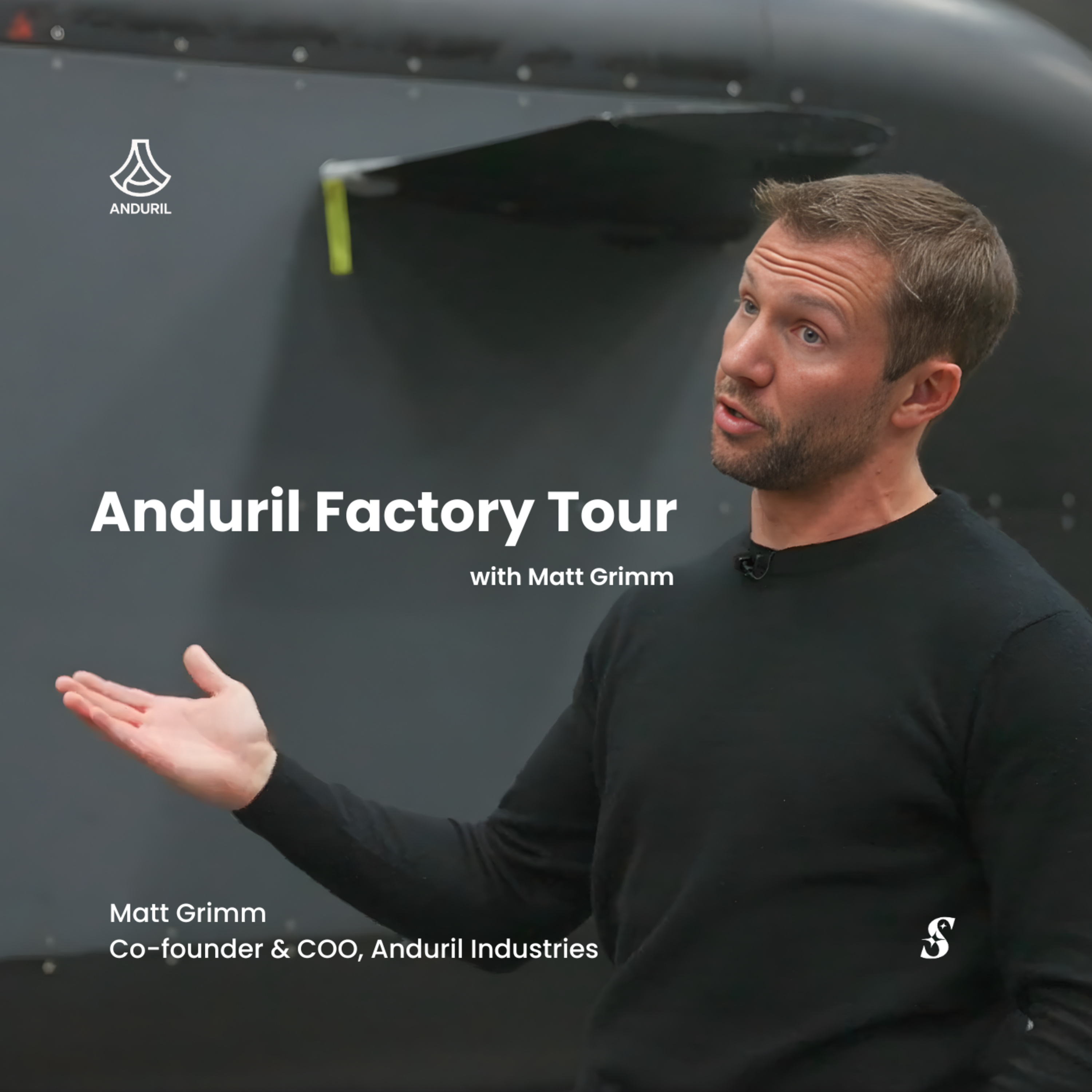
Anduril's R&D building houses machine shops, labs, and a 'dev test area' designed specifically to break products. By putting engineers across the parking lot from facilities that can rapidly prototype and test for failures (e.g., saltwater corrosion, vibration), they create an extremely tight feedback loop, speeding up iteration.
Related Insights
Instead of fearing failure, Ridge institutionalizes it by allocating a $1M annual budget specifically for testing new product expansions. This removes pressure from any single launch, encourages aggressive experimentation, and has led to eight-figure successes alongside predictable flops like watches.

Instead of starting with a blank slate, Nike's team prototypes new ideas by physically cutting and modifying existing products. This "cobbling" method enables rapid, low-cost testing of core concepts before investing in new designs and expensive molds, allowing them to fail fast and forward.

Unlike traditional contractors paid for time and materials, Anduril invests its own capital to develop products first. This 'defense product company' model aligns incentives with the government's need for speed and effectiveness, as profits are tied to rapid, successful delivery, not prolonged development cycles.

At OpenAI, the development cycle is accelerated by a practice called "vibe coding." Designers and PMs build functional prototypes directly with AI tools like Codex. This visual, interactive method is often faster and more effective for communicating ideas than writing traditional product specifications.

Stripe's Experimental Projects Team discovered that embedding its members directly within existing product and infrastructure teams leads to higher success rates. These "embedded projects" are more likely to reach escape velocity and be successfully adopted by the business, contrasting with the common model of an isolated R&D or innovation lab.

Moving from a science-focused research phase to building physical technology demonstrators is critical. The sooner a deep tech company does this, the faster it uncovers new real-world challenges, creates tangible proof for investors and customers, and fosters a culture of building, not just researching.

To test its electronic warfare products, Anduril uses an anechoic chamber. This is not just for a clean signal environment but a legal necessity. Their proximity to John Wayne Airport makes it illegal to broadcast powerful jamming signals openly, requiring a specialized, enclosed facility to develop and test these capabilities.
Unlike mass manufacturers, defense tech requires flexibility for a high mix of low-volume products. Anduril addresses this by creating a core platform of reusable software, hardware, and sensor components, enabling fast development and deployment of new systems without starting from scratch.

Gamma compresses the product development cycle into a single day. They generate an idea in the morning, build a functional prototype, and use platforms like Voice Panel to run user research studies in the afternoon, yielding actionable feedback by evening. This operationalizes rapid, pre-build validation.

Anduril prototypes drone frames by milling them from solid metal blocks. While extremely wasteful and expensive for mass production, this method bypasses the slow and costly process of creating molds for casting, drastically reducing latency during the critical iterative design phase and getting products to market faster.