Get your free personalized podcast brief
We scan new podcasts and send you the top 5 insights daily.
A long-standing state law mandates that new developments in metro areas prove a 100-year water supply. While once a regulatory hurdle, this policy now provides certainty to water-intensive businesses like semiconductor fabs, making Arizona more attractive than other drought-prone Western states.
Related Insights
To attract and retain Taiwanese semiconductor workers, Arizona's development efforts extended beyond the factory gates to cultural integration. This included supporting Mandarin immersion in schools and celebrating new Taiwanese restaurants and a Costco, viewing quality of life as a key competitive advantage.
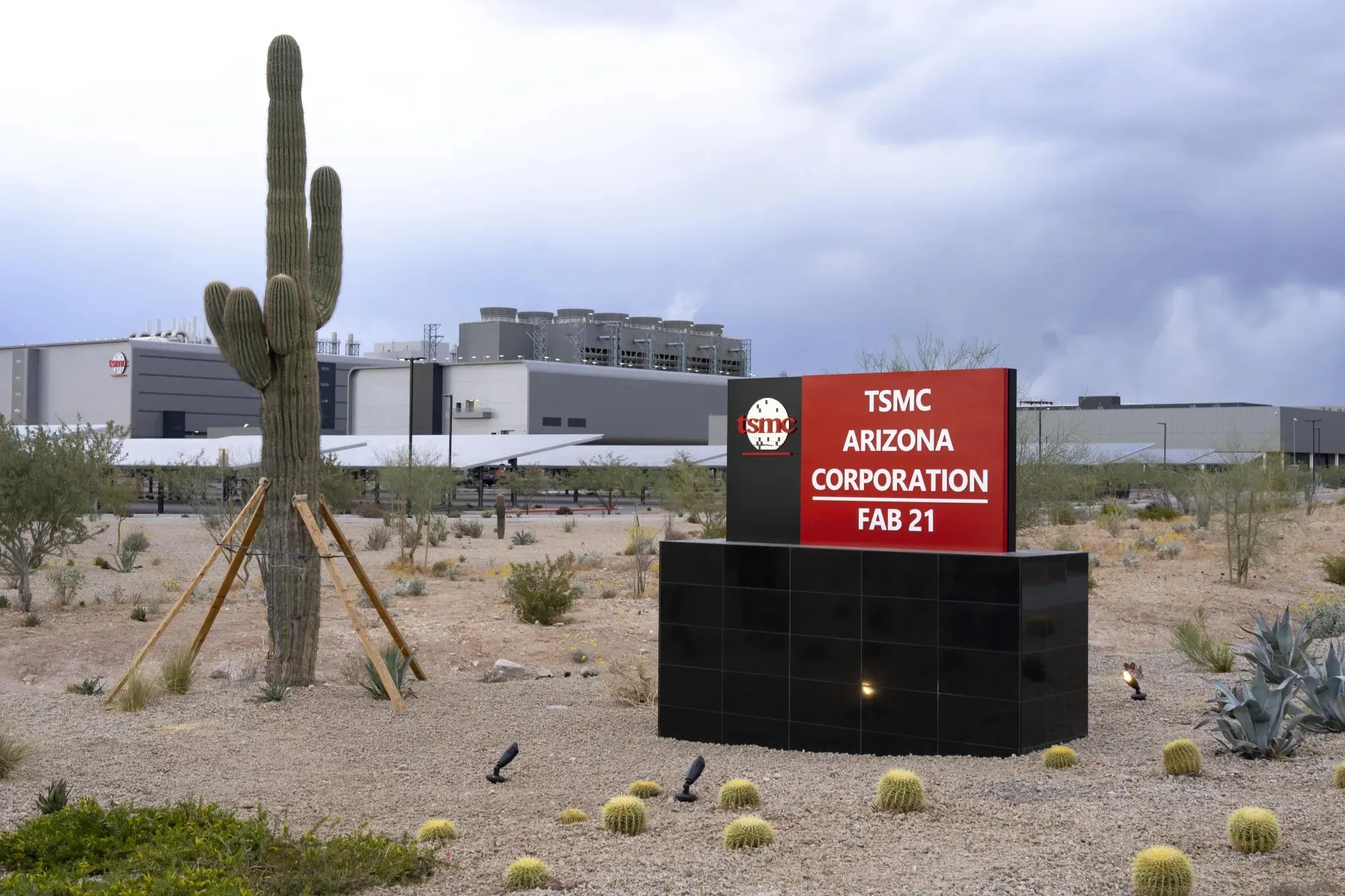
Arizona's support for TSMC's fab construction involved the governor's office mediating labor disputes over basic amenities like refrigerators and porta-potties. This demonstrates that executing grand industrial strategy relies on solving small, practical, on-the-ground problems for workers.
Contrary to popular belief, the success of semiconductor industries in Taiwan and Korea isn't primarily due to massive government subsidies. Instead, their governments excel at creating an extremely stable and predictable business environment with streamlined permitting and minimal regulatory friction, which is more critical for long-term, capital-intensive projects.

Counterintuitively, data centers in arid regions like Arizona can be a net positive. They generate up to 50 times more tax revenue per gallon of water used than industries like golf, making them a highly efficient economic replacement.

A key benefit of attracting companies like Intel and TSMC is not just job creation, but talent retention. ASU has the nation's largest engineering school, but graduates historically left for jobs elsewhere. These new fabs provide compelling local opportunities, reversing the state's brain drain.
For manufacturing startups, factory location is a critical strategic decision. They should prioritize states where local governments actively partner with them to expedite permits, guarantee power, and assist with hiring, avoiding regulatory bottlenecks found elsewhere.

Arizona struggled to permit new fabs because the 1970s Clean Air Act, designed for high-emission industrial areas, created an 'offset' problem in the low-emission state. This highlights how outdated regulations can unintentionally hinder critical modern projects, even those with broad political support.
Arizona's ability to build new industries quickly may stem from not being tied to a legacy identity like oil, gas, or automotive. This lack of 'industrial sediment' prevents the institutional inertia that can slow down other states from pivoting to new technologies like semiconductors.
Beyond just training, Arizona's government focused on raising public awareness of new semiconductor jobs. This marketing-style approach included promoting these careers in K-12 schools to build a future talent pipeline, reframing workforce development as a communications and branding challenge.
To reduce friction for new businesses, Arizona's commerce authority consolidates permitting. Instead of a company bouncing between transportation, wildlife, and historical agencies, the state coordinates internally, offering a simplified 'one-stop shop' that serves as a key competitive advantage.