Get your free personalized podcast brief
We scan new podcasts and send you the top 5 insights daily.
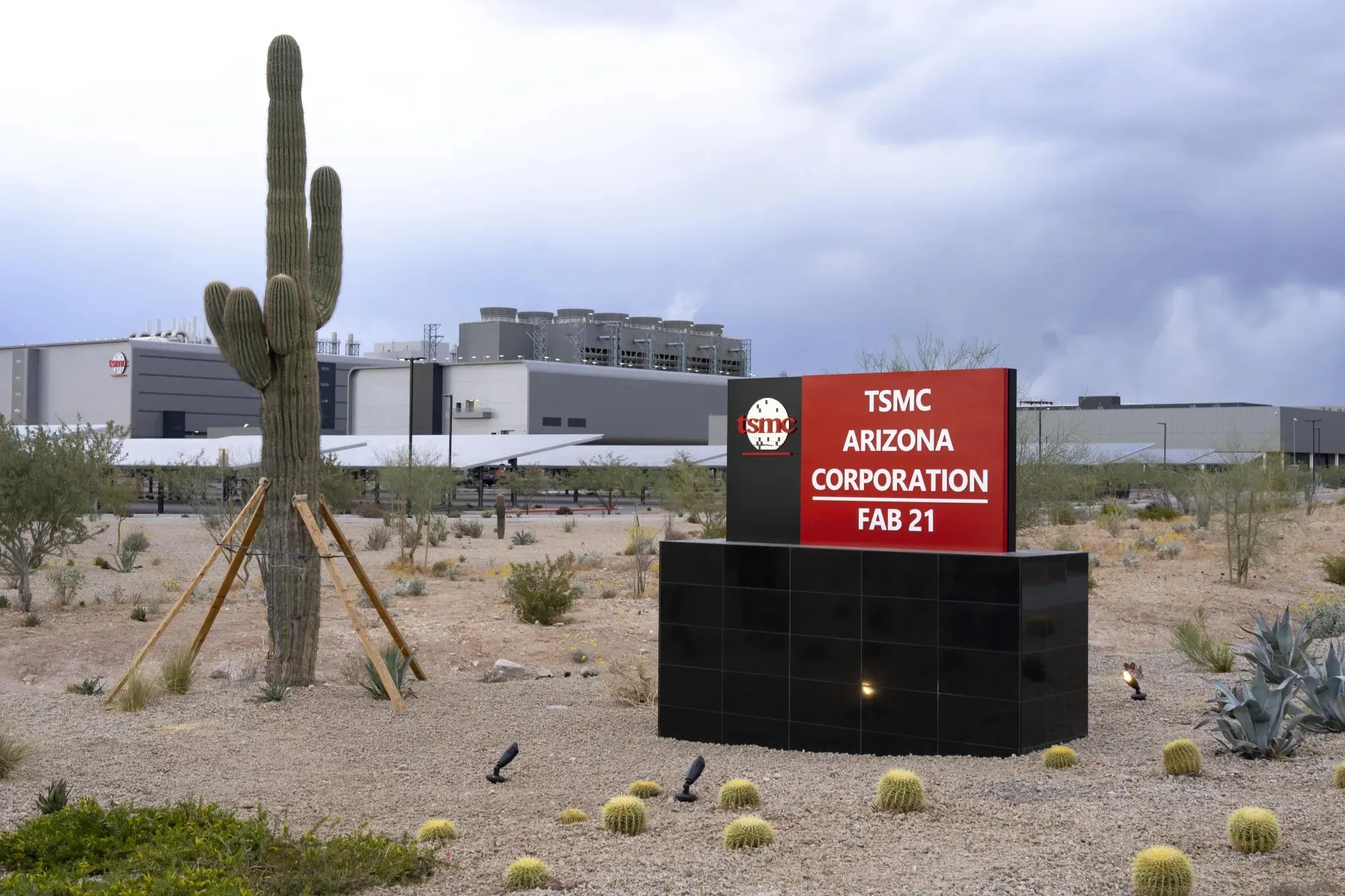
A key benefit of attracting companies like Intel and TSMC is not just job creation, but talent retention. ASU has the nation's largest engineering school, but graduates historically left for jobs elsewhere. These new fabs provide compelling local opportunities, reversing the state's brain drain.
Related Insights
To attract and retain Taiwanese semiconductor workers, Arizona's development efforts extended beyond the factory gates to cultural integration. This included supporting Mandarin immersion in schools and celebrating new Taiwanese restaurants and a Costco, viewing quality of life as a key competitive advantage.
Arizona's support for TSMC's fab construction involved the governor's office mediating labor disputes over basic amenities like refrigerators and porta-potties. This demonstrates that executing grand industrial strategy relies on solving small, practical, on-the-ground problems for workers.
The new city project California Forever is pitching manufacturers on a key value proposition: proximity to the Bay Area's elite R&D talent. By locating factories an 80-minute drive away, it eliminates the inefficient 'three-day trip' required for engineers to visit out-of-state facilities, creating a significant competitive advantage.

To compete with China in manufacturing, the US can't rely on labor volume but on productivity from AI and robotics. This requires eliminating the friction of distance between R&D talent (in the Bay Area) and factory floors, making talent-proximate manufacturing parks a strategic necessity.

Arizona's ability to build new industries quickly may stem from not being tied to a legacy identity like oil, gas, or automotive. This lack of 'industrial sediment' prevents the institutional inertia that can slow down other states from pivoting to new technologies like semiconductors.
Beyond just training, Arizona's government focused on raising public awareness of new semiconductor jobs. This marketing-style approach included promoting these careers in K-12 schools to build a future talent pipeline, reframing workforce development as a communications and branding challenge.
A long-standing state law mandates that new developments in metro areas prove a 100-year water supply. While once a regulatory hurdle, this policy now provides certainty to water-intensive businesses like semiconductor fabs, making Arizona more attractive than other drought-prone Western states.
Herbert Hoover's primary motivation for creating the Stanford Graduate School of Business was to prevent the region's top business talent from leaving for East Coast institutions and never returning. The school was an explicit strategy for regional economic and talent development, countering a perceived 'brain drain.'

The primary benefit of a robust domestic manufacturing base isn't just job creation. It's the innovation that arises when diverse industries physically coexist and their technologies cross-pollinate, leading to unexpected breakthroughs and real productivity gains.

Beyond technology, Elon Musk's strategy for the TeraFab chip plant involves a deep cultural and talent play. He plans to build a "Taiwan town" and similar communities in Texas to recruit the world's best semiconductor engineers by recreating their home environments, a unique advantage over incumbents.
![Gavin Baker - Watts and Wafers - [Invest Like the Best, EP.473] thumbnail](https://megaphone.imgix.net/podcasts/3bc7d580-53ec-11f1-99c0-3bd245449e4f/image/31563a7dd10ea92493c934f0c1e723fe.jpg?ixlib=rails-4.3.1&max-w=3000&max-h=3000&fit=crop&auto=format,compress)