Get your free personalized podcast brief
We scan new podcasts and send you the top 5 insights daily.
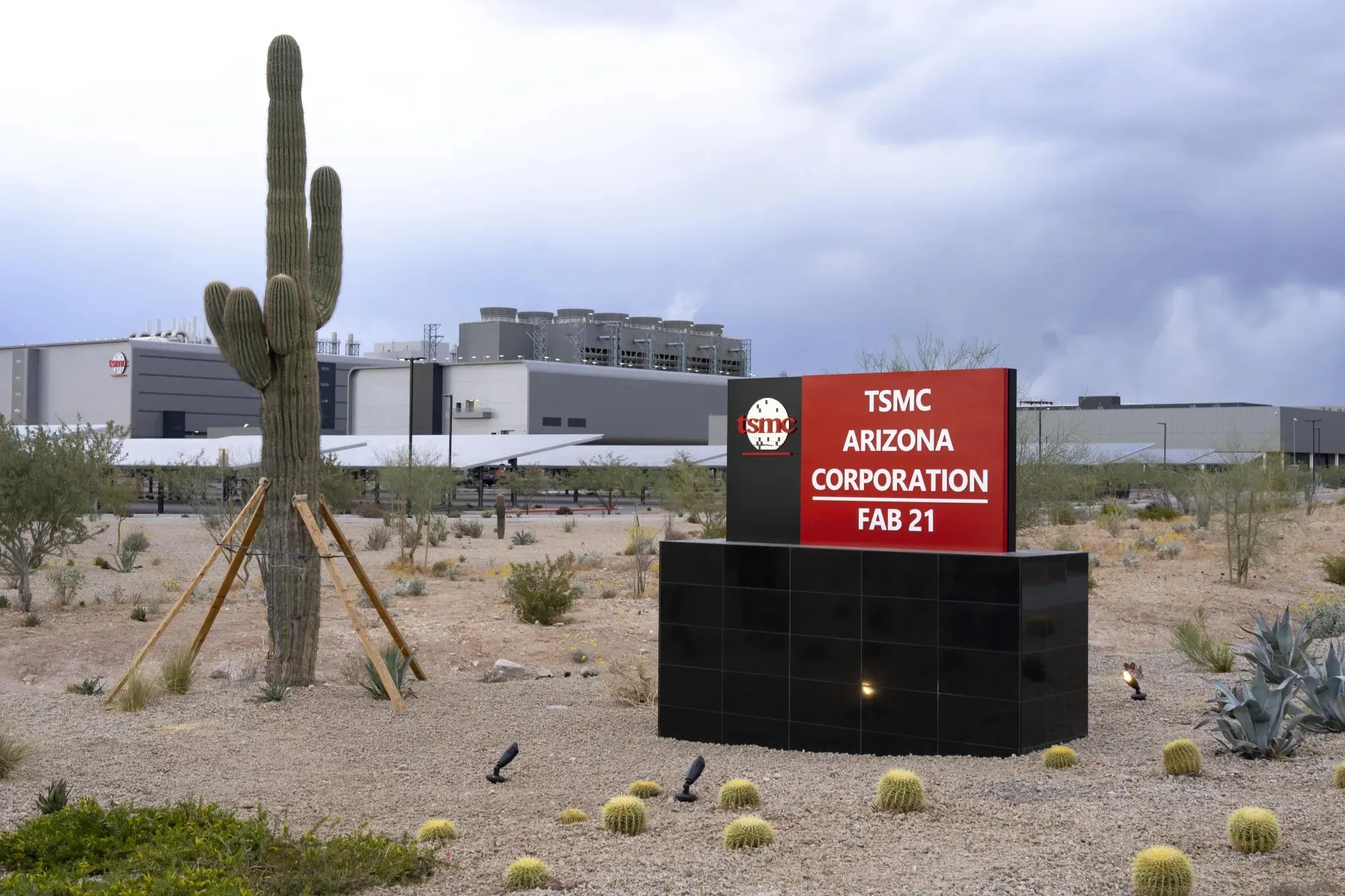
Arizona's support for TSMC's fab construction involved the governor's office mediating labor disputes over basic amenities like refrigerators and porta-potties. This demonstrates that executing grand industrial strategy relies on solving small, practical, on-the-ground problems for workers.
Related Insights
To attract and retain Taiwanese semiconductor workers, Arizona's development efforts extended beyond the factory gates to cultural integration. This included supporting Mandarin immersion in schools and celebrating new Taiwanese restaurants and a Costco, viewing quality of life as a key competitive advantage.
Contrary to popular belief, the success of semiconductor industries in Taiwan and Korea isn't primarily due to massive government subsidies. Instead, their governments excel at creating an extremely stable and predictable business environment with streamlined permitting and minimal regulatory friction, which is more critical for long-term, capital-intensive projects.

Effective US industrial policy should foster competition among states rather than imposing top-down federal plans. By offering federal loans with equity kickers to states that opt-in to host critical industries like mining or chip fabs, the government can incentivize reshoring while allowing for a market-driven, locally-supported approach.

A key benefit of attracting companies like Intel and TSMC is not just job creation, but talent retention. ASU has the nation's largest engineering school, but graduates historically left for jobs elsewhere. These new fabs provide compelling local opportunities, reversing the state's brain drain.
It's naive to expect private companies to reverse the offshoring of chip manufacturing, a trend they initiated to maximize profits. Pat Gelsinger argues that markets don't price in long-term geopolitical risk, making substantial, long-term government industrial policy essential to bring supply chains back.

For manufacturing startups, factory location is a critical strategic decision. They should prioritize states where local governments actively partner with them to expedite permits, guarantee power, and assist with hiring, avoiding regulatory bottlenecks found elsewhere.

Arizona's ability to build new industries quickly may stem from not being tied to a legacy identity like oil, gas, or automotive. This lack of 'industrial sediment' prevents the institutional inertia that can slow down other states from pivoting to new technologies like semiconductors.
The CHIPS team's primary goal was securing a commitment for three TSMC fabs, viewing it as a strategic tipping point. They believed the operational scale of a three-fab cluster would make building a fourth, fifth, and sixth a near certainty, creating a self-sustaining 'mega fab' without requiring subsidies for later expansions.

A long-standing state law mandates that new developments in metro areas prove a 100-year water supply. While once a regulatory hurdle, this policy now provides certainty to water-intensive businesses like semiconductor fabs, making Arizona more attractive than other drought-prone Western states.
Beyond immense technical challenges, US chip manufacturing is stymied by short political cycles. Fabs require multi-administration timelines (5-6 years) and stable, long-term policy support, which is difficult to maintain in the American political system, creating a significant hurdle for reshoring.
