Get your free personalized podcast brief
We scan new podcasts and send you the top 5 insights daily.
The theory that the President has absolute removal power over executive officers challenges the 1803 Marbury v. Madison precedent, which established that the President is under the law and can be compelled by courts to follow it. This shift risks creating a scenario where presidential orders supersede statutory law.

Related Insights
Executive Orders (EOs) primarily guide how the executive branch interprets and enforces existing laws; they cannot create new ones. For an EO to have staying power, the administration must embody it in departmental regulations and processes. Without congressional action, EOs are often 'more flash than bank' and don't drive behavior outside the administration.

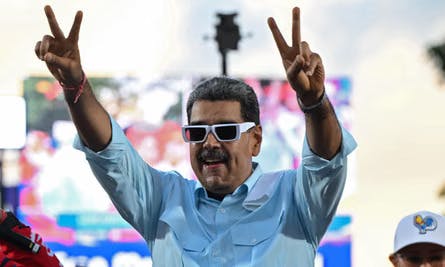
The US executive branch increasingly initiates military action by citing inherent commander-in-chief powers, sidestepping the constitutional requirement for Congress to declare war. This shift, exemplified by the Venezuela operation, marks a 'third founding' of the American republic where historical checks and balances on war-making are now considered quaint.
The Supreme Court is systematically dismantling laws that protect heads of independent agencies (like the CFPB and FTC) from being fired at will. This aligns with the "unitary executive theory," concentrating power in the presidency and eroding the apolitical nature of regulatory bodies.

Criticisms of a president's 'authoritarian tendencies' often miss the historical context. The concentration of power in the executive branch, or 'imperial presidency,' is a long-standing issue in U.S. politics, dating back to at least FDR and Nixon, and is often exacerbated by a weak and ineffective Congress.

The arguments to allow presidential firing of FTC commissioners create a slippery slope that threatens other independent, multi-member bodies. This logic could extend to the Federal Reserve's Board of Governors, potentially politicizing U.S. monetary policy—an outcome so significant that even the court's conservative justices appear wary of its implications.
AI tools could give the president granular, real-time control over the entire federal bureaucracy. This concept of a 'unitary artificial executive' threatens to centralize immense power, enabling a president to override the independent functions and expertise of civil servants at scale.

The Supreme Court case 'Trump v. Slaughter,' concerning the firing of an FTC commissioner, is poised to dismantle longstanding protections for independent agencies. A ruling favoring the president would transfer significant power from Congress to the executive branch, fundamentally altering the separation of powers in American government.
The fundamental shift to autocracy occurs when the legal system is no longer a neutral arbiter. Instead, it becomes an instrument of power for the leader, where legal decisions are dictated by political expediency rather than established statutes.

Trump's efforts are not just breaking norms but constitute an attempt at a full-blown "political revolution." The goal is to gain direct political control over institutions like the FBI and DOJ, weaponize them against political opponents, and eliminate the checks and balances that constrain presidential power.

The Trump administration operates "extra-constitutionally" not by directly breaking laws, but by creating bureaucratic chaos. By claiming incorrect venues or unclear authority, they engage in a "cat and mouse game" that paralyzes the legal system and operates as if the Constitution doesn't exist.
