Get your free personalized podcast brief
We scan new podcasts and send you the top 5 insights daily.
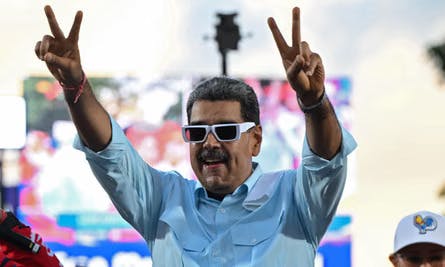
The US executive branch increasingly initiates military action by citing inherent commander-in-chief powers, sidestepping the constitutional requirement for Congress to declare war. This shift, exemplified by the Venezuela operation, marks a 'third founding' of the American republic where historical checks and balances on war-making are now considered quaint.
Related Insights
The Trump administration's strategy for control isn't writing new authoritarian laws, but aggressively using latent executive authority that past administrations ignored. This demonstrates how a democracy's own structures can be turned against it without passing a single new piece of legislation, as seen with the FCC.

Presidents consistently follow the War Powers Resolution's 48-hour notification rule but include language asserting their inherent Article II authority to act unilaterally. This creates a constitutional paradox: they perform the actions required by the law while simultaneously arguing the law doesn't actually constrain them.
The Venezuelan intervention was coordinated with American oil businesses before and after, while Congress was kept in the dark. This demonstrates a shift where foreign policy serves specific corporate interests directly, bypassing traditional democratic oversight and processes.

Crucial U.S. institutions, while formally existing, have effectively ceased to function as checks on executive power. Congress has ceded its constitutional authority to tax and spend, and the Justice Department's independence from the White House has disintegrated, rendering them functionally inert.

Cheering for a president to use executive orders or emergency powers is short-sighted. The opposition will eventually gain power and use those same expanded authorities for policies you oppose, creating a cycle of escalating executive action.

The US has established a precedent of using military force to apprehend fugitives abroad based on domestic legal actions, as seen with Noriega in 1989 and Maduro now. This practice blurs the line between law enforcement and an act of war, creating a thin legal justification for military intervention without traditional congressional or international approval.
A president can legally initiate military actions like a blockade without congressional approval by first designating the target regime as a 'Foreign Terrorist Organization.' This provides a separate legal playbook and set of executive powers, circumventing the formal declaration of war process.

The War Powers Resolution's 60-day limit is triggered by "hostilities." The Obama and Trump administrations exploited the term's ambiguity, arguing that military actions like drone strikes against an enemy that cannot retaliate do not count as "hostilities," thus avoiding the need for congressional authorization.
Senator Elizabeth Warren argues that the separation of powers is not self-enforcing; it depends on each branch jealously guarding its own authority. A constitutional crisis arises when Congress becomes compliant and allows the executive branch to usurp its powers.
Article II grants executive power without the "herein granted" limit applied to Congress in Article I. Presidents have historically used this ambiguity to assert inherent powers beyond those explicitly listed in the Constitution, a practice now central to debates over executive authority.
