Get your free personalized podcast brief
We scan new podcasts and send you the top 5 insights daily.
Criticisms of a president's 'authoritarian tendencies' often miss the historical context. The concentration of power in the executive branch, or 'imperial presidency,' is a long-standing issue in U.S. politics, dating back to at least FDR and Nixon, and is often exacerbated by a weak and ineffective Congress.

Related Insights
The Trump administration's strategy for control isn't writing new authoritarian laws, but aggressively using latent executive authority that past administrations ignored. This demonstrates how a democracy's own structures can be turned against it without passing a single new piece of legislation, as seen with the FCC.

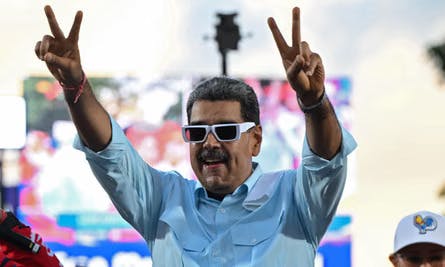
The US executive branch increasingly initiates military action by citing inherent commander-in-chief powers, sidestepping the constitutional requirement for Congress to declare war. This shift, exemplified by the Venezuela operation, marks a 'third founding' of the American republic where historical checks and balances on war-making are now considered quaint.
Crucial U.S. institutions, while formally existing, have effectively ceased to function as checks on executive power. Congress has ceded its constitutional authority to tax and spend, and the Justice Department's independence from the White House has disintegrated, rendering them functionally inert.
Cheering for a president to use executive orders or emergency powers is short-sighted. The opposition will eventually gain power and use those same expanded authorities for policies you oppose, creating a cycle of escalating executive action.

Mass surveillance capabilities weren't created by a single administration. They are the result of decades of incremental, bipartisan decisions from Reagan to Obama, driven by political fears of appearing weak on national security, making the system deeply entrenched and difficult to reform.

The U.S. political landscape is increasingly adopting authoritarian rhetoric and tendencies. However, this shift comes without any of the supposed upsides of authoritarianism, such as hyper-efficient infrastructure or public order. The result is a dysfunctional "authoritarianism without the good stuff."

The Supreme Court is systematically dismantling laws that protect heads of independent agencies (like the CFPB and FTC) from being fired at will. This aligns with the "unitary executive theory," concentrating power in the presidency and eroding the apolitical nature of regulatory bodies.

The expansion of executive power and erosion of political norms, such as state intervention in corporate decisions or attacks on media, will not be reversed. Future administrations, regardless of party, are unlikely to relinquish these new powers. A Democrat could use state capitalism to promote renewables just as a Republican uses it for oil.
The alleged plan for Donald Trump to become the lifetime head of a new global 'board of peace' highlights a dangerous precedent. It shows how a sitting president can leverage the power of their office to create a permanent, influential political role for themselves as a private citizen.

Trump's efforts are not just breaking norms but constitute an attempt at a full-blown "political revolution." The goal is to gain direct political control over institutions like the FBI and DOJ, weaponize them against political opponents, and eliminate the checks and balances that constrain presidential power.