Get your free personalized podcast brief
We scan new podcasts and send you the top 5 insights daily.
The Trump administration operates "extra-constitutionally" not by directly breaking laws, but by creating bureaucratic chaos. By claiming incorrect venues or unclear authority, they engage in a "cat and mouse game" that paralyzes the legal system and operates as if the Constitution doesn't exist.

Related Insights
The chaotic nature of major foreign policy moves, such as the Venezuelan operation, could be strategic. By creating an overwhelming and confusing news cycle, the administration can deliberately divert media and public attention away from damaging domestic issues like the Epstein files.

Trump's erratic approach isn't random; it's a strategy to create chaos and uncertainty. This keeps adversaries off-balance, allowing him to exploit openings that emerge, much like a disruptive CEO. He is comfortable with instability and uses it as a tool for negotiation and advantage.

The Trump administration's strategy for control isn't writing new authoritarian laws, but aggressively using latent executive authority that past administrations ignored. This demonstrates how a democracy's own structures can be turned against it without passing a single new piece of legislation, as seen with the FCC.

The US executive branch increasingly initiates military action by citing inherent commander-in-chief powers, sidestepping the constitutional requirement for Congress to declare war. This shift, exemplified by the Venezuela operation, marks a 'third founding' of the American republic where historical checks and balances on war-making are now considered quaint.
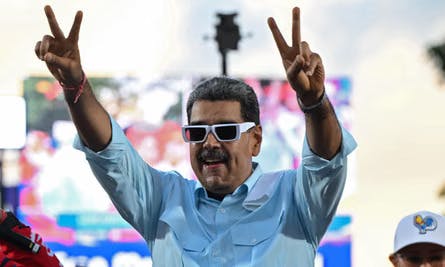
Much of government functions on decorum and unwritten rules. When political actors attack these norms—like challenging procedural traditions—it creates a cycle of retribution that destabilizes the entire system more profoundly than any single illegal act could.

In Trump v. United States, the Supreme Court granted presidents immunity from criminal prosecution for official acts related to their "core constitutional functions," such as pardoning or directing investigations. This protection applies even if the actions are performed in bad faith, creating an unprecedented shield from accountability.

Crucial U.S. institutions, while formally existing, have effectively ceased to function as checks on executive power. Congress has ceded its constitutional authority to tax and spend, and the Justice Department's independence from the White House has disintegrated, rendering them functionally inert.

Beyond headline-grabbing scandals, the most insidious impact of a kleptocratic administration is its refusal to enforce existing laws, from financial regulations to anti-corruption acts. This quiet dismantling of the legal framework fosters a culture of impunity where bad actors thrive, ultimately harming ordinary people and destabilizing the entire system.

A president can legally initiate military actions like a blockade without congressional approval by first designating the target regime as a 'Foreign Terrorist Organization.' This provides a separate legal playbook and set of executive powers, circumventing the formal declaration of war process.

Trump's efforts are not just breaking norms but constitute an attempt at a full-blown "political revolution." The goal is to gain direct political control over institutions like the FBI and DOJ, weaponize them against political opponents, and eliminate the checks and balances that constrain presidential power.