Get your free personalized podcast brief
We scan new podcasts and send you the top 5 insights daily.
The hope that airstrikes can catalyze a popular uprising for regime change is historically unfounded. Unlike in Afghanistan or Libya where local ground forces existed, there is no organized army on the ground in Iran to capitalize on air power, making a decapitation strategy highly unlikely to succeed.

Related Insights
Despite widespread protests, Iran's repressive state apparatus is highly effective and has shown no signs of cracking. The probability of the regime collapsing from internal pressure alone is extremely low. Niall Ferguson argues that only external intervention, a form of 'regime alteration,' can realistically topple the Islamic Republic.

Unlike regimes centered on a single dictator like Saddam Hussein, Iran's power structure is a complex, institutionalized relationship between its clerical and military establishments. This distributed power makes the regime resilient to 'decapitation' strikes aimed at killing senior leaders, as there is no single point of failure.
The "absolutely clinical" US raid to capture Venezuela's president is lauded as a military success. However, historical precedents from Afghanistan in 2001 and Iraq in 2003 show that initial military prowess in toppling a regime is no guarantee of long-term strategic success, which depends on far more complex political factors.
A clean, external removal of Iran's leadership, similar to what occurred in Venezuela, is unlikely. Iran's population is nearly four times larger, it is geographically distant, and the American political psyche associates the Middle East with costly military entanglements, creating a much higher barrier to intervention.

Defining success as an ambitious, all-or-nothing outcome like 'regime change' is a critical mistake. Instead, administrations should set clear, measurable military objectives, such as degrading missile capabilities or naval threats. This allows them to define success, declare victory, and create a clear off-ramp for military campaigns.
While a ground invasion is unlikely, a potential US military strategy involves a direct assassination attempt on Iran's Supreme Leader, Ayatollah Khamenei. This high-risk decapitation strike aims to destabilize the regime's core, but the effect on the cohesion of its security forces is completely unpredictable.
Rather than surgical strikes, which have a poor historical track record, the most effective foreign support for Iranian protesters is restoring their internet connectivity. The regime kills in the dark; offensive cyber operations that tear down its 'digital iron wall' directly empower citizens and expose atrocities.

A U.S. military strike to remove Ayatollah Khamenei is unlikely to help protesters. Analysis suggests it would more likely result in the Revolutionary Guard seizing control or other regime remnants continuing the fight, ultimately failing to satisfy the opposition and potentially worsening the civil conflict.
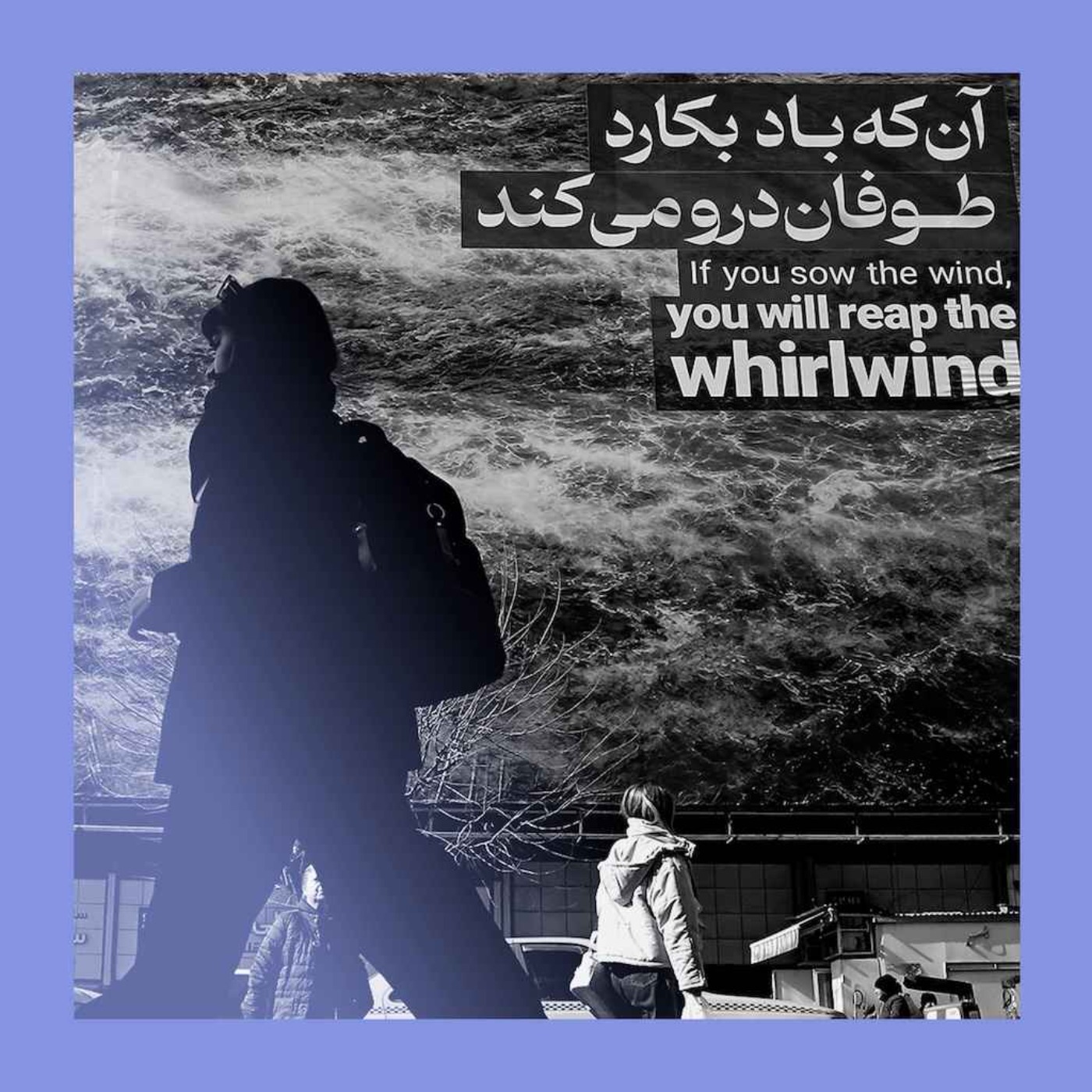
Despite widespread internal protests and instability, history shows that an external attack is one of the few things that can unify the Iranian population. A potential Israeli strike, meant to weaken the regime, could backfire by creating a 'rally 'round the flag' effect that shores up support for the Ayatollah.

Unlike nascent revolutionary states that rally against foreign attacks, late-stage dictatorships are weakened by military defeats. Iran's recent humiliations by Israel and the US have exposed incompetence and eroded the public's perception of strength, fueling protests and accelerating the regime's demise.