Get your free personalized podcast brief
We scan new podcasts and send you the top 5 insights daily.
Mexican officials are less concerned about cartels disrupting the World Cup—as gangs see it as a business opportunity—and more worried that minor incidents will be amplified by Donald Trump to damage Mexico's international standing.
Related Insights
Having worked on World Cups as a sponsor and agency, the biggest surprise for FIFA's CMO upon moving in-house was the immense, hidden operational complexity. Marketing is just one visible piece of a massive logistical puzzle involving transportation, security (FBI, Homeland Security), and multi-state government coordination.
The successful crackdown on the relatively business-minded Sinaloa cartel created a power vacuum. This void was filled by the more brutal Jalisco New Generation Cartel, which uses extreme violence as its primary business model. This inadvertently worsened the security situation by replacing a predictable actor with a chaotic one.

President Claudia Scheinbaum's hesitant response to cartel violence is framed not as weakness, but as a calculated political gamble. She may believe letting the violence 'blow over' is less risky than an all-out war that could threaten her family and destabilize her government.

Leaders create simplified, emotionally resonant narratives for public consumption that mask the messy, complex, and often ugly truths behind their actions. The real "why" is rarely present in the official story.

The FIFA World Cup, co-hosted by the US, Canada, and Mexico under the slogan "United as One," is set against a backdrop of severe political discord. Tensions include US presidential threats against Mexico, suggestions of annexing Canada, and Mexico offering to host the Iranian team against US wishes.

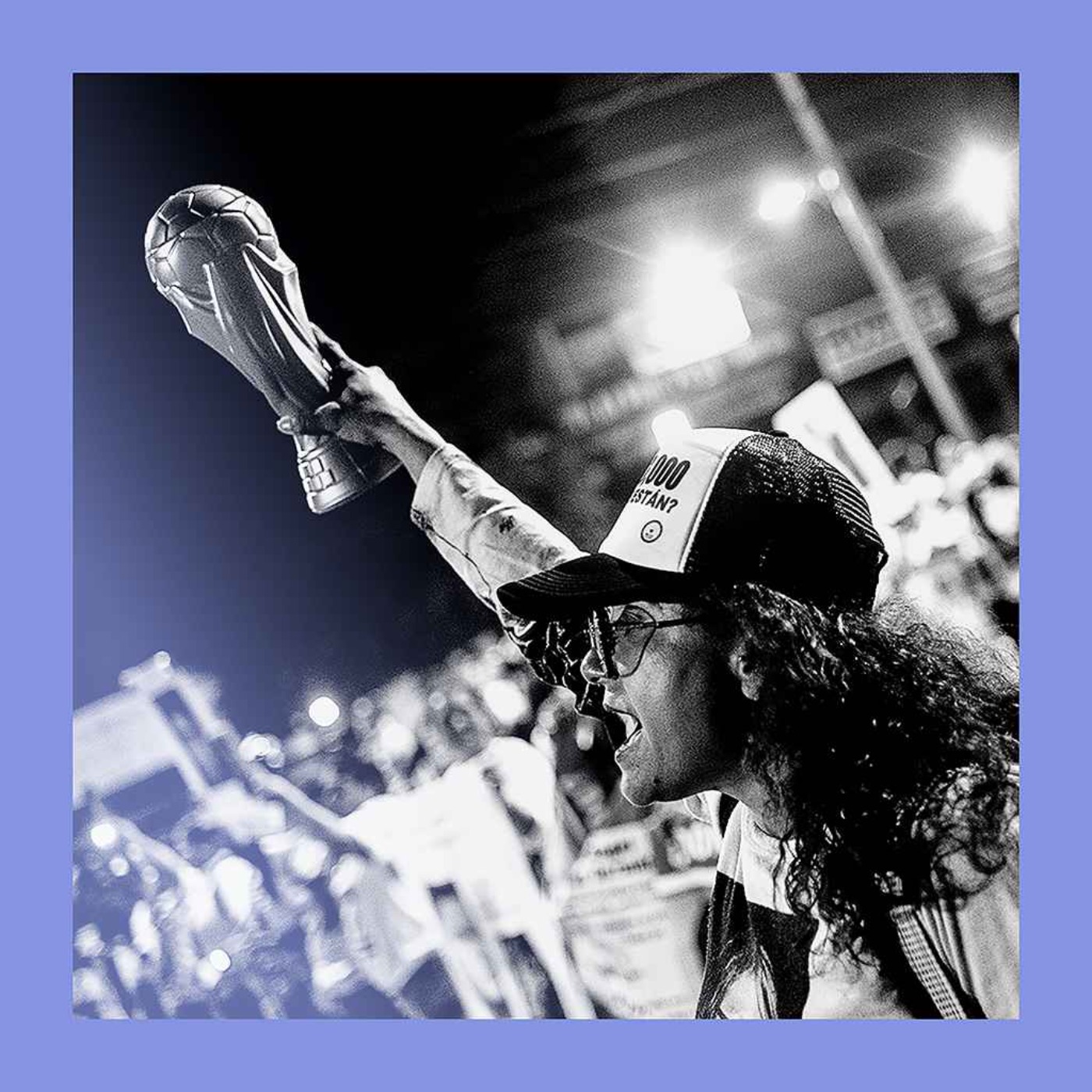
Groups like teachers and families of the 'disappeared' are leveraging the international media attention from the World Cup to pressure the Mexican government on domestic issues, turning the global spectacle into a platform for their causes.
The nature of cartel violence in Mexico has shifted from traditional drug wars to battles for local economic power. Cartels are deeply integrated into the economy and government, competing for diversified revenue streams like fuel theft, extortion, and control over local supply chains.

Instead of fearing Trump's unpredictability, foreign leaders can manipulate it. By appealing to his desire for a 'peace through strength' legacy and his need to showcase American power, a country like Mexico could secure significant military and economic aid by framing it as a clear win for him.
FIFA's strict on-field rules against political statements do not extend to press conferences. Just as U.S. players were questioned about Qatar's human rights, international players will be given a global platform to criticize American policies on immigration and foreign relations, turning the event into a forum for geopolitical commentary.

FIFA shifted from local organizing committees to running the World Cup directly via a subsidiary. This insulates them from host-country political dynamics (e.g., U.S.-Mexico trade issues) and gives them direct control over all revenue streams, from ticketing and naming rights to resale commissions.