Get your free personalized podcast brief
We scan new podcasts and send you the top 5 insights daily.
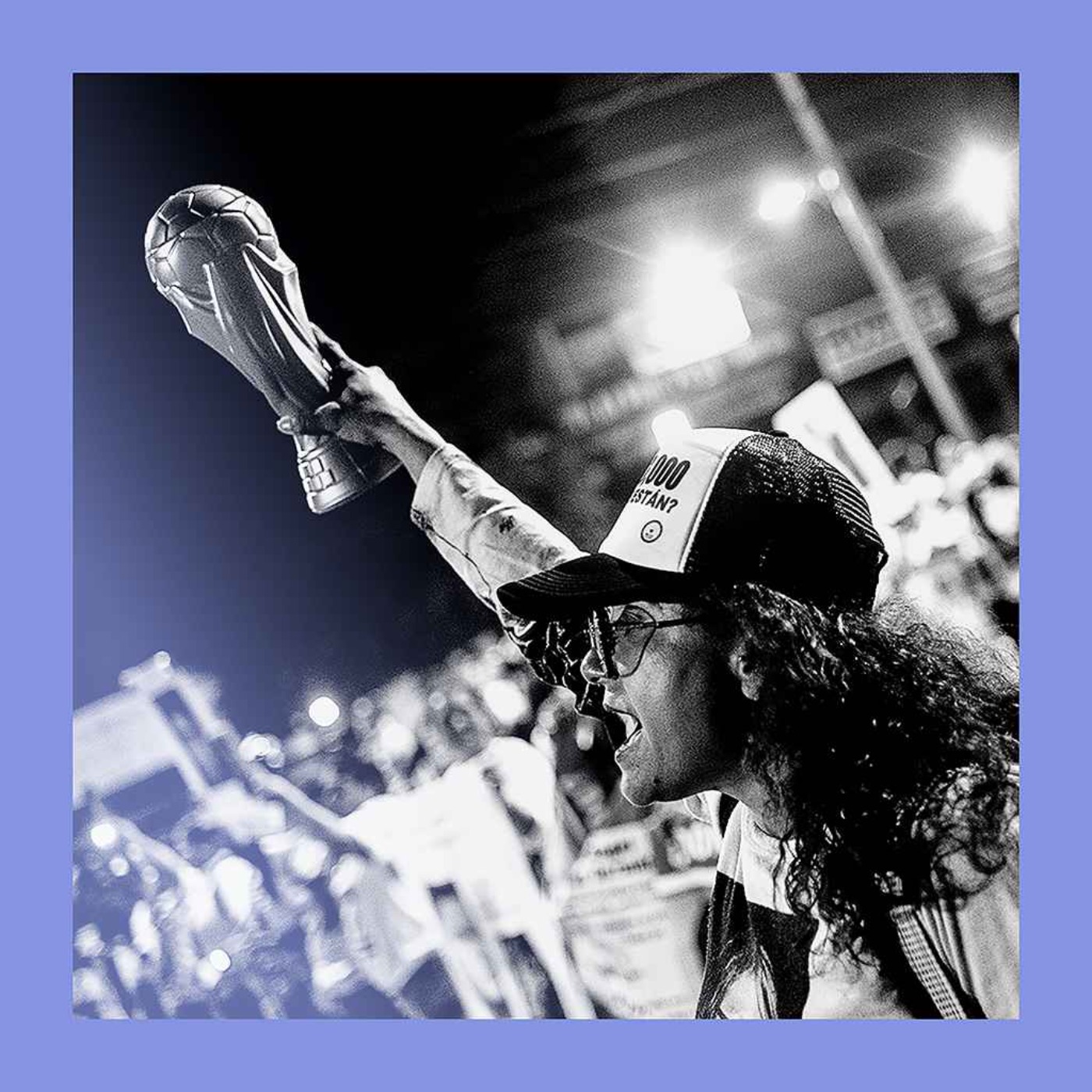
Groups like teachers and families of the 'disappeared' are leveraging the international media attention from the World Cup to pressure the Mexican government on domestic issues, turning the global spectacle into a platform for their causes.
Related Insights
With FIFA World Cup games starting June 12th in major U.S. cities, the event generates significant hype. Marketers in any sector can leverage this by theming emails, offers, and subject lines around soccer/football to capture the attention of both domestic and global audiences engaged with the tournament.

When marketing to a vast, diverse audience like the World Cup's, the team stops thinking about engagement as a metric and starts treating it as a behavior. People organize their lives around the event, so the strategy is to bring the experience to them through local initiatives, making them feel it's for them.

Beyond the commercialism and politics, the event’s core magic is its role as a "great equalizer." For one month, people in vastly different circumstances—from Haiti to the U.S.—share the same simple dream: a goal, a win. This shared focus creates a rare and beautiful moment of global human connection.

The primary value of protests isn't just cinematic outrage; it's serving as a gateway for deeper organizing. Demonstrations allow individuals to connect with the groups that form the backbone of sustained political action, creating lasting, though often unseen, infrastructure.

The FIFA World Cup, co-hosted by the US, Canada, and Mexico under the slogan "United as One," is set against a backdrop of severe political discord. Tensions include US presidential threats against Mexico, suggestions of annexing Canada, and Mexico offering to host the Iranian team against US wishes.

As the first Central Asian country to qualify for the World Cup, Uzbekistan's team represents an entire region. In a nation where criticizing the president is a crime, football provides a rare, unifying refuge for national expression and pride, channeling government investment into a source of soft power.
Mexican officials are less concerned about cartels disrupting the World Cup—as gangs see it as a business opportunity—and more worried that minor incidents will be amplified by Donald Trump to damage Mexico's international standing.
The ultimate marketing goal for the World Cup is not just awareness but active participation. Success is measured by getting someone—a fan, a family, a local business owner—to engage in an experience they otherwise wouldn't have. This shifts the focus from passive impressions to meaningful, active involvement.
FIFA's strict on-field rules against political statements do not extend to press conferences. Just as U.S. players were questioned about Qatar's human rights, international players will be given a global platform to criticize American policies on immigration and foreign relations, turning the event into a forum for geopolitical commentary.
Spain's 2010 World Cup victory was not just a sporting achievement but a deliberate political project. The coach, Vicente del Bosque, used a 'superstar-proof' team-first system to unite players from rival clubs and politically divided regions, aiming to make separatist-leaning Catalans and Basques feel proud to support the national team.